Free Article 1 (Dec. 23, 2025): The Bitcoin Chronicles - 1.F.1.1 - Elias Walker of the the Long Break
A quiet portrait of Elias Walker, born after the Long Break, living on a Kepler world where sovereignty is no longer debated but simply lived.

A quiet portrait of Elias Walker, born after the Long Break, living on a Kepler world where sovereignty is no longer debated but simply lived.
Continuing his comparative study of prices and lived conditions across mature enclaves, Caleb Moreau visits Europa and speaks with a local coordination officer about what ordinary life looks like in a fully engineered world.
A canonical archival note describing the condition of the Solar System enclaves after several centuries of settlement, maturity, and alignment with local realities.
A historical account of the first human settlements on Kepler-class worlds, tracing how sovereignty emerged through distance, consequence, and the quiet failure of Earth-managed systems.
In the Martian city of New Bern, ordering a Big Mac reveals what abundance, honest pricing, and settled life look like after centuries of off-world habitation.
Commander Isaac Bell is a Senior Launch Authorization Officer operating during the final years of Earth’s managed departure era. His role is not to design policy or debate ideology, but to execute denials that prevent uncontrolled exit cascades. Each decision is technically justified, morally heavy, and personally isolating. The Signature Line explores the quiet machinery of enforcement at the moment when legitimacy begins to fracture. Bell is neither villain nor hero — only the one willing to say no, and to be remembered for it.

As Earth’s launch controls tighten, Commander Isaac Bell encounters a departure request that is flawless in every technical sense. The problem is not safety, risk, or compliance — it is timing. Approval would signal that coordinated exit is still possible. *Exit Velocity* explores the moment Bell realizes that enforcement is no longer preserving order, but postponing its reckoning. What he denies is not a launch, but a future he can no longer imagine surviving intact.
Years after his most consequential denials, Isaac Bell reviews the data meant to justify his decisions. The numbers confirm what history already suspects: he was rarely wrong in his assessments. What fails is not his judgment, but the assumption that legitimacy can survive enforcement without consent. *The Last Free Window* places Bell at the hinge between managed departure and irreversible exit — a man who delayed collapse long enough for something else to form, even as he misunderstood what that something would require.
Not all turning points are dramatic. Some are irreversible precisely because they are quiet. This chapter explores the moment humanity crossed from reform to replacement — when systems lost the ability to reclaim loyalty, and sovereignty became a matter of gravity rather than choice.

After the Exodus, Earth did not collapse — it frayed. This chapter traces the early signs of institutional unraveling as legacy systems strained to contain a world that had already learned how to leave, revealing that decline begins not with chaos, but with quiet loss of coherence.
The Exodus Protocol was not an escape plan — it was a threshold. This chapter explores what followed: the quiet, irreversible shift after humanity learned it could leave permission behind, and the unsettling realization that freedom, once proven, cannot be forgotten.
The Pelagia Compact was not a rebellion, nor a revolution, nor a declaration of independence in the Earthly sense. It was a quiet agreement among guilds, enclaves, and Freeport elders—affirming that Luna had already outgrown Earth’s authority. The Compact merely put into words what had become true.

Part VI unveils the deep truth beneath the entire Bitcoin Chronicles canon: the victorious Gospel is not metaphor but the hidden structure of reality. Christ is the architect, sustainer, and destiny of the universe, and sovereignty exists because He is sovereign.

After the Great Archive Migration safeguarded humanity’s knowledge on the Moon, Luna’s engineers confronted an even greater challenge: preserving it for centuries. The result was the Lattice Protocol — a self-repairing, cryptographically verifiable memory architecture
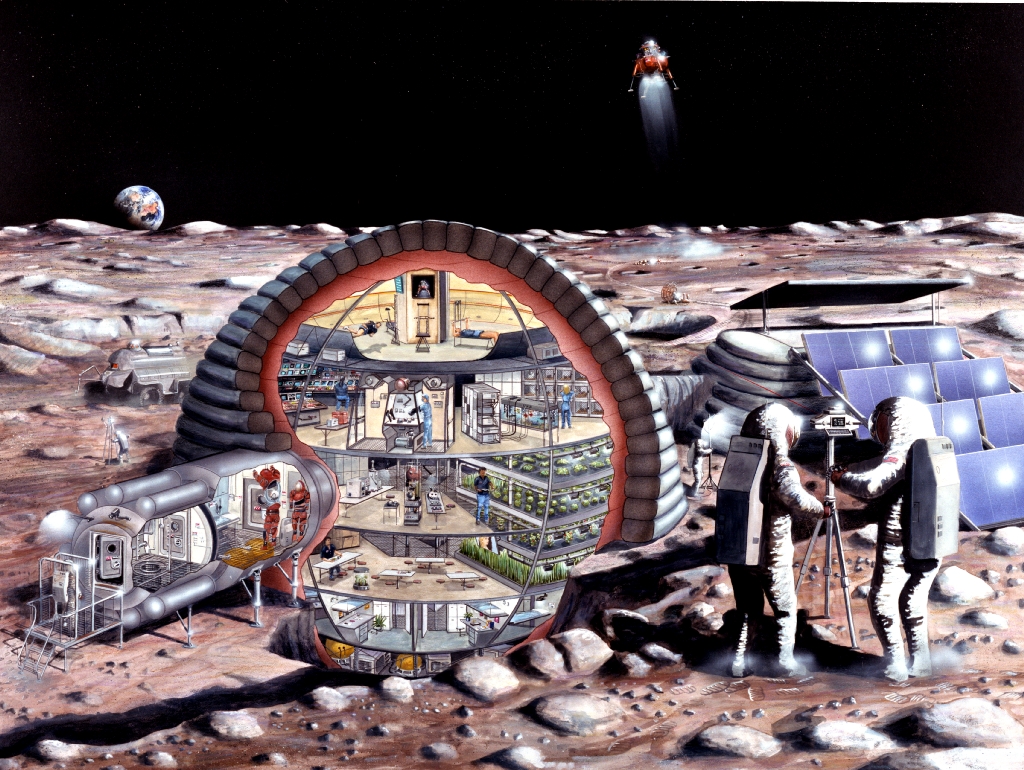
Following the Red Charter, twelve Martian settlements convened to answer a single question: how can sovereign colonies coexist without repeating Earth’s failures? Their answer—the Covenant of Twelve—formed the first decentralized alliance on Mars, defining its political identity and declaring a new center for a post-Earth civilization.

In the quiet shadow of the Atlas Uprising, twelve thinkers became architects of humanity’s first deliberate breakaway. The Exodus Protocol was not a document or a plan—it was a living, encrypted choreography of people, resources, code, and conviction. It marked the moment when the sovereign diaspora stopped merely resisting Earth’s trajectory and began preparing to leave it.

Before the Atlas Uprising, before the Exodus Waves, before the first sovereign habitats, a quieter movement formed—individuals from every discipline who simply stopped believing in Earth’s centralized trajectory. They withdrew not with violence or manifestos, but with silence, conviction, and a growing hunger for truth.

If Christ redeemed humanity two thousand years ago, why do sovereign systems only begin emerging now? Part VII explains the difference between redemption (instant) and restoration (progressive), and shows why the Sovereign Age begins in the 21st century — at the exact historical moment when humanity finally possesses the tools to rebuild systems aligned with the Creator’s design.
Before Luna Freeport had Archivists, before the Pelagia Compact established political autonomy, the settlers of the Shackleton Corridor invented a lightweight legal system rooted in guild consensus. Known as the Shackleton Circle, it became the backbone of all sovereign lunar governance.
A mythic-poetic rendering of the universe’s birth. The Big Bang is reframed not as a random explosion but as the first note of a cosmic song—an intentional act of harmony, structure, and sovereign purpose.