“Not a Panacea” — And Not Trying to Be
Reflecting on the statement “Bitcoin is not a panacea” and clarifying what Bitcoin is—and is not—designed to solve.

Reflecting on the statement “Bitcoin is not a panacea” and clarifying what Bitcoin is—and is not—designed to solve.
An exploration of two fundamentally different approaches to money: deterministic systems governed by fixed rules, and managed systems governed by human decision-making.
Why humility alone isn’t enough — and what Bitcoin and the Gospel share

The world is no longer one system. It is splitting into several economic zones with different rules. For digital nomads this changes everything. It is no longer about comfort. It is about resilience. Territory, food, energy and infrastructure become critical factors. As these systems take shape, mobility will increase. AI will accelerate this shift. We may see a new wave of migration driven by choice, not necessity. And this could lead to a deeper adoption of Bitcoin as a tool for freedom.

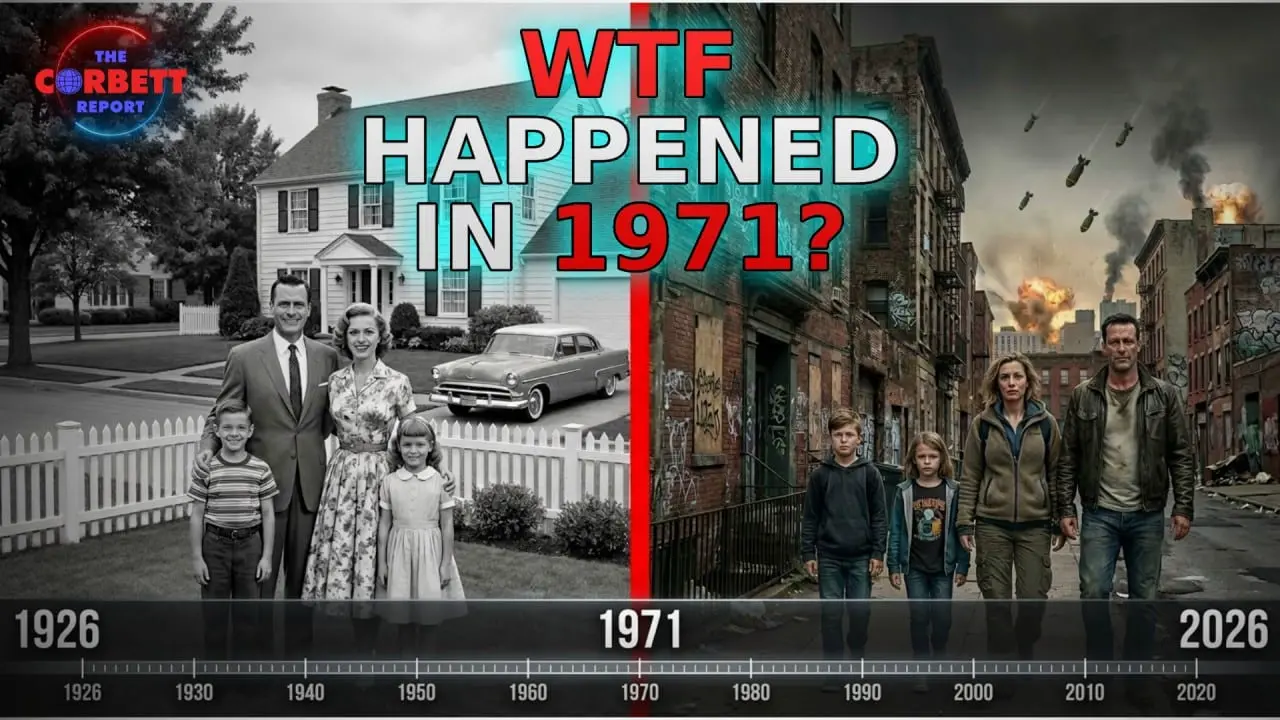
It seems the normies are finally catching on to the fact that 1971 was the year of peak everything. So, who's going to tell them what happened (and what's coming next)?
Free markets drive prices down. AI is making that force unstoppable. The monetary system fighting it is printing into a headwind it can't survive, and the people trusting custodians will learn the hardest lesson.
The headline payroll number is a lagging indicator filtered through statistical adjustments. Here's what to actually watch Friday morning — the two surveys, the birth-death model, full-time vs. part-time composition, real wages, and what the Fed is watching.
A macro analyst compared February 2026 to July 2007. He predicted the bond panic, the Fed pivot, and gold's breakout. His next call is the biggest yet. We tracked 4 years of his predictions across 10 podcasts using PullThatUpJamie.ai.

Today James fills in the missing pieces about the most important bet you've never heard of and what it tells us about the value of human life.

**Date:** 2026-03-25 **Tags:** #economics #stablecoins #regulation #privacy #sovereignty #dollarization
The petrodollar system is fracturing. Iran wants yuan for oil. Gold is flowing east. The Fed is quietly expanding its balance sheet by $420 billion a year. The fiscal math doesn't work anymore, and Bitcoin is the exit.
Software-as-a-Service did not become dominant because it was inherently better for users. It became the default because it aligned with the economic incentives of companies and the operational realities of the web. This chapter explores the forces that led to SaaS dominance and why those forces continue to shape modern software architecture.
Humanity has never lived in a free market. Centrally controlled money prevents it. Bitcoin -- finitely scarce, permissionless, and uncontrolled -- is breaking that open over the next decade.
**Date:** 2026-03-18 **Tags:** #AI #inference #silicon #economics #technology #sovereignty
Something structural broke in February 2026, and the wreckage is still piling up. Over **$1 trillion in SaaS market capitalization** evaporated in a single month — Salesforce down 26%, Atlassian cratering, Adobe bleeding, the entire iShares Expanded Tech-Software ETF in freefall. Wall Street is call
As of March 2026, the U.S. is running a quiet experiment: can you grow an economy without growing jobs?
Monetary systems influence how societies perceive time. Inflationary fiat systems encourage acceleration and short-term thinking, while the Sabbath rhythm introduces a counter-pattern that restores patience and perspective.

Inflation reshapes how people think about time, labor, and security. When money loses value, the system quietly pressures individuals toward constant activity and acceleration. The biblical rhythm of Sabbath interrupts that pressure by reminding us that provision does not ultimately come from endless economic striving.
