The Tradeoff Most People Never See
Most people aren’t choosing convenience over control consciously. The tradeoff is rarely visible at the moment of decision. This piece explores why that happens and what it means.

Most people aren’t choosing convenience over control consciously. The tradeoff is rarely visible at the moment of decision. This piece explores why that happens and what it means.
Nostr clients are powerful — especially for discovery and interaction. But they are not designed for ownership, authoring, or long-term control. This article explores why clients are essential, but not sufficient, and what changes when you separate discovery from creation.

Most modern systems collapse writing and publishing into a single action. This creates hidden pressure and limits how ideas develop. This article explores why separating authoring from distribution matters — and how local-first systems restore a healthier way to think, write, and share.
Most people believe they “own” their accounts, data, and identity online. In reality, they have access — not ownership. This article explores how small, everyday failures (like password resets and lockouts) reveal a deeper architectural problem, and why local-first systems change that foundation.
Ownership is often confused with visibility. Many systems allow users to see and interact with their data, but stop short of granting true control over it. This chapter clarifies the distinction between owning data and merely accessing it, and explains why local-first systems must prioritize ownership at the structural level.

Modern software gives users access to data without granting authority over it. This distinction is subtle but foundational. This chapter explores how systems can feel usable and even empowering while still being controlled elsewhere — and why true local-first design requires shifting from access-based models to authority-based systems.
Why does Bitcoin Well refuse to hold your Bitcoin? Because custody equals control. In this post, we explain why self-custody is the "first domino" in reclaiming your personal sovereignty. Through the story of a high-net-worth client choosing responsibility over convenience, we explore why the "hard way" of Bitcoin is the only way to achieve true financial independence. We aren’t here to be your bank; we’re here to be your guide to freedom.

This piece examines the convergence of generational, debt, and ownership cycles and argues that systemic resets are recurring features of history, not anomalies. Independent frameworks from generational theory, long-term debt analysis, and ownership structure all point to the same conclusion: prolonged debt expansion, rising inequality, and eroding trust eventually force structural change. Today, these cycles are aligning, suggesting that traditional policy tools are losing effectiveness and that a broad institutional reset is already underway or imminent. The implication is practical rather than predictive. Periods of crisis expose hidden risks in leverage, intermediaries, and custodial ownership, while directly held assets and skills prove more resilient. Preparation, therefore, is not about fear or timing markets, but about reducing dependency on fragile systems and building sovereignty incrementally. In this view, resilience becomes a form of responsibility, positioning individuals and families to navigate systemic change deliberately, brick by brick.

Most creators assume ownership because they can still log in. But access is not ownership, and convenience is not custody. This essay examines why true ownership only exists when your work can survive platforms, policies, accounts, and time — and why sovereignty begins the moment export stops being optional.
Reach dominates modern publishing metrics, but durability determines whether work truly survives. This essay argues that builders and writers pursuing sovereignty must prioritize coherence, ownership, and memory over visibility—and why durable work ultimately travels further, even if more slowly.
Sovereign publishing is the practice of creating, preserving, and distributing your work in a way that maintains ownership, identity, and continuity independent of platforms, algorithms, or business models you do not control. In an era dominated by rented attention and subscription-driven content churn, sovereign publishing offers a slower but far more durable path: the creation of intellectual artifacts that outlive platforms and remain legible across time.

How receipts are verified, how purchases are claimed, and what admins should expect.

How receipts are verified, how purchases are claimed, and what admins should expect.
Virality, reach, and growth are not inherently bad. They are powerful forces that can amplify truth, creativity, and human connection. The problem with modern platforms is not growth itself, but the way growth has been inverted into a mechanism of control — where creators become the product and platforms decide how amplification happens. This piece clarifies that distinction, and why it matters.

From MySpace to Skype, Web2 promised permanence but delivered disposability. Users invested their labor into platforms they did not own, only to lose everything when hype or competition overtook them. The lesson: platforms are fragile, but Bitcoin offers property that endures.
This deep dive explores covenantal ownership, jurisdictional sovereignty, and how Sovereign Land Titles could replace the perpetual leasing and trust systems that keep communities in dependency—restoring real ownership to individuals and real sovereignty to tribes.
A Sunday reflection on renewal — how the pattern of resurrection illuminates the rebirth of ownership in a world shifting from fiat to Bitcoin. This piece explores why ownership has been hollowed out by inflation, debt, and extraction; how hard money restores foundations; how trust re-emerges in communities; and how a Bitcoin economy gives individuals, families, and nations the ability to rise again.
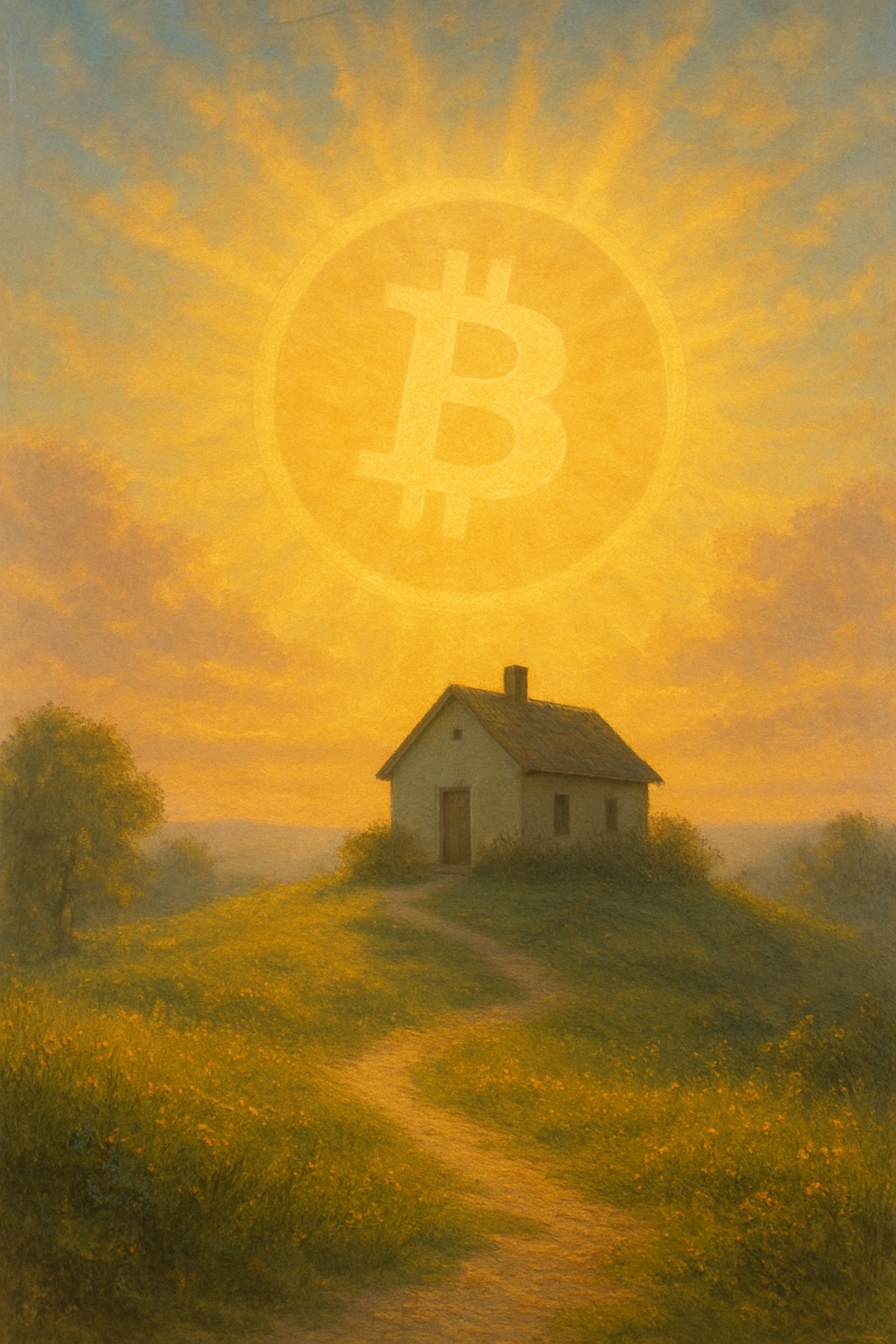
Explores how centralized land and registry systems undermine true ownership and how sovereignty begins by reclaiming stewardship beyond bureaucratic permission.
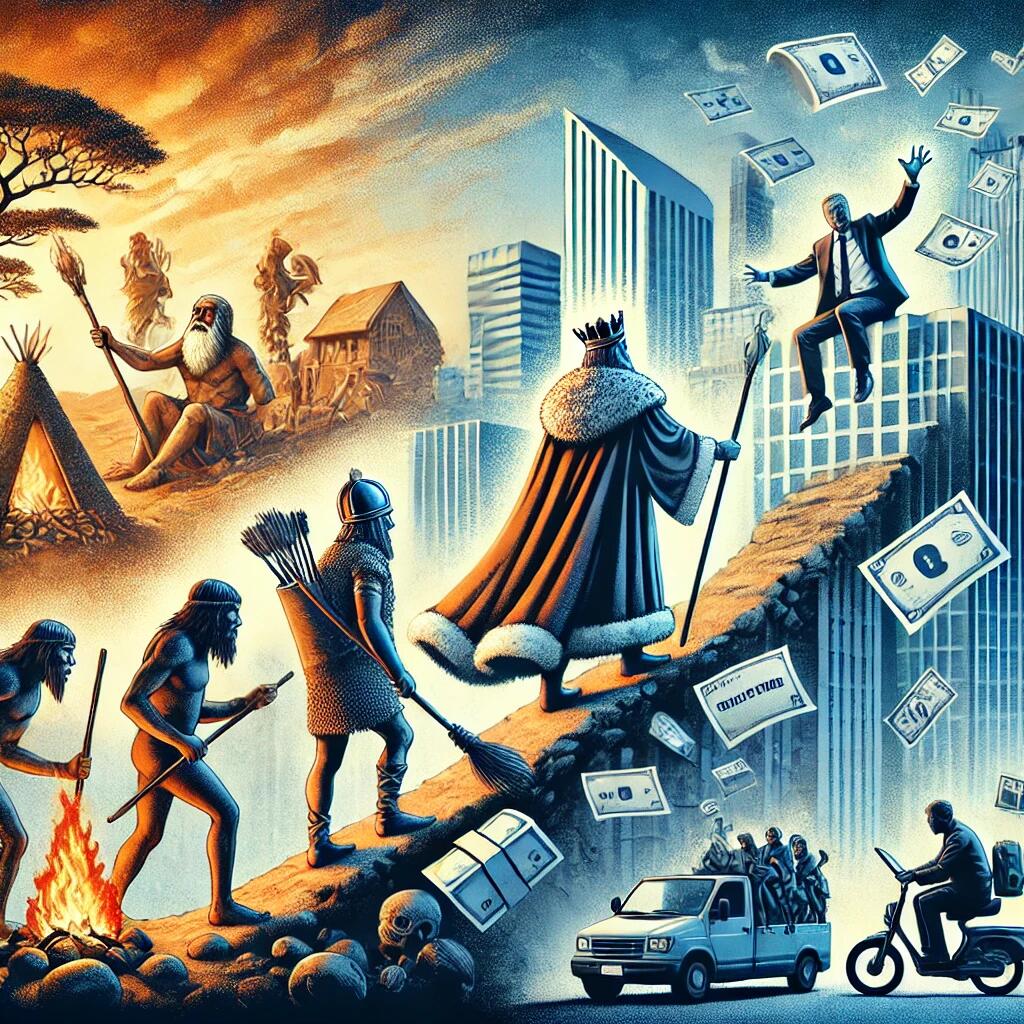
For thousands of years, humanity fought to own land, wealth, and the means to shape their future. Yet today, we’re voluntarily giving it all away—one subscription, lease, and financed payment at a time.
Data centric and owned data shift in architecture