Building Is a Form of Stewardship
Building is not just creation—it is stewardship. It reflects how we manage time, responsibility, and what has been entrusted to us.

Building is not just creation—it is stewardship. It reflects how we manage time, responsibility, and what has been entrusted to us.
As entangled coordination spreads beyond Luna’s experimental corridors, sovereign worlds confront a deeper question: if authority no longer depends on delay, who carries responsibility? Elias Walker begins to understand that distributed systems demand more maturity, not less.
Sovereignty is often marketed as empowerment, freedom, or self-expression. In reality, it is a burden — the burden of responsibility, authorship, and consequence. This essay explores why true sovereignty feels heavy, isolating, and uncomfortable, and why that discomfort is not a failure but a signal that something real is happening.

MONIKA BRAVO FEB 05, 2026

At a certain stage of maturity, asking for permission stops being prudent and starts becoming corrosive. This essay explores why serious builders eventually abandon permission-seeking—not out of arrogance or rebellion, but because sovereignty, responsibility, and durable creation require action without consensus, applause, or institutional approval.
Building with intention is not only a creative choice but a moral one. It treats time, skill, and attention as resources to be stewarded—not exploited.
Modern ministries rely heavily on platforms they do not control. Continuum offers a different approach: a local-first publishing foundation that prioritizes stewardship, integrity, and long-term faithfulness over reach, metrics, or convenience.
Convenience always has a price. This essay examines the hidden costs of outsourcing identity, memory, and agency to systems you do not control — and why reclaiming them is becoming less optional with time.
Bitcoin is often described as freedom technology. Less discussed is the maturity it demands. This essay explores why Bitcoin feels uncomfortable, demanding, and uncompromising — and why that is precisely its value.

Sovereignty does not remove cost — it redistributes it. This essay explains why sovereign systems front-load pain, responsibility, and discipline instead of hiding them behind convenience, and why most people rationally opt out.
Many people speak about “freedom” as if it were a toggle you enable or a benefit you receive. But real freedom is never granted — it emerges as a consequence of responsibility, cost-bearing, and opting out of systems that reward dependence. This essay explores why freedom cannot be offered by platforms, institutions, or movements, and why those who truly pursue it often appear stubborn, inefficient, or uncooperative to the world around them.
Wir alle träumen vom Bitcoin-Standard, doch die Realität als Familienvater ist oft eine Gratwanderung. In diesem Artikel teile ich meine ehrlichen Gedanken über die Zerreißprobe zwischen der Vision von Freiheit und der Verantwortung im Hier und Jetzt. Über Euphorie, Demut und die kleinen Siege der Circular Economy im Alltag.

The first generation born entirely under Bitcoin does not remember inflation, bailouts, or negotiated truth. To them, money has always been final, transparent, and impersonal. This essay explores how that quiet inheritance reshaped Martian culture—not through slogans or struggle, but through instinct—and why those who remembered Earth sometimes found the new normal unsettling.
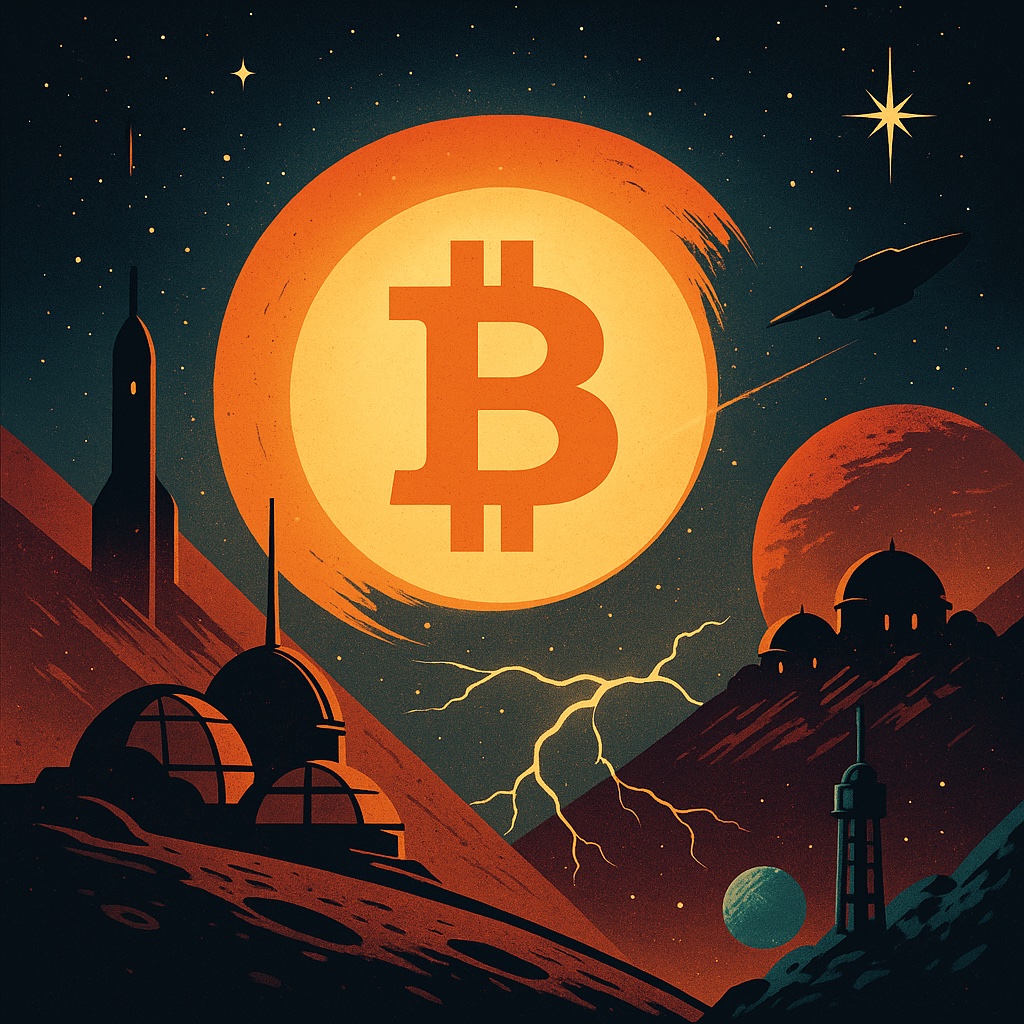
On Mars, survival depends on precision, honesty, and irreversible consequences. When a young systems engineer makes a mistake that cannot be undone, Bitcoin does not intervene, forgive, or soften the outcome. It records. This essay explores how finality reshaped Martian ethics—not as punishment, but as clarity—and why a civilization that cannot rely on mercy by abstraction learned to practice responsibility in full daylight.
Waiting was once treated as inefficiency. At the outer edges, it became a moral practice. This essay examines how civilizations learned to live responsibly when answers would arrive too late to matter.

Civilizations do not collapse primarily because of violence, invasion, or even decadence. They collapse when responsibility is systematically removed from individuals and absorbed by systems. When consequences are softened, delayed, or socialized, decay becomes invisible—until it is irreversible. Bitcoin matters because it restores responsibility as a structural requirement rather than a moral suggestion.
Commander Isaac Bell is a Senior Launch Authorization Officer operating during the final years of Earth’s managed departure era. His role is not to design policy or debate ideology, but to execute denials that prevent uncontrolled exit cascades. Each decision is technically justified, morally heavy, and personally isolating. The Signature Line explores the quiet machinery of enforcement at the moment when legitimacy begins to fracture. Bell is neither villain nor hero — only the one willing to say no, and to be remembered for it.

Christmas is often framed as relief — a pause, a comfort, a sentimental shelter from the weight of the world. But the original claim of Christmas is far more severe. God does not remove humanity from history; He enters it. This essay reflects on Christmas as commitment rather than escape, and on why incarnation makes neutrality impossible.
Modern culture often equates freedom with the removal of limits. This essay argues that freedom does not emerge from weightlessness, but from rightly ordered constraint — and that the collapse of constraint produces drift, fragility, and quiet forms of control.
Modern life encourages the outsourcing of responsibility — for memory, judgment, identity, and decision-making. This essay argues that sovereignty begins when we reclaim what should never have been delegated.