Nikita in the topsy-turvy land short story for kids
- Start by checking the child’s reading goal
- Verify the opening situation
- Track the first reversal
- Confirm the central problem
- Follow Nikita’s preparation
- Check the grade and the ending
- Use questions that test the message
- Checklist before payment
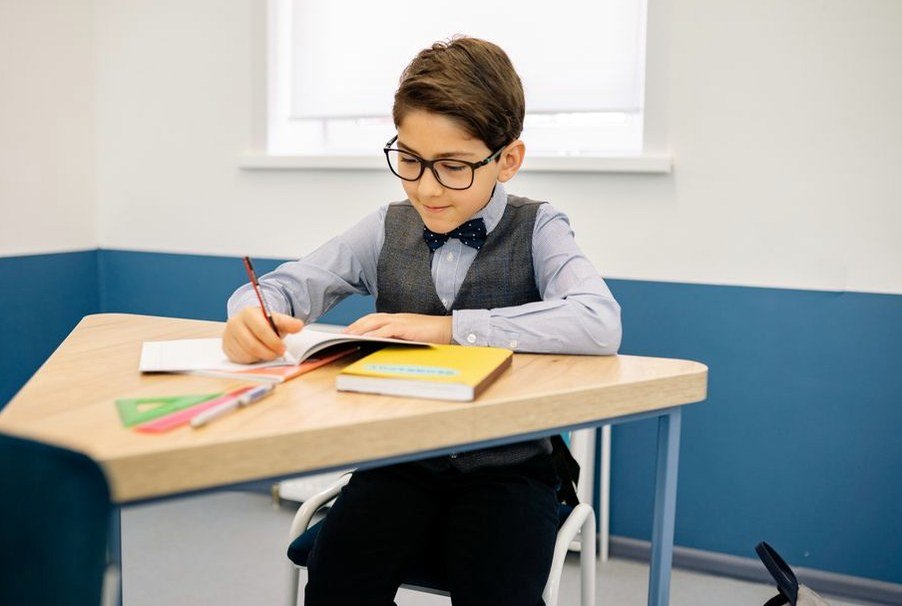
Nikita in the Topsy-Turvy Land is a short fantasy story about a failing student who enters a world where school rules are reversed. The most effective way to read it with a child is to check understanding at several points, because the story changes the meaning of praise, grades, home, and school.
Nikita begins as a boy who arrives late, ignores his teacher, teases classmates, and dreams about playing football with older friends. His principal, secretly a kind wizard, sends him to another world after deciding that ordinary punishment has not changed his behavior.
Start by checking the child’s reading goal
Before reading, decide whether the child needs a read-aloud story, independent practice, or a discussion about school behavior. This choice affects the pace. A younger child may need pauses after each strange event, while an older reader can follow the reversal without constant explanation.
Ask one simple question before the first page: what might happen in a world where everything works differently? Do not explain the ending in advance. The story works because Nikita and the reader discover the rules together.
Verify the opening situation
At the first checkpoint, confirm that the child understands why Nikita is unhappy at school. He wants to join his older friends, but he still has to attend class. He arrives late and pays more attention to the sunshine outside than to Maria Stepanovna’s lesson.
Ask the child to identify two details about Nikita’s behavior. Suitable answers include poor studying, pranks, pulling classmates’ hair, and ignoring questions. This check prevents a common misunderstanding: Nikita is not transported away because he is curious or adventurous. His repeated choices lead to the principal’s intervention.
Track the first reversal
When Nikita opens his eyes in the strange version of the school, everything looks familiar at first. The teacher calls him her favorite student, and the principal describes him as the best student in school. That praise confuses Nikita because he has done nothing to earn it.
At this stage, ask what feels wrong. The answer is not merely that the adults are being kind. Their statements contradict what the reader already knows about Nikita. The child should notice that the new world copies ordinary school life while changing its basic rules.
For a guided reading session, the nikita in the topsy-turvy land short story for kids can be read in short sections, with a pause after Nikita learns that students live at school.
Confirm the central problem
The second checkpoint comes when Nikita discovers that school is now his home. He remembers his parents and becomes frightened by the thought of staying away from them. This moment gives the fantasy its emotional direction: Nikita no longer wants freedom from school; he wants to return to his family.
Ask the child to explain why Nikita runs to the principal. He needs to learn the rule for returning, and the principal tells him that he must receive a failing grade. In this topsy-turvy world, a failing grade is harder to obtain than the highest mark in Nikita’s ordinary world.
Check that the child understands the reversal before continuing. If the rule remains unclear, later events may seem unfair rather than humorous. A short explanation is enough: Nikita must work hard to fail because this world rewards the results he used to avoid.
Follow Nikita’s preparation
Nikita returns to the classroom, takes out his textbooks, and studies through the night. The work is difficult because he has little practice, and the information becomes confused in his mind. His effort matters even though he is aiming for an outcome that would normally disappoint a student.
Ask what has changed in Nikita. His fear of losing his parents gives him a reason to study, but he also experiences the difficulty of learning firsthand. This is a useful point for discussing effort without pretending that one night of work fixes every habit.
Check the grade and the ending
During the lesson, Nikita raises his hand first and answers at the board. Maria Stepanovna says he prepared well, then gives him a two, the failing grade he needs. Nikita celebrates because the result brings him closer to home.
The principal tells him that he will wake up in his own room after sleeping. Nikita returns to his parents, promises to improve, and later sits down to do his homework before playing with his friends. The ending shows a change in behavior rather than an instant transformation.
Use questions that test the message
- Why did Nikita want to skip school at the beginning?
- Which ordinary rules changed in the magical land?
- Why did the failing grade make Nikita happy?
- What did Nikita understand about studying?
- What action proves that he plans to change after returning home?
Keep the discussion focused on actions and consequences. The story does not say that grades alone make a child good. It shows Nikita discovering the effort behind schoolwork and recognizing the value of his parents.
Checklist before payment
- Confirm that the title matches the intended story about Nikita and the topsy-turvy school world.
- Check that the child’s reading level suits a story with magical reversals and school-related vocabulary.
- Verify that the page opens correctly before paying for any optional edition or reading access.
- Make sure the child can read or hear the complete story, including Nikita’s return home and promise to study.
- Check that any purchase terms, access conditions, and final price are shown clearly before payment.
Write a comment