Independiente Santa Fe Wins 2026 Colombian Superliga Title
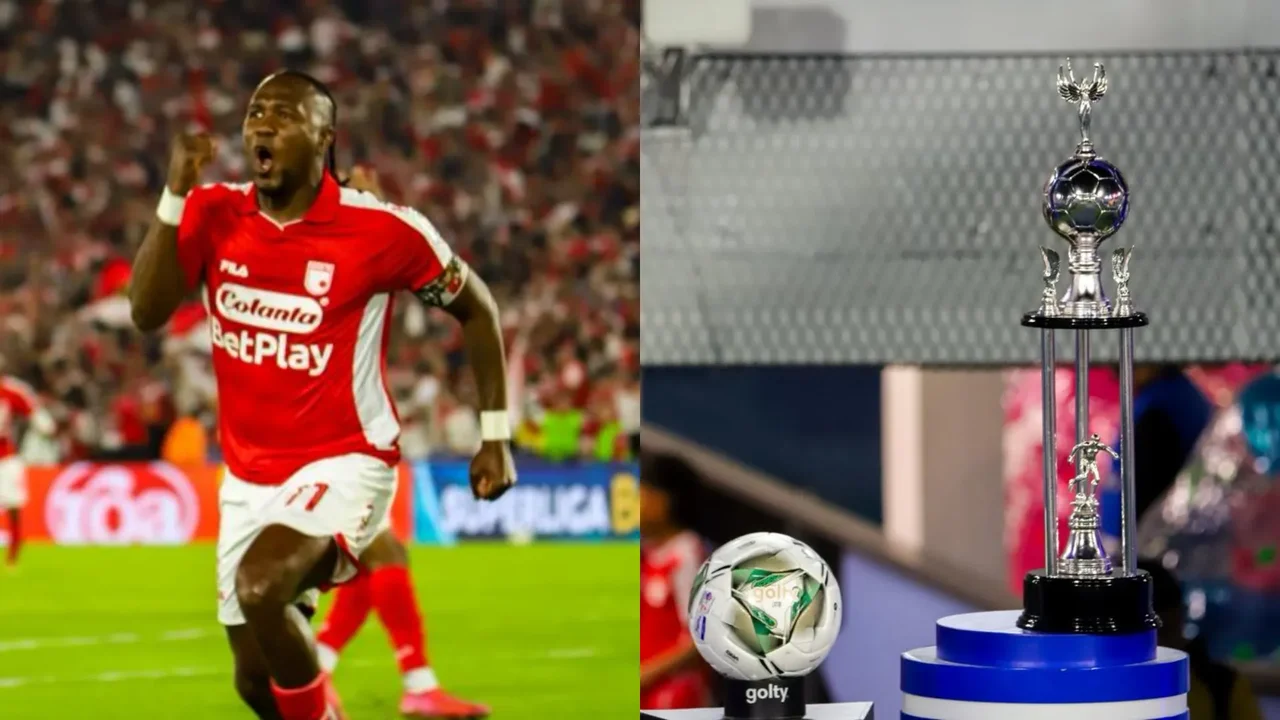
Independiente Santa Fe Wins 2026 Colombian Superliga Title government-aligned Government-aligned outlets portray Santa Fe’s 2026 Superliga triumph as a dominant, deserved victory that crowns the club as the most successful in the competition and offers an uplifting start to the football year. Their reporting highlights the orderly organization, festive atmosphere, and supposed reflections of national unity and institutional effectiveness surrounding the 3-0 win at El Campín. @@48e9…nr0z Independiente Santa Fe clinched the 2026 Colombian Superliga title by defeating Junior de Barranquilla, with all outlets agreeing that the decisive second leg at El Campín ended 3-0 in favor of Santa Fe and closed the series with a 4-1 aggregate score. Reports from both sides coincide that Santa Fe struck early through Ewil Murillo, capitalizing on an intense start and a quick transition after a midfield recovery, and that veteran Hugo Rodallega contributed on the scoresheet as the Bogotá side secured the first official trophy of the 2026 Colombian football calendar.
Coverage across the spectrum agrees that this is Santa Fe’s fifth Superliga crown, consolidating the club as the most successful team in the history of this competition and extending its edge over traditional rivals such as América de Cali in the overall domestic trophy count. Both opposition and government-aligned outlets also emphasize that the result reflects not only Santa Fe’s attacking efficiency but also a solid defensive structure and game management, situating this title within a broader narrative of the club’s recent resurgence and the Superliga’s role as a curtain-raiser and prestige marker in Colombian professional football.
Points of Contention
Framing of the victory. Opposition outlets tend to frame Santa Fe’s triumph in more neutral or institution-focused terms, highlighting tactical execution, club management, and player performance with relatively little political symbolism. Government-aligned coverage, by contrast, leans into celebratory language and emotional narratives about pride in Bogotá and national football, sometimes echoing official discourse about resilience and unity. Where opposition pieces might treat the scoreline and statistics as the main story, pro-government reports more often emphasize the spectacle, atmosphere in El Campín, and the uplifting nature of starting 2026 with a resounding title for a capital club.
Use of political symbolism. Opposition media generally keeps the match within the boundaries of sports analysis, avoiding explicit parallels between Santa Fe’s superiority and the performance of political institutions or current authorities. Government-aligned outlets are more inclined to allude to the club’s order, discipline, and character as virtues that echo the government’s preferred self-image, suggesting that the victory reflects a broader climate of progress or stability. While both sides celebrate the sporting achievement, only the latter systematically links the win to narratives about national cohesion or successful public policies around security and event organization.
Institutional context and governance. Opposition coverage is more likely to mention structural issues around Colombian football governance—such as calendar congestion, commercialization of the Superliga, or long-standing disputes within the federation—using the final as an entry point for criticism or calls for reform. Government-aligned media tends instead to emphasize how smoothly the event was organized, the security operation around El Campín, and the positive image projected of the league and the host city. As a result, the same title is presented by the opposition as occurring despite persistent institutional shortcomings, whereas pro-government outlets present it as evidence of functioning coordination between clubs, local authorities, and national bodies.
Socioeconomic and fan impact. Opposition outlets more often foreground concerns about ticket prices, access for lower-income fans, and lingering frustrations over infrastructure and public transport around matchdays, framing the celebration against a backdrop of unresolved social grievances. Government-aligned coverage highlights the economic boost for local commerce, tourism, and small vendors, and stresses the unifying effect of a full stadium backing Santa Fe. Thus, opposition narratives focus on inequalities and uneven benefits of such events, while government-friendly reports stress feel-good images of packed stands and collective joy as indicators of social normalcy.
In summary, opposition coverage tends to treat Santa Fe’s title as a primarily sporting event embedded in a landscape of institutional criticism and social concern, while government-aligned coverage tends to elevate the win into a symbol of order, unity, and effective governance that reinforces broader official narratives.
Story coverage nevent1qqsdfxc4a69797vfm3wznpp7vct5t02kq0r8xt0azgphywtlz2q7d5sxwy2a3 nevent1qqsdph9qa00w2ecql2tkuzayvrr7esrscjgfmgpd3uh42nzjvcpepsgwl8sgh nevent1qqs0gvllwtah2g34qgqjuh4xzl5f9je49nz08kr8yczjmzj5qt0gcecnwpytc
Write a comment