Nicaragua Inaugurates National Genetics Center in Managua
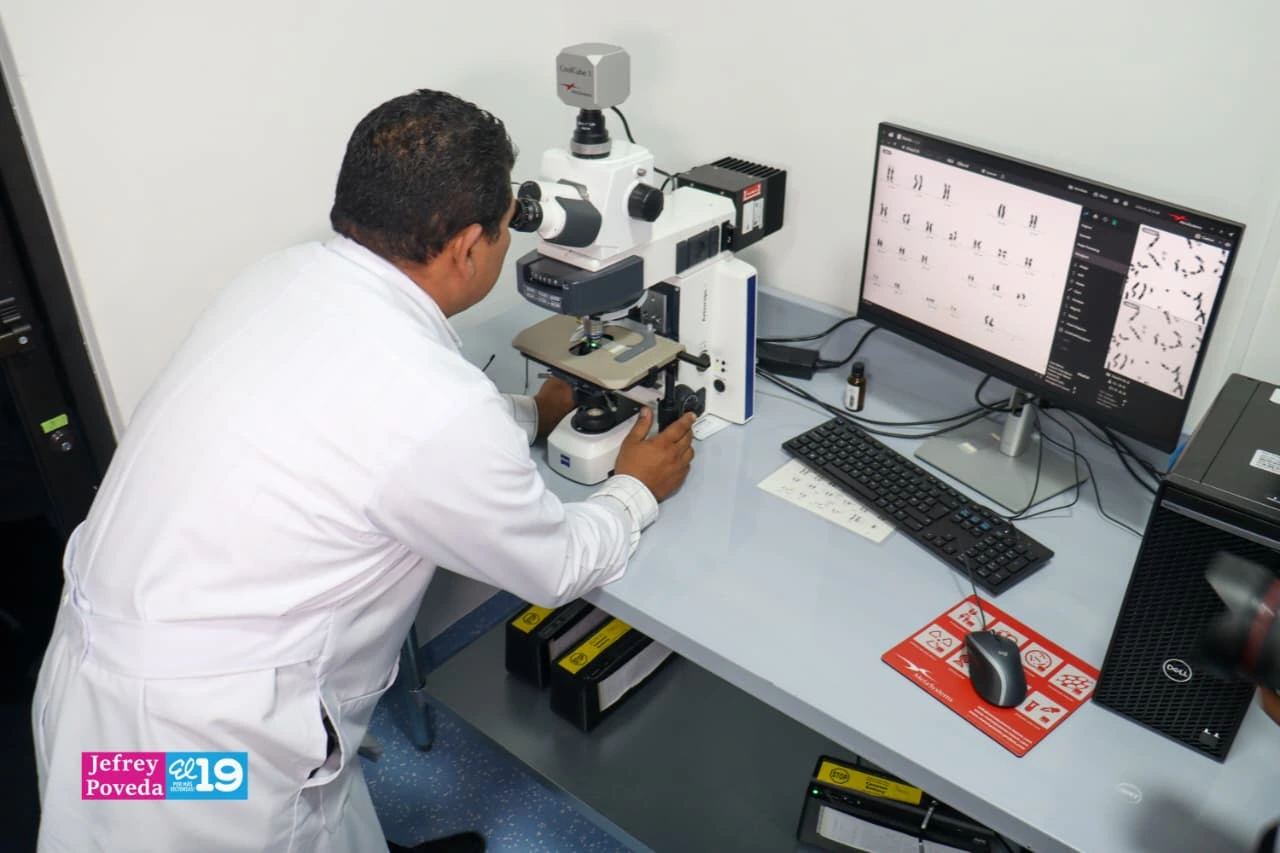
Nicaragua Inaugurates National Genetics Center in Managua government-aligned Government-aligned coverage portrays the National Genetics Center as a historic achievement that brings cutting-edge genomic and molecular diagnostics to Nicaragua’s public health system, protecting life from pregnancy through childhood. These outlets emphasize free or affordable access for families, improved early diagnosis of genetic conditions, and link the center to broader successes such as reported declines in communicable diseases. @El 19 Digital Nicaraguan media report the inauguration of the country’s first National Genetics Center, officially named “Blanca Segovia Sandino Aráuz,” located in Managua. Coverage agrees that the facility is equipped with modern technology for genomic and molecular biology studies and is intended to diagnose and manage rare or hereditary genetic conditions that affect pregnancy, fetal development, and children’s health. Both sides acknowledge that such specialized genetic testing was previously very limited or had to be sought abroad at high cost, and that the center is framed as serving Nicaraguan families by providing more timely and precise diagnoses.
Reports also concur that the center is part of a broader public health effort under the current government to expand specialized services, including maternal and child health. It is described as an institutional step to integrate genetics into Nicaragua’s healthcare system, with functions that include early detection, diagnosis, and follow-up of genetic disorders, and potentially contributing data for national public health planning. Coverage from all sides situates the center within ongoing reforms aimed at strengthening the public health network and expanding access to more sophisticated medical technologies that were not previously available in the country.
Points of Contention
Purpose and framing. Opposition-aligned sources tend to frame the inauguration as a political showcase for the Ortega-Murillo government, suggesting the center is used to project an image of modernity and social commitment while broader systemic problems persist. Government-aligned outlets instead present the center as a concrete achievement of public policy that fulfills the state’s responsibility to protect life from pregnancy onwards and to democratize high-cost genetic testing. While government-aligned media emphasize technical capabilities and benefits to families, critical outlets underline the risk that the facility functions more as propaganda than as a fully integrated, sustainably funded service.
Access and equity. Opposition coverage questions whether services at the center will truly be universally accessible, raising concerns about hidden costs, long waiting times, and potential prioritization of politically connected patients. Government-aligned media repeatedly stress that the center will be available to Nicaraguan families as part of the public health system and that it reduces dependence on expensive foreign laboratories. Critical reporting tends to highlight urban–rural gaps and the lack of clear information on referral pathways, whereas official-aligned stories focus on the promise of timely diagnoses and comprehensive management without dwelling on possible barriers.
Institutional context and governance. Opposition sources often situate the center within a health system they portray as underfunded, centralized, and politically controlled, warning that technical decisions could be subordinated to loyalty to the ruling party. Government-aligned outlets embed the center within a narrative of continuous strengthening of public health institutions, underscoring coordination between the health ministry, specialized hospitals, and new diagnostic infrastructure. While critical media raise questions about transparency, data protection, and independent oversight of genetic information, pro-government coverage largely omits governance risks and highlights only institutional efficiency.
Health outcomes and broader indicators. Critical outlets, when mentioning other health statistics, tend to question the reliability of official claims about decreasing cases of dengue, malaria, influenza, and pneumonia, arguing that underreporting and limited testing may distort the picture. Government-aligned media, by contrast, fold these reported declines into a success story in which the genetics center is another step in a broader trajectory of improving health indicators. Opposition voices suggest that focusing on high-tech genetics may divert attention from basic primary care and epidemiological surveillance, whereas official narratives argue that both high-tech and basic care are advancing together.
In summary, opposition coverage tends to cast the new genetics center as a potentially useful but heavily politicized project with uncertain accessibility and governance, while government-aligned coverage tends to present it as a flagship achievement of the public health system that expands equitable access to advanced genetic diagnostics and supports broader improvements in national health indicators. Story coverage
Write a comment