Trump Threatens to Sue Trevor Noah Over Grammy Awards Joke
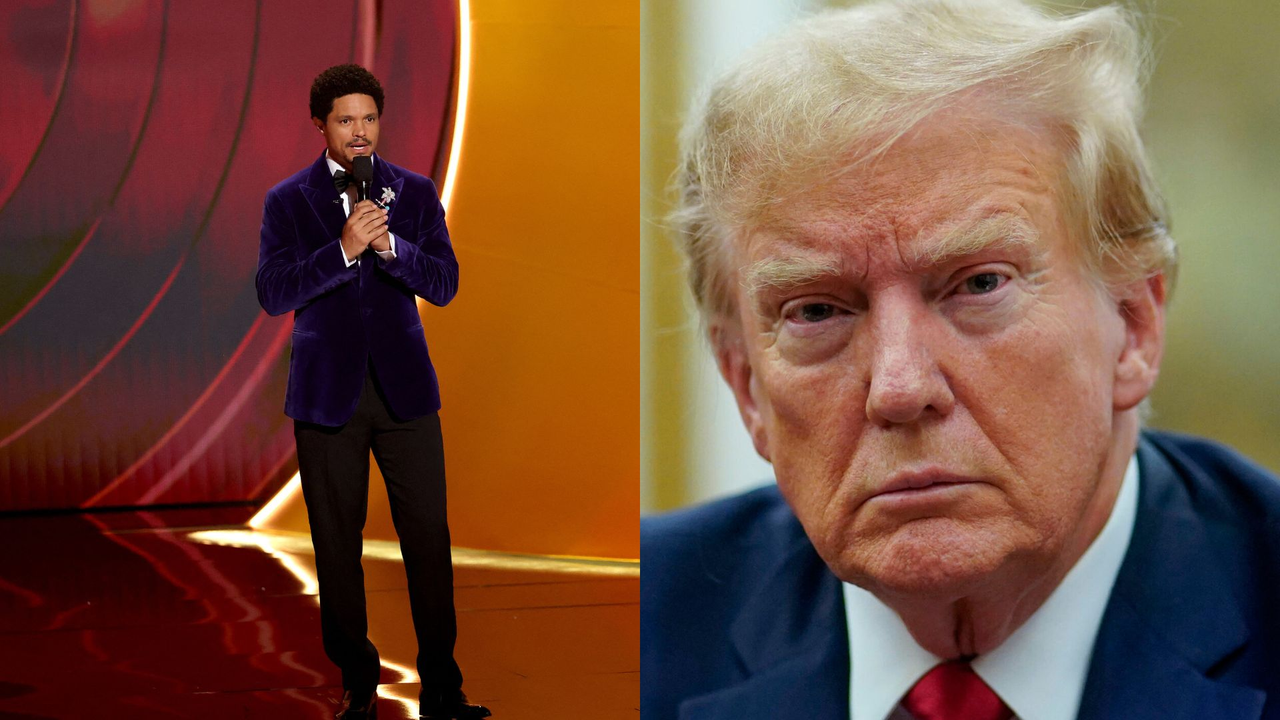
Trump Threatens to Sue Trevor Noah Over Grammy Awards Joke opposition Opposition outlets present Noah’s Epstein Island joke as standard political comedy during a Grammy ceremony that rightly spotlighted immigration protests, and they see Trump’s threat to sue as another attempt to bully critics into silence. They emphasize his history with Epstein and his pattern of lashing out at cultural figures instead of addressing substantive concerns. @El Colombiano
government-aligned Government-aligned outlets argue that Noah’s comment spread a serious, baseless insinuation about Trump and Epstein Island, making Trump’s threat of legal action a legitimate defense of his reputation. They portray the Grammys as a partisan stage weaponized by liberal elites to attack Trump and conservatives under the guise of entertainment. @Noticias RCN During the 2026 Grammy Awards, hosted by Trevor Noah in what was presented as his final year in that role, Noah delivered a joke linking Donald Trump’s past interest in purchasing Greenland to alleged connections with Jeffrey Epstein and Bill Clinton, specifically alluding to “Epstein Island.” The ceremony itself featured broader political overtones, including visible protests by artists wearing “Ice Out” pins to criticize U.S. Immigration and Customs Enforcement and U.S. immigration policy. Both sides agree that Trump reacted publicly after the broadcast, posting on Truth Social where he denounced the Grammys as “the worst,” insulted Noah personally, denied ever being on Epstein’s island, and threatened legal action, characterizing Noah’s remarks as defamatory.
Coverage from both opposition and government-aligned outlets situates the episode within the larger context of Trump’s contentious relationship with entertainment award shows and politically outspoken celebrities. The references to Epstein and Bill Clinton invoke long-running public scandals and conspiracy-laden discourse that intertwine elite politics, sexual abuse allegations, and partisan narratives in the U.S. Both perspectives acknowledge that the Grammys have increasingly become a platform for political expression and critique of government policies, particularly around immigration enforcement and human rights, and that Trump’s response fits into an established pattern of his using social media and legal threats to counter perceived slights and accusations.
Points of Contention
Nature of the joke and defamation claim. Opposition-aligned coverage frames Noah’s Epstein Island quip as a satirical, clearly hyperbolic joke typical of awards-show monologues, implying that it falls squarely within protected political comedy. Government-aligned outlets lean into Trump’s characterization of the remark as a serious and potentially defamatory accusation, emphasizing his explicit denial of ever being on the island. While the former stresses artistic and speech freedoms, the latter stresses reputational harm and presents the threatened lawsuit as a justified response.
Framing of Trump’s reaction. Opposition sources portray Trump’s Truth Social outburst as thin-skinned, disproportionate, and consistent with a long history of trying to intimidate critics with legal threats he rarely follows through on. Government-aligned reporting instead highlights his response as a reasonable pushback against what they describe as a politically motivated smear broadcast on a major platform. The former casts his behavior as an abuse of power dynamics against a comedian, whereas the latter frames it as a private citizen and former president defending himself against false allegations.
Role of the Grammys and political protest. Opposition outlets tend to celebrate the “Ice Out” pins and anti-ICE messaging as legitimate protest and a continuation of the Grammys’ role as a stage for artists to challenge government policy. Government-aligned outlets more often depict the show as hijacked by left-leaning politics, describing it as a hostile environment for conservatives and using that to contextualize Noah’s joke as part of a broader anti-Trump agenda. In this telling, opposition coverage normalizes politicized art, while government-aligned coverage presents it as partisan activism masquerading as entertainment.
Broader narrative about Trump and scandal. Opposition coverage situates the episode within a long pattern of controversies around Trump and Epstein, arguing that comedy often reflects legitimate public questions about Trump’s associations and personal conduct. Government-aligned sources emphasize the lack of concrete evidence tying Trump to Epstein Island visits and cast the joke as exploiting unproven insinuations to damage a political figure. Thus, opposition accounts treat the allusion as a culturally resonant critique, while government-aligned accounts treat it as an irresponsible amplification of rumors.
In summary, opposition coverage tends to frame Noah’s joke as protected satire, depict Trump’s legal threats as overreach, and highlight the Grammys as a legitimate venue for political protest, while government-aligned coverage tends to portray the remark as a potentially defamatory smear, present Trump’s response as justified self-defense, and cast the awards show as a partisan platform targeting him.
Story coverage
Write a comment