Why That Shiny New Quantum Chip Will Not Drain Your Bitcoin Wallet
Every time a tech giant announces a slightly shinier quantum chip, the internet loses its collective mind. Your timeline floods with doom and gloom. The hot takes start rolling in. Suddenly, your uncle in Kuala Lumpur is texting you to ask if his sats are about to get drained by a supercomputer.
Take a deep breath. Your Bitcoin is perfectly safe.
Let us get the technical reality straight. The gap between today’s quantum hardware and a machine capable of breaking Bitcoin encryption is massive. Right now, quantum computers are essentially toddlers trying to build a skyscraper out of wet spaghetti. They operate with a few hundred “noisy” qubits that lose their focus almost instantly.
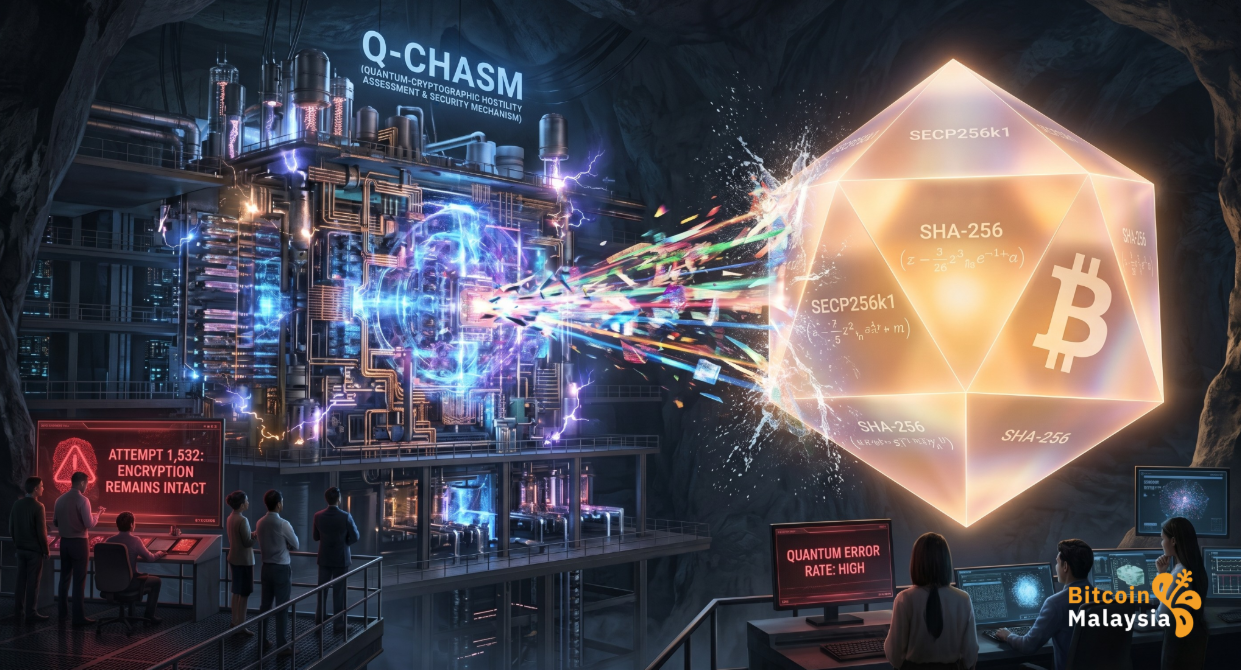
To actually crack the elliptic curve cryptography protecting your private keys, an attacker would need an absolute monster of a machine. We are talking about roughly 13 million perfectly stable qubits running flawless calculations for hours on end. We are not just a software patch away from that reality. Most experts agree we are looking at ten to twenty years of massive, unprecedented scientific breakthroughs before that happens.
And the Bitcoin community is not exactly sleeping at the wheel. The developers and cryptographers who obsess over this stuff have been anticipating a quantum future since the early days of Satoshi. You can see this relentless drive anywhere serious builders gather online. Whether you are hanging out on Nostr or tracking core protocol updates, the energy is focused on proactive defense.
Engineers are already drafting and testing upgrades. There are active proposals for post-quantum cryptography featuring complex math that would make a futuristic supercomputer completely useless.
But you actually have a massive defense mechanism right in your hands today. It is incredibly simple. Stop reusing your wallet addresses.
Think of your public key like the detailed blueprint to a vault. When you receive Bitcoin at a fresh address and just leave it there, that blueprint stays completely hidden from the network. A quantum attacker cannot crack what they cannot see. They only get a tiny window of opportunity the exact moment you broadcast a transaction to spend those funds. So keep your operational hygiene clean and you instantly eliminate most of the risk.
Bitcoin has survived exchange collapses, mining bans, and endless regulatory threats. It has proven time and again that it can coordinate massive upgrades like SegWit and Taproot when the network actually needs them.
So go ahead and ignore the panic-bait headlines making the rounds right now. Keep stacking. Keep your keys offline. Are you really going to let a glorified calculator ruin your sleep?
Write a comment