Everyone Is an Intellectual Now
- WHAT IS HAPPENING. When “Smart” Became a Trend.
- WHY YOU SHOULD CARE. Intellectualism as Status Symbol.
- Subscribe now
Everyone Is an Intellectual Now Apologies in advance, as this one’s partially a rant. But scroll through social media - especially Instagram - and you’ll quickly notice something: almost everyone, from pop stars to brands to your best friend, is working overtime to look smart. This article won’t be just a complaint, though: it’s an investigation into why everything feels increasingly over-intellectualized, and why that matters.
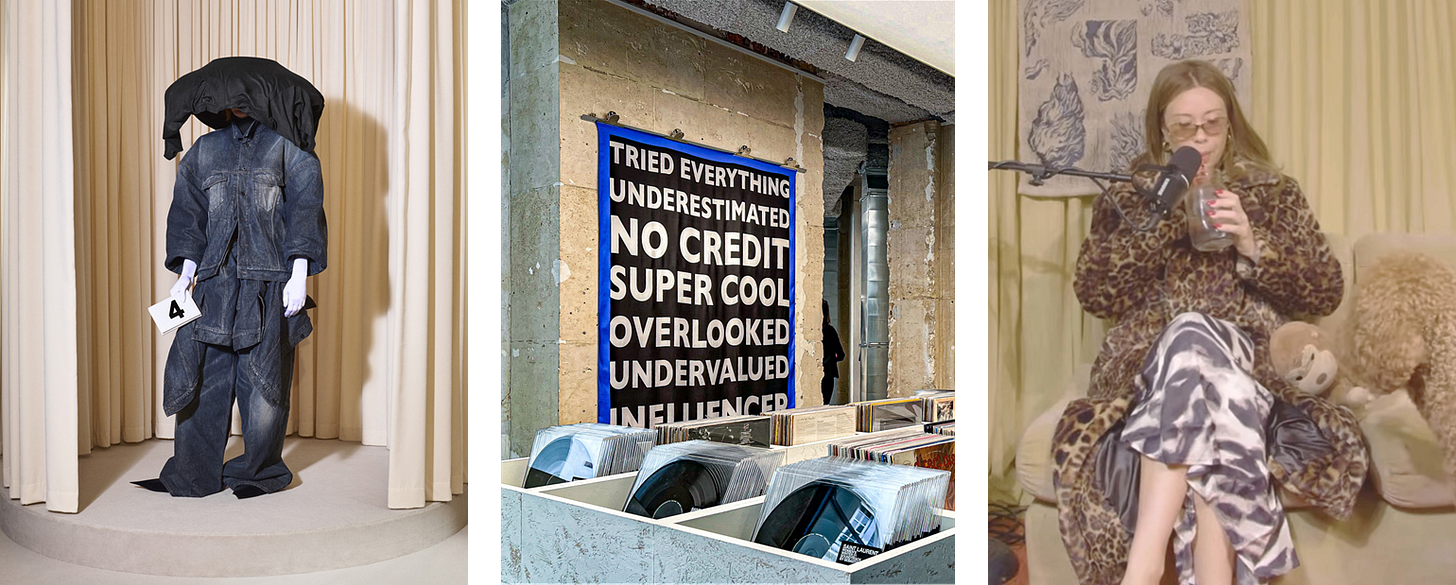
WHAT IS HAPPENING. When “Smart” Became a Trend.
A few weeks ago, Miley Cyrus teased her new album with a series of Instagram posts. So far, nothing unusual. Except for the fact that the captions, referring to the artist in the third person, read more like the curatorial statement of a blue-chip contemporary art gallery than a typical pop star’s promotional post. While a case could be made that pop divas often play with unrelatable personas, fans - especially on Twitter - quickly pointed out how strange this choice felt, almost as though Miley was trying to elevate her upcoming album into a higher form of art that transcended the realm of pop music.
In the fashion world, Balenciaga’s over-intellectualization is another clear example. Before Demna Gvasalia departure to Gucci, the brand was known for introducing provocative concepts, like selling a $925 towel as an accessory or including t-shirts in its Couture collections, attempting to elevate everyday objects into high-concept instruments of critique and, by extension, art.
Looking around on social media, it’s clear that this phenomenon is becoming increasingly widespread. Everyone, from influencers to brands, is trying to look smarter, more cultured, and more interesting, often through associations with exclusive, intellectual, or sophisticated interests and brands. The more unattainable, the better.
But before diving into why this is happening, it is important to note a counter-trend. Take former Bachelor star Gabby Windey, who went viral with her TikToks and her unfiltered podcast, Long Winded. Gabby’s approach is anything but polished or high-brow. With a mix of cynicism, irreverence, and exhilarating humor, she tackles everything from marriage to the latest BlueSky space mission with a refreshing, unguarded style. Earlier last year, Charli XCX’s Brat embraced a similarly raw approach. Charli described her songwriting as “very much like texts I would send to friends. I wasn’t worried about rhyme, or the traditional things; it’s really just about capturing a feeling of chaos and saying the most blunt thing that is at the top of my brain”. This aesthetic was also reflected by the broader brat cultural movement, which emphasized imperfection, spontaneity, and unapologetic authenticity.
Together, these two opposing forces - intellectual performance and raw expression - are reshaping how culture is created, consumed, and communicated today.
WHY YOU SHOULD CARE. Intellectualism as Status Symbol.
In the digital age, what was once a personal pursuit of knowledge and taste has increasingly become a tool for signaling identity and status to others.
The Role of Identity Signaling
Social media exists to connect people, but also to communicate who we are. Every post, share, and like becomes part of the identity we build online. In this context, creating or sharing content perceived as intellectual, or connected to parts of culture perceived as ‘high-brow’, can help project an image of being interesting, cultured, and socially desirable.
This phenomenon closely ties to Pierre Bourdieu’s theory of cultural capital (also introduced here). According to Bourdieu, cultural capital refers to the non-financial assets, like education, taste, and cultural knowledge, that confer social status and power. In today’s digital landscape, showcasing cultural capital online has become a key strategy for signaling intelligence, discernment, and belonging to a certain (higher) social class.
Whereas tastemakers were traditionally defined by unique expertise or deep knowledge, today everyone wants to be a tastemaker, performing taste and knowledge to elevate social standing.
Wearing a Balenciaga T-shirt (or towel) as a piece of high-fashion, for example, signals belonging to a small, insider circle that can appreciate the supposed Dadaist spirit behind such designs. Whether most people engaging with these references are aware of Dadaism itself, however, is an open question.
Today on social media, it’s not about loving culture: it’s about wanting to be seen loving culture.
Brands Curating Culture
A similar dynamic is unfolding at the brand level, as more companies are positioning themselves as cultural curators, with mixed results.
Saint Laurent’s investment in the film industry through Saint Laurent Productions stands out as meaningful patronage, reflecting creative director Anthony Vaccarello’s passion for cinema and enriching the brand’s cultural standing. Elsewhere, however, the line between genuine engagement and strategic branding blurs. At Saint Laurent’s recently opened Babylone bookshop in Paris, it’s fair to wonder: how many visitors are truly invested in the books, and how many are chasing the cultural clout of being seen there and looking for Instagram content?
But the phenomenon of brands’ cultural collaborations deserves an article of its own, so more on this soon.
The Counter-Trend: Anti-Intellectualisation
The anti-intellectualism counter trend, exemplified by Charli XCX and Gabby Windey’s unapologetically raw and viral storytelling, shows that there is still a hunger for genuine expression amid the noise of performance in today’s digital world.
In the end, what truly cuts through isn’t an intellectual caption or the perfect cultural reference: it’s powerful stories. Stories that are entertaining, relatable, and most importantly, true.
Subscribe now
Read the full article https://whyyoushouldcare.substack.com/p/everyone-is-an-intellectual-now
Write a comment