When Gwyneth Paltrow Is The Crisis Management Strategy
- WHAT’S HAPPENING. When a Crisis Becomes a Campaign, and Vice Versa
- WHY YOU SHOULD CARE. Because Strategy Is What Makes Or Breaks A Moment
- INTRODUCING: THE CTRL FRAMEWORK
- Enjoyed this? Subscribe below and get the next articles straight to your inbox.
When Gwyneth Paltrow Is The Crisis Management Strategy This week, we look at how brand crises (when handled well) can become unlikely moments of leverage. Sometimes that means a clever pivot or a perfectly timed celebrity cameo. Sometimes, the celebrity campaign is the scandal. What separates the two usually comes down to one thing: strategy. Plus a framework for spotting the difference.
WHAT’S HAPPENING. When a Crisis Becomes a Campaign, and Vice Versa
In theory, brand crises are things to avoid. But when they do happen, they don’t always have to be a disaster. With the right response, crises can become opportunities in disguise.
You’ve probably seen the Astronomer CEO video by now: a viral clip of him and the company’s chief people officer embracing - and then ducking - at a Coldplay concert. Even Chris Martin noticed, pausing mid-show to joke, “Either they’re having an affair or they’re just very shy.”
But what’s more interesting than the scandal itself is how the company chose to respond.
Astronomer’s unlikely solution? Gwyneth Paltrow. Oscar-winner, wellness queen, and former wife of Coldplay frontman Chris Martin; the casting choice alone adding a surreal layer of irony.
The actress appears in a deadpan ad as Astronomer’s “very temporary spokesperson”, answering the company’s most-asked questions. She deflects (or embraces) scandal, recentering the product while delivering just enough meta-irony to feel strategic. It’s slick, weirdly self-aware, and instantly viral. And it clearly worked. At least in redirecting the conversation.
https://www.youtube-nocookie.com/embed/vich2C-Tl7Q?rel=0&autoplay=0&showinfo=0&enablejsapi=0
But casting a celebrity isn’t always the fix. And sometimes, celebrity cameos themselves are the crisis.
The recent American Eagle “Good Jeans” campaign featuring Sydney Sweeney is a clear example of celebrity campaigns gone wrong. The ad played on the “jeans/genes” pun and leaned hard into Sweeney’s blonde, blue-eyed, all-American image - sparking backlash almost immediately. In a cultural moment when diversity is under threat, the messaging felt tone deaf at best. Whether it was an unfortunate creative choice or a strategy to appeal to far-right ideals through not-so-well-hidden messaging, the result was the same: the ad hit a nerve, and the brand hasn’t yet had a real answer for it.
Right after the ad was launched about a week ago, American Eagle’s stock price went up by about 20% in a couple days - likely due to the “celebrity effect”. But since Monday this week - when the internet started realising the content of the ad and backlash happened - it’s been free falling.
https://www.youtube-nocookie.com/embed/AK8s3iqL99c?rel=0&autoplay=0&showinfo=0&enablejsapi=0
So what makes the Astronomer spot clever and the American Eagle one careless? And what can we learn from brands who’ve done this well - or terribly - before? Let’s get into it.
WHY YOU SHOULD CARE. Because Strategy Is What Makes Or Breaks A Moment
Some brands face unexpected backlash and manage to reframe it. Others walk straight into controversy of their own making: by failing to read the room, pushing the wrong message, or trying to play both sides. This isn’t just about crisis response. It’s about strategy, or the lack of it.
What Good Looks Like: Crisis, Reframed
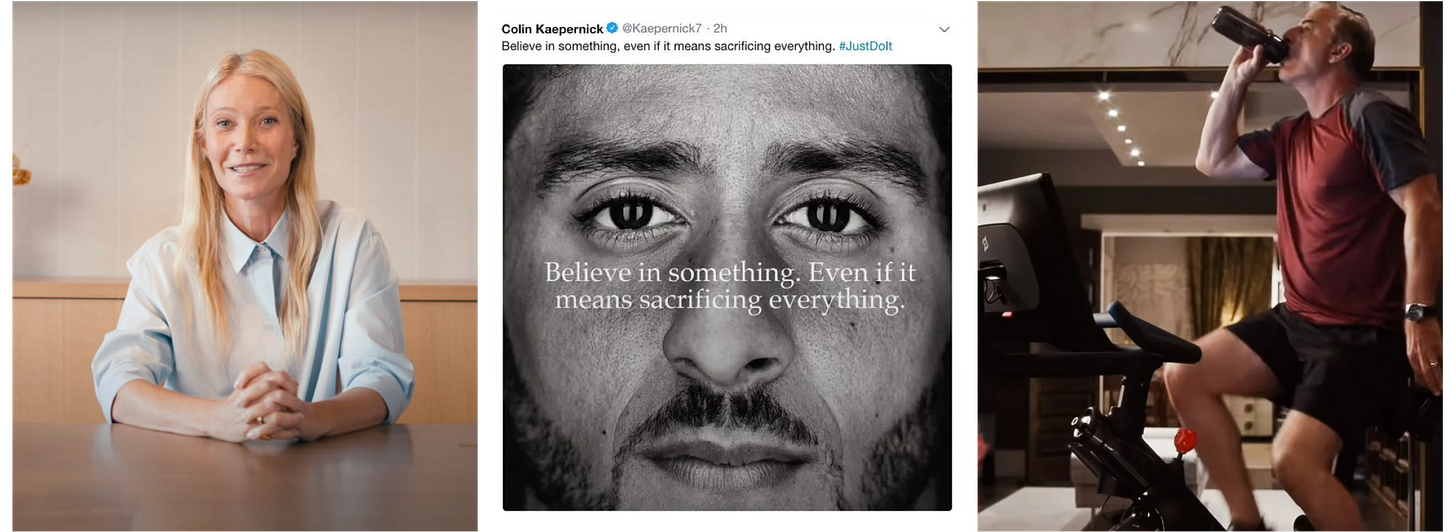
Let’s start with Astronomer. The campaign featuring Gwyneth Paltrow worked for two reasons. First:** multi-layered irony**. The casting itself is surprising, even absurd. Paltrow plays it completely deadpan. The added twist? She’s the ex-wife of Chris Martin, whose concert was the setting for the entire cheating scandal. The layers build.
Second: narrative redirection. Through humor, the ad shifts focus away from the scandal (and the people no longer with the company) and back to what Astronomer does best - data infrastructure. The crisis becomes a vehicle to talk about the product. And people listened, because it was smart, weird, and entertaining.
Another brilliant example: Peloton’s Mr Big moment. After the Sex and the City reboot And Just Like That killed off Big via a post-ride heart attack, Peloton’s stock dropped 11%. The company responded quickly by releasing a new ad: Mr. Big, alive and well, raising a glass with Peloton instructor Jess King. The spot, produced by Ryan Reynolds, ends with a rapid-fire monologue on the health benefits of cycling. The key here wasn’t just irony - it was the** ability to take control of the narrative**. The company turned a cultural whiplash into an opportunity to entertain people, while communicating product benefits.
Then, the story took another spin: actor Chris Noth was accused of sexual misconduct, and Peloton quickly pulled the ad. But again, speed mattered. The spot served its purpose, and was gone before it could become a liability of its own.
(Fun fact: both the Astronomer and Peloton ads were created by Ryan Reynolds’ agency Maximum Effort, which now seems to be quietly specializing in brand resuscitation through storytelling, speed, and irony.)
And then there’s Kaepernick x Nike. In 2016, NFL player Colin Kaepernick knelt during the national anthem to protest against police brutality. Two years later, Nike released an ad featuring the athlete alongside the slogan “Believe in something, even if it means sacrificing everything.” It was bold, polarizing, and totally on-brand. Nike didn’t play it safe; but it wasn’t a random risk either. The message aligned with the company’s long-term narrative around resilience, grit, and individual power. It paid off: the stock rose 7% on a day the market was down.** A cultural stand, backed by strategic coherence.**
What Bad Looks Like. Opportunity, Fumbled
Not every brand move is a pivot. Some are just bad ideas to begin with.
American Eagle’s “Good Jeans” campaign with Sydney Sweeney is a recent case. The ad leaned on a “jeans/genes” pun, visually centering Sweeney’s blue eyes and blonde hair. It landed awkwardly. At best, it felt tone deaf. At worst, it looked like a not-so-subtle nod to eugenics-era beauty ideals, especially in a moment when conversations around race, identity, and inclusion are increasingly politicised. Whether intentional or not, it read wrong. The backlash was swift. The brand hasn’t said anything yet. A case study in what happens when you fail to account for the broader cultural context.
Then there’s the Pepsi x Kendall Jenner disaster, still iconic for all the wrong reasons. Released during the height of the Black Lives Matter movement, the ad depicted Jenner resolving a protest by handing a police officer a can of soda. It attempted to tap into real, charged political discourse, but stripped it of all meaning. No context, no stakes, just a sugary metaphor. The result: one of the most widely mocked ads in recent memory. Unlike Nike, Pepsi wanted the symbolism without the risk. And it showed.
So how do you know whether a brand is actually handling a crisis well, or just hoping it goes away?
INTRODUCING: THE CTRL FRAMEWORK
Every crisis is different, but the best brand responses follow a pattern: one that’s less about panic, more about control.
Borrowing from crisis management models and the above case studies, this simple framework helps turning cultural tension into strategic opportunity. It’s not about damage control. It’s about narrative control.
C - Control the Tone
The first move sets the mood. Whether it’s deadpan, sincere, ironic, or outraged, it has to feel human. If your tone reads like legal wrote it, you’ve already lost the narrative.
T - Time It Right
Don’t rush into the fire just to be “first.” But don’t wait until people have moved on. Reaction speed signals cultural fluency - if it’s thoughtful. Astronomer took a week. Peloton took 48 hours. Both felt intentional.
R - Reframe the Narrative
While an apology might be the opening move, the best responses go further. They redirect. Make the moment about your product, your values, or your audience - not about the scandal itself. Gwyneth talking data. Reynolds talking cycling and heart health. The scandal becomes context, not the headline.
L - Leverage the Culture
Crisis response is brand storytelling in disguise. Use cultural tools: irony, casting, meme logic, self-awareness. Know how your audience talks and what they expect you to say.
Consider the type of scandal, the resulting backlash, and the broader cultural context. Astronomer could afford irony. Pepsi could not.
Enjoyed this? Subscribe below and get the next articles straight to your inbox.
Read the full article https://whyyoushouldcare.substack.com/p/gwyneth-paltrow-crisis-management
Write a comment