Our Need for War ⋅ Metro 2033

The glassy stare of a subway train’s front window reflected everything we have turned this world into—a mirror of ourselves, rife with conflict and hatred: within families, among colleagues, and in the assemblies of nations. We declared war on words, and instead of addressing the words themselves, we struck out at those who seemed to stand behind them. Who is the true enemy, if not ourselves?
“If it’s hostile, you kill it.”
— Hunter
In search of former greatness, we reconstruct the past, for without it, we are nothing. Bringing back the past means bringing back everything we once labeled as friend or foe, good or evil, pleasant or painful. The very act of desiring to reclaim the past implies that this past existed—separate from us. But is that truly the case, once you strip away the tinsel society has created to keep its machine running?

We sell nostalgia to offer products of the future that replicate the past. And the product of the past is war. The engine of technological progress, a source of instant resources, and most importantly, a distraction from oneself. One who runs into this war at every opportunity, because without it, all one has is routine and mundane existence.
A family scandal gives way to an international one, spinelessness at work gives way to confidence among comrades, and self-hatred gives way to hatred of others. Therefore, the other is you—the higher the kill count, the more demons driven to the bottom that we call ourselves. We were trained to win—and so, without a word of protest, we charged into the breach
Tunnel
We build bridges only to destroy them; we extend a helping hand, yet use it to strangle; we sow what we eventually reap. In this internal helplessness, we seek help from outside, which continues our helplessness. No matter what we ask of another, it will never be enough, because we have already decided, within ourselves, that we lack it. When need ceases, we will cease too.

Our fear of death drives us to inflict it upon others. To do otherwise would mean having to stop—and listen to what the voices in the underground are trying to say. Have we ever truly listened to ourselves?
“I know this tunnel, and it knows me.”
— Khan
Station
At rest, we tell stories around the campfire to bring order to the chaos that surrounds us: radiation, lack of food, angry survivors, and nightmares roused from dreams. The Dark Ones. An enemy that both exists and does not. They are terrifying—not in reality, perhaps, but certainly on paper. No one has ever seen one, yet everyone fears them. Whatever they actually see, their superimposed image will glue all the pieces of the horror together.
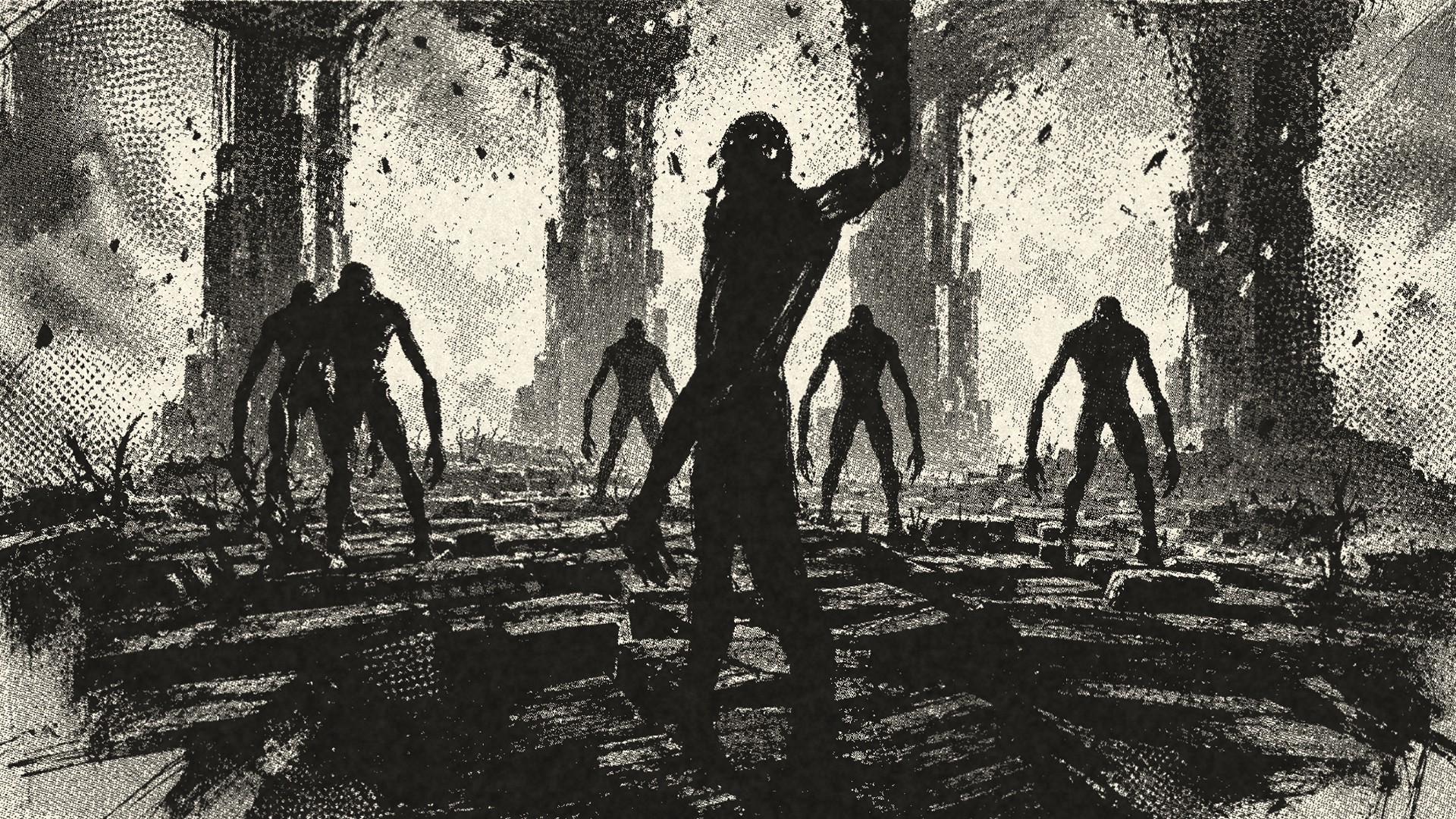
We cherish these moments of rest—our “homes” carved out within the metro stations. It is a fleeting comfort, a shield against the reality that we have no home—and never did. We call the city “home”—yet it was wiped away by a nuclear strike. We call the station “home”—yet it is overrun by an assault from a rival station, leaving no one alive. We call a bunk on a rail-draisine “home”—only to have it seized by a companion, a knife in hand, no longer willing to endure the suffering.
The station is an illusion of a home—a home we have never known, not since the day we were born. The war only exposed our self-deception.
“But this is the only way out. What are you going to do now?”
— Khan
Railway
The vast open spaces will set us free, won’t they? There’s enough land, air, and supplies for everyone—we needn’t even cross paths, let alone stumble into yet another conflict. We’ll draw borders to keep one another at bay. And yet, we end up tearing at each other over lines we’ve drawn ourselves—with sticks, with guns, with words. They call it “diplomacy,” but that’s just another word for war. If you come in peace, why come at all?
If there is no enemy, then for us, he is merely dormant. The enemy never truly vanishes—his disappearance would mean the end of us. Of our allies. Of the “forces of good.” Without evil, we are nothing. Therefore, anyone will fit the role of an enemy, otherwise we will have to attack each other, and ultimately ourselves, remaining in the complete loneliness of our madness. No, it is the mind itself that orchestrates both war and madness.
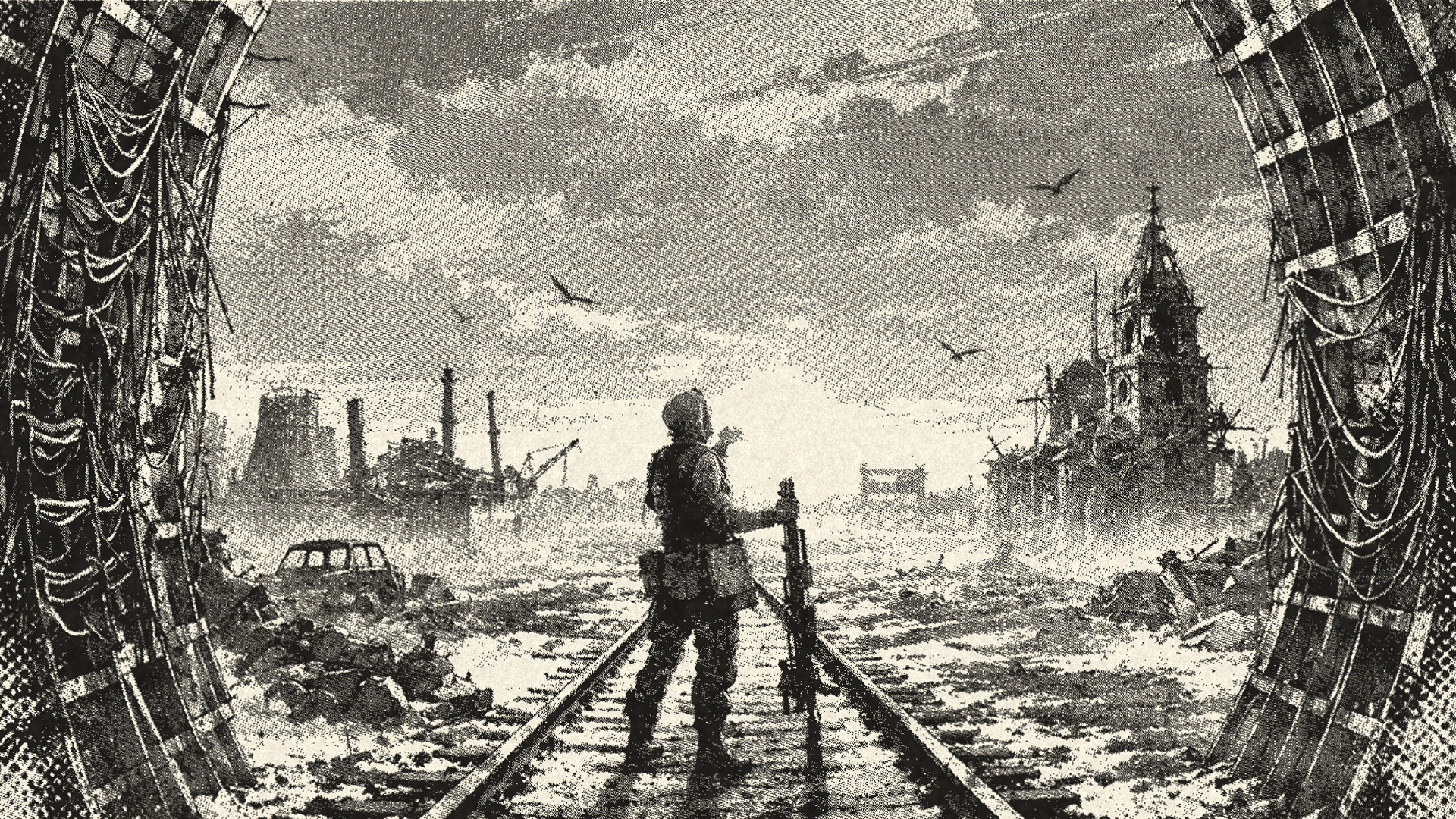
We deceive ourselves and others by hiding the war that travels from end to beginning along the worn-out rails of our brain: hatred—love—generosity—greed—joy—envy. We always need a new destination—otherwise, why on earth would we lay down tracks in the first place? This is war—eternal calculation, guessing and assumption. The fear of life—of its inherent uncertainty—is war itself.
Against whom can you wage war if you cannot tell friend from foe? Who is a friend, and who is an enemy? Who are we, and what is this world around us? Words—the noise of a metro—convince us that every announcement made over the intercom is real. That the enemy is real, that the friend is real—yet neither truly exists. Any friend can turn into an enemy; any station can prove to be the final stop.
The Dark Ones—they are not “them”; they are us. The invaders are not them, but us. Those we call our enemies are merely defenders, having sensed our fear of them. Fear is a reaction to an enemy, and an enemy must be destroyed. The Metro knows this, and so it consumes humanity—even up on the surface. And humanity desires this, because people are afraid to live without fear.
“He who has enough courage and patience to stare into the darkness for his entire life, shall be the first to see the flash of light.”
— Khan
Write a comment