TFTC - Whitney Webb Exposes Hidden Secrets About Epstein, Digital IDs & Transhumanism Plot | Mark Goodwin

Key Takeaways
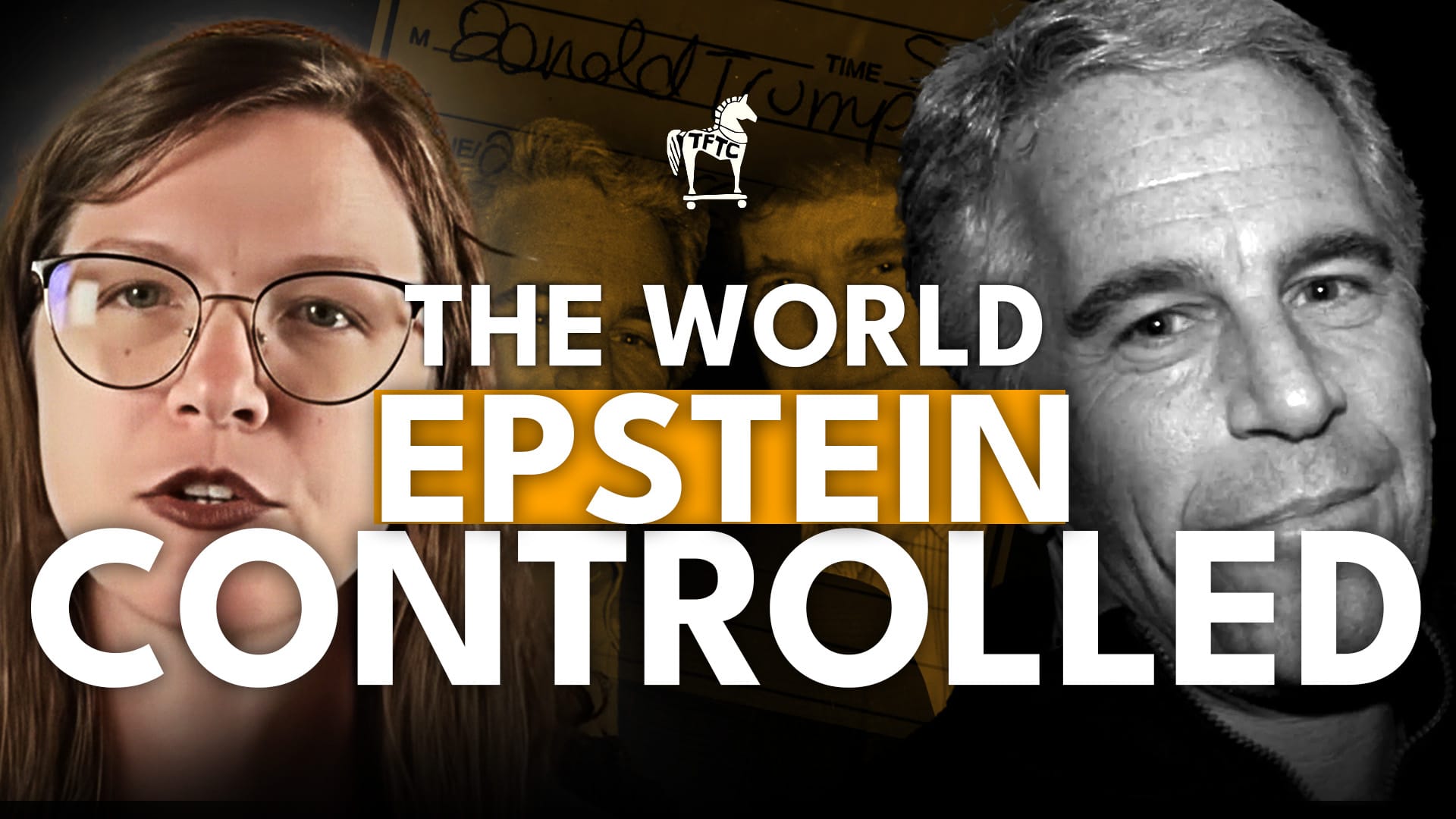
)
Whitney Webb and Mark Goodwin reveal how Epstein-linked ventures, predictive policing firms like Palantir, and digital ID mandates are converging into a global surveillance-financial control grid. From Vietnam’s mass biometric debanking to the U.S. Genius Act’s quiet push for digital ID, governments are exploiting crises to centralize power, censor dissent, and restrict financial freedom. This is part of a broader transhumanist agenda championed by elites like Peter Thiel and Curtis Yarvin, who envision a techno-feudal order. Yet resistance is possible through Bitcoin, Nostr, open-source AI, local self-reliance, and community resilience.
Best Quotes
“Carbine 911 was financed heavily by Jeffrey Epstein… now they’ve slowly taken over the 911 call systems of counties across the United States.”
“In the U.S., it looks like it’s going to slide in with the Genius Act, framed as an essential pillar to financial regulation.”
“Vietnam closed 84 million bank accounts, telling people they could be rebanked if they agreed to biometric ID.”
“They capitalize on real tragedies to justify bigger budgets, more control, and removal of liberties, it’s the same strategy of tension used for decades.”
“Their goal is a humane alternative to genocide: virtualizing the unproductive into pods with immersive VR… a rich, fulfilling life in a completely imaginary world.”
“Digital ID won’t work unless everybody complies. We need to normalize pushing back as much as possible.”
“The end result of cryptocurrency might literally be the U.S. Treasury running the entire financial system if people don’t fight back.”
“Go meet your neighbor, start a garden, raise chickens. Local resilience is how we resist being herded into digital corrals.”
Conclusion
The episode warns that crises, whether mass shootings, terrorism, or financial shocks, are being used to justify an expanding technocratic state, threatening privacy, sovereignty, and freedom. But the antidote lies in building parallel systems: decentralized tools like Bitcoin and Nostr, independent media, and local networks of trust and resilience. The battle is between compliance with digital serfdom or proactive steps toward sovereignty.
Timestamps
0:00 - Intro
1:42 - Palantir mafia and stablecoins
7:57 - Vietnam debanking
10:48 - Noncompliance and speech laws
19:44 - Obscura & Bitkey
21:29 - Precrime infrastructure
30:28 - Platform pressure
34:32 - Al-Qaeda's diplomatic welcome
37:35 - Great Reset rebrand
44:48 - Elite transhumanists
56:29 - SLNT & Unchained
58:01 - Patriot Act expansion
1:04:52 - Manufactured political division
1:23:34 - AI independence and physical media
1:38:58 - Touch grass
Transcript
(00:00) He said, quote, "Our goal, in short, is a humane alternative to genocide, the removal of undesirable elements from society, but without any of the moral stigma. A virtualized human is in permanent solitary confinement. The cell contains an immersive virtual reality interface that allows him to experience a rich, fulfilling life in a completely imaginary world.
(00:25) " In 2019 specifically, they really started selling themselves as preventing mass shootings before they happened. Carbine 911 was financed heavily by Jeffrey Epste. Now, they've slowly taken over the 911 call systems of a litany of counties across the United States. Palanteer was specifically really created to be a pre-rime entity. When people like that say they're not spying on Americans, it's kind of hard to trust them.
(00:44) Kirsty is pushing through digital ID to stop illegal immigration, but it seems like in the US they're actually instead of sneaking it through border stuff, it's going to slide in with the Genius Act. the definition of how the government defines domestic terrorism. It includes people really on both sides of the divide.
(01:02) People that are against perceived government overreach, for example, they use whichever group is convenient to pander to their base to justify us giving up liberty for perceived security. A few of the platforms left where people can kind of have a somewhat of a public square, they're actually a centralized choke point. They're actually picking and choosing companies that have a less chance of being independent.
(01:19) The so-called libertarian elites behind people like JD Vance are very overtly transhumanist and think that the only way forward is to basically merge with machines. They are playing us against ourselves and some of them play the role of we're elites on this side and we're elites on the other side to help engineer the divide and conquer necessary to hurt us into this cattle pin.
(01:43) Guys, it's been 10 and 1/2 months since we since we last caught up. That's a long time. Jeez. A lot of time was we recorded uh I believe November 10th, 2025, which was 2 days after the election. We talked about Palunteer Mafia coming in. And when I was thinking about how to start this conversation, I'm sure you guys saw it, but Alex Karp at the All-In Summit very confidently letting the people of the United States know that Palunteer is not spying on individual Americans.
(02:14) At first I was like, "Oh man, maybe I've really misunderstood Palanteer." And then I was like, "Wait a second." Like, "How how is that possible?" Yeah. Do you remember when like James Clapper lied about how they were uh spying on Americans under oath and didn't get in trouble for it? Mhm. Yeah. I think when people like that say they're not spying on Americans, it's kind of hard to trust them given a lot of the precedents, you know. Yeah. James Clapper, NSA.
(02:43) The NSA is not going to work with Palanteer, though. They can't get the contracts. They don't spy enough. That's what was told. Well, um, pretty sure the contract for all 18 US intelligence agencies. Yeah. Well, I guess a year into the Trump admin, the the last episode we did was like what to expect the next four years.
(03:04) Um, and I think the crux of that conversation revolved around sort of financial stable coin implementation. And I think it's pretty clear that that was a very strong priority this administration. They passed the Genius Act rather quickly. Obviously, we're talking about the PayPal Palunteer Mafia getting more ingrained in the surveillance state here. That seems to be happening.
(03:29) Um, and I think one thing we highlighted was with the immigration policy, watch out for the border. digital IDs are probably um the borders where they're gonna basically Trojan horse digital IDs in. And so yeah, it I mean that's still possible. I think that's definitely what's happening in the UK though.
(03:50) So Kier Starmer is pushing through digital ID to stop illegal immigration, which um you know, previously the Labor Party in the UK was pushing it. You know, this is we're going to stop hate speech and stop online bullying. Um, but it seems like in the US they're actually instead of sneaking it through border stuff and on on those same, you know, um, justifications that the UK government is using, it looks like it's going to slide in with the Genius Act.
(04:14) Um, considering what they've, uh, some of the stuff they've put out asking for comment on uh, after its passage, sort of framing digital ID is an essential pillar to the implementation of um, of the Genius Act. So, so somebody somebody who uh prized himself on being on the cutting edge of all this, I was unaware that digital ID was tied into this. I I assume some KYC AML stuff, but didn't realize.
(04:38) Yeah, it's not it's not directly like there's nothing in the Genius Act specifically talking about digital ID. There's obviously a lot about know your customer and bank secrecy act stuff and and what have you, but I think the the bigger well well so as it relates to the Genius Act specifically, the Treasury did open up, you know, asking for comments and within that, you know, proposition asking for for public comment.
(05:04) they did bring up digital ID and um you know I think people like Lola Leites at the Rage has been covering a lot of the the Genius Act implications for like you know basically using articles of the Patriot Act to push towards a lot of this stuff which is obviously not good but I think what's actually kind of interesting is not so much about the US yet although I think that's it's pretty inevitable that that will come at some point but we're actually seeing the downstream effects of the stable coin legislation passing in the US, other places in the world now, like in the UK, they're limiting how many dollar stable coins or attempting to limit how many dollar
(05:38) stable coins a UK citizen can hold. Um and then we're seeing, you know, mass debanking in Vietnam. You know, I think it was something like 70 something million bank accounts um were closed. Um you know, basically saying, you know, we'll we'll rebank you if you agree to this biometric stuff and uh you know, basically implemented digital ID.
(06:07) Um, and I think the reason for that is, you know, when there's a proliferation of US dollar stable coins across the world and, you know, now there's even avenues for yield to be given to those stable coins, which we're going to see right at some point. Um, you know, why would any foreign national hold anything other than, you know, dollars? Hopefully, you know, Bitcoin if if if you're into that.
(06:31) Um, but why would you hold a local currency when you can hold dollars, get yield from it, and all you need to do to get to it is have, you know, a smartphone. So, I think countries around the world, the euro, you know, the ECB is now putting out comments being like, we're screwed if we let the dollar stable coins take over cuz why would
Write a comment