Center of Hash - The Best Way to Acquire Bitcoin | Kent Halliburton

Key Takeaways
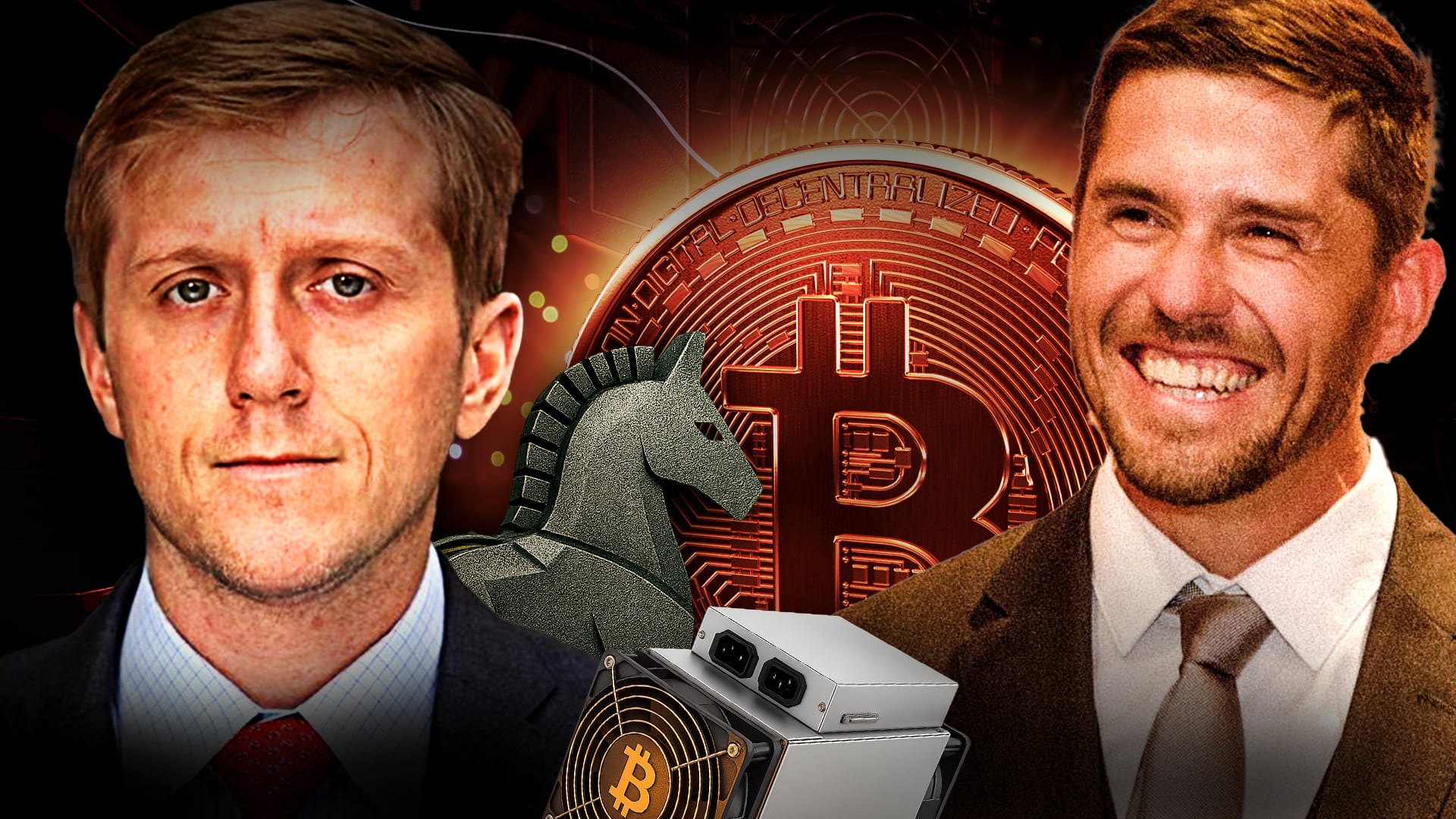
Kent Halliburton (Saz Mining) and Parker Lewis argue that mining, not buying, is the most Bitcoin-native path to acquisition: it converts cheap, stranded, or flexible power directly into “wild sats,” avoids point-of-purchase volatility, and can undercut exchange prices when energy is sourced efficiently (e.g., hydro in Paraguay/Ethiopia/Norway/Wisconsin). Halliburton frames mining as an upstream manufacturing process where energy becomes digital scarcity, predicts “sats per kWh” will rival “dollars per barrel,” and stresses that decentralizing rig ownership plus pool choice (e.g., Ocean integration) strengthens Bitcoin’s social and technical resilience. Saz’s mining-as-a-service model aligns incentives by charging only a 15% share of mined rewards, vetting long-term partners, diversifying jurisdictions, and focusing on Bitcoiners who want to accumulate BTC, not fiat returns, thereby repatriating value to local grids and turning excess capacity into export income while building a broader Bitcoiner-run hash base.
Best Quotes
“I actually don’t see Bitcoin and energy as separate, they’re flip sides of the same coin.”
“Mining is where reality hits Bitcoin.”
“Most of the network’s centralization issues exist because Bitcoiners stopped mining and started buying.”
“We only make money if you make Bitcoin.”
“Sats per kilowatt-hour will become the new dollars per barrel.”
“If every Bitcoiner visited a mine, they’d understand how real Bitcoin actually is.”
Conclusion
Mining anchors Bitcoin in physics, aligns operators with users, and decentralizes control of the network; by pairing low-cost renewable power with incentive-aligned operations and pool optionality, Saz’s approach shows how individuals can steadily accumulate BTC, strengthen grid and industry economics, and reduce central points of failure, pushing Bitcoin back into the hands of Bitcoiners while turning wasted energy into lasting monetary sovereignty.
Transcript
(00:04) Kent, thanks for coming to Austin. Excited to record this podcast, Center of Hash. I think we’re at episode 10. We skipped a few weeks, but uh first how was your first CrossFit this morning? Oh, it was fun, man.
(00:23) It’s been a lot of years since I’ve been in a gym and working out with a bunch of dudes like that. So, yeah, it was fun. Um, and I will be sore and not certain if I’m going to be able to uh put my bag in the overhead bin after all those uh presses. Guys and girls, we got a we’ve got a a Bitcoin group that goes to uh CrossFit a couple days a week.
(00:44) And um so both both represented, but you hadn’t done it before and it was good to get you out there. Yeah. Good way to start the day. Yeah. Thank you. And it’s fun to be here, man. I’m glad to be recording with you. And you were at you were at Tabcom just before this. Yeah, that was real the real uh um motivation to to get into the US.
(01:04) You know, I live abroad, but uh came came for Tabcom, you know, uh development and developers are a big part of our our business at SAS Mining and so uh came to to, you know, rub elbows with that community and learn what I could and then flew here to Austin afterwards to record with you. Quick shot over to Austin from Atlanta before going back to South America. Appreciate you you sliding through. Um, so you’re founder and CEO co-founder co-founder. Yeah.
(01:28) And CEO of SAS mining, a Bitcoin mining company to set a baseline. Before we get into the mining business itself and how you guys approach it, explain a little bit about your background in energy and what led you to both Bitcoin and Bitcoin mining. start specifically with with your background just to give some of that color and context. Yeah.
(01:54) So, I I know everybody’s got a unique path, right? I just think that mine is a little a wider weave than most uh to get here. So, I um did computer engineering in California. um actually did it on if you know who Bob Bernett is, CTO of Gateway Computers. I uh got a computer engineering degree on one of his computers that he designed which is very synchronous because he’s now a an adviser for SAS mining and friend.
(02:22) Um but uh I did computer engineering and then I got quite passionate about solar rooftop solar specifically. And so from about 2008 until 2005 excuse me to 2014 I worked in that industry and um there’s a lot of parallels to mining. I didn’t realize it at the time obviously uh but in that industry you know I ran sales software and postacquisition integration for a publicly traded company where we had like nine figure revenue targets and the odd thing was at that point in time I was competing with like Elon Musk’s cousins that he was helping to support. So those were kind of my primary competitors. But then the board of the
(03:02) the company I was working for, they decided to bring in a new CEO and I said, you know, I’ve always had a dream of seeing the world, so this seems like a good time to exit Sage Left. So I threw on a backpack and I traveled, took a couple years satical.
(03:18) And during that 2-year time frame between 2014 and 2016, I fell in love with the Portuguese woman and Bitcoin. So my life restarted in Portugal in 2016. What was first? The Portuguese woman or Bitcoin? Portuguese woman. Yeah. But it was uh oddly enough uh both happened in Peru and within uh about a year of each other. Yeah. So kind of kind of odd and I now live in Peru. Um but the the story for how I got to Peru is is uh is that I was in Portugal.
(03:46) Um tried my hand at all sorts of different Bitcoin entrepreneurial activities. Um, and ultimately after reading Jeff Booth’s The Price of Tomorrow, there’s a chapter on solar and Bitcoin mining. I was just like, “Oh my gosh, what have I been doing? Let me figure out how to get into mining.
(04:03) “ And so had a mutual acquaintance uh from the solar industry that knew uh the founder of SAS Mining put us in touch and I joined up and helped the founder raise some capital and pivot the business into what we’re now doing. Uh and then eventually the founder actually handed it off to me uh to to run the business. But during this time uh my wife and her work uh actually took us to Peru.
(04:25) So that’s how I ended up in Peru since about 2021. We’ve been living there. At a top level, how do you think about solar energy in relation to Bitcoin? Bitcoin mining. Yeah, I think there’s an inevitable collision that’s going to happen there. Um and I don’t think that all the technologies fully been worked out yet. And I think the magic piece of that is batteries.
(04:50) Um, as the cost curve of those come down, see the thing about solar that I think a lot of people miss in our industry is that it’s very analogous to Bitcoin mining. Um, so it’s decentralized, distributed, disruptive to the grid. You’re importing it from China primarily and the infrastructure the infrastructure. Yeah.
(05:15) panels themselves come mainly from China and then your uh profits are constrained by an energy network. All of those characteristics are the same for mining. Now the cost curves for solar have come down faster than any other industry uh or energy source and you partner that with the fact that solar is the only way we can make electricity without moving anything means that the longevity of solar panels is incredible truly.
(05:39) Um I think it’s an applicationspecific issue, but as uh solar integrates further and further into the the energy networks along with batteries, I think that Bitcoin mining is kind of the third leg of that stool that’s really going to make that come alive in a big way. And I’m not I’m not as big a fan as like the industrial or the the mass uh solar farms as I am like use the real estate that’s already on people’s roofs.
(06:02) But at a certain point when solar gets cheap enough, which it is trending that direction, it’s going to be pretty ubiquitous. I mean, you see China installing just incredible amounts of solar power right now, more than any other energy source. Before we get to Saz, you mentioned reading Jeff Booth the the price of tomorrow, having your background, if you could just discuss a little bit of that rabbit hole and your own kind of journey to Bitcoin at a more detail like what made it click for you and then um kind of your initial thinking and how that might have evolved from when that
(06:39) was. Oh man. So I I first bumped into Bitcoin in 2015 and this was uh during the time when I was on the sbatical and I was traveling and you know getting money in different countries was always just kind of a pain in the ass, right? And so as I uh as I just stumbled into, you know, I had free time.
(07:03) I was living in the sacred valley of Peru for a couple of months and I was just going down different rabbit holes and studying different things and I came across the white paper, read it, I was like, “Oh, this is interesting. I’m going to go check it out and buy a little bit and play around with it.” And just as a computer engineer realizing, “Oh, I can transfer value all over the world and I don’t have to be restricted in this way that I have been as I’ve traveled and trying to get money out of various ATMs. like this is incredible.
(07:26) So that was kind of the step one and then I got sucked into, you know, the the the shitcoin wheel of Samsara, right? That kind of fukes you out and you get to the other side, you know, purified and realizing that really I should be in Bitcoin, you know, I I did that for a couple years. Um but that process uh I I always came back to the signal that I was reading various books about Bitcoin itself and money and I think really you know that that fundamental question what is money uh came to the surface and as I studied that there’s just several aha mom
Write a comment