TFTC - Commercial Real Estate Crisis Worse Than 1990. Bitcoin Adoption Changing The $37T Market | Chris Drzyzga

Key Takeaways
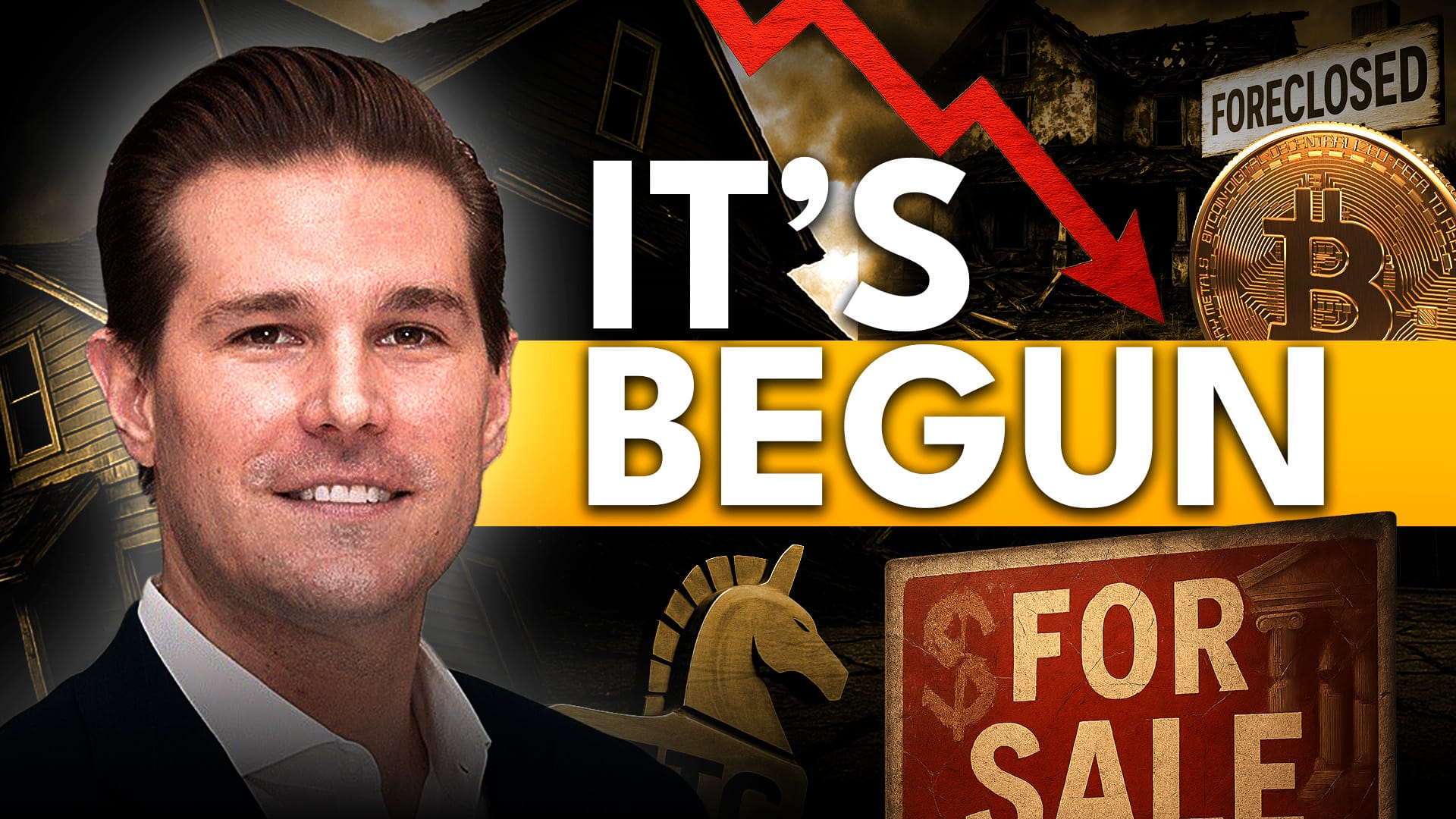
)
Commercial real estate isn’t just in a downcycle; it’s hitting a structural wall: 87B sq ft in the U.S., with 62% built pre-1990 and 60% privately owned, much of it now functionally/economically obsolete. Rising rates, AI-driven business shifts, and double-digit energy inflation (often 30% of OpEx) have killed the old “value-add and flip” playbook. Chris argues operators need a four-part reset: (1) a Bitcoin-forward capital plan (treasury allocation, and yield/credit via products like MicroStrategy’s Stretch and dual-collateral loans), (2) energy optimization up to and including integrated Bitcoin mining to turn a cost line into revenue, (3) proptech for stickier tenants and real-time ops data, and (4) modular TIs to preserve capital and shorten downtime. The Fed can’t fix obsolescence or demographics; competing with Bitcoin’s return profile and liquidity requires truly re-architecting how assets are financed, operated, and upgraded.
Best Quotes
“I’m not saying real estate’s going to zero, but to proceed like it’s business as usual, like it’s just another cycle — that is a very dangerous approach.”
“62% of U.S. commercial property was built before 1990. Much of that supply is obsolete, and 60% of it is privately owned. That’s mom-and-pop America.”
“When you integrate Bitcoin mining into your asset, you’re not just cutting costs, you’re turning an expense line into an income stream.”
“The real estate industry keeps saying, ‘It’s cyclical, we’ve been here before.’ They’re missing the structural changes right in front of them.”
“At some point LPs will realize they can outperform real estate’s high-teens returns by simply holding Bitcoin.”
“This transition will flush out the malinvestment, separate the pros from the wannabes, and reward those who adopt real strategies.”
“I’d rather trust MicroStrategy’s capital stack than the clowns in Washington.”
“If you think the Fed’s going to save this market, you’re not paying attention, interest rates can’t reverse AI, demographics, or Bitcoin adoption.”
“Bitcoin, energy, and real estate are colliding. We’re taking single-purpose, depreciating assets and turning them into resilient financial machines.”
“When the books are written about this transition, I’d rather be remembered as the crazy Bitcoin guy who tried to warn everyone.”
Conclusion
This isn’t a quick patch; it’s a decade-long rebuild where balance sheets, financing, and building systems get Bitcoin-native: accumulate BTC, adopt self-custody, explore dual-collateral credit, mine where it pencils, deploy proptech, and shift to modular improvements. Buy only at reset bases (bankruptcy/steps or well below replacement cost) and then run the new playbook; those who do will survive the reset and potentially thrive, while those waiting on the Fed will watch obsolescence compound. The next CRE recovery will be bottom-up and Bitcoin-powered, a grassroots modernization of assets and communities without permission from central banks.
Timestamps
0:00 - Intro
1:00 - Real estate meets bitcoin
8:50 - How bad is commercial real estate right now?
11:33 - Economics of building ownership and timeframes
24:27 - SLNT & Bitkey
26:15 - The four pillar strategy for real estate operators
31:43 - How the pitch has been received
35:23 - Obscura & Unchained
36:49 - Regulatory burdens
46:10 - Industry is catching on
49:40 - Bitcoin cycles colliding with real estate cycles
52:29 - Game plan for RE investors
57:03 - Improvements bitcoin can make
1:00:29 - Optimistic outcome
Transcript
(00:00) I'm not saying that real estate's going to zero, but to proceed like it's business as usual, like it's just another cycle, that is a very dangerous approach. In the short term, I think it'll be more of a meltup situation. But there's going to come a point in that process where there's no marginal buyer for the bottom 75% of the stock.
(00:19) The Fed's not going to allow another real down cycle to occur. There's about 87 billion square ft of commercial property. 62% of that supply was built before 1990. How much of that supply is functionally and economically obsolete? 60% of the supply is owned privately. That's a huge problem. All markets energy the last handful of years is increasing double digits.
(00:41) It's taking this singlepurpose monolithic appreciating asset and turning it into this financial machine positioned well for the 21st century. Last piece of the puzzle was cash flow piece. Bitcoin's keer could have been 200% a year. Chris, good morning to you on the West Coast. Early afternoon for me. How are you? I'm doing very well, Marty. How are you doing well? Excited for this conversation.
(01:11) I mean, we've been talking about the intersection of real estate and Bitcoin for a few years now. Right before we hit record, you mentioned Leon Wonkom. We've had Andrew Hones on the show, uh, and a few others to talk about this.
(01:29) And recently we've had some real estate experts that really aren't focused on Bitcoin that have come on. So I think this is going to be a good continuation conversation. Um and you're someone in the real estate industry in California specifically that has decided to come out and sort of ring the alarm bells in August. On August 20th, you sent out a tweet. That's your pin tweet. A warning and a call to action for the entire real estate industry. Real estate is at a breaking point.
(01:56) monetary debasement, 62% inventory obsolete, new financial products competing for capital. And so it seems like you're very well ingratiated in the real estate industry. You're a Bitcoiner and you see the writing on the wall of some of the problems in the real estate industry and you think Bitcoin is a potential solution to the problems that exist.
(02:17) Uh that's absolutely right. Um, you know, I I've been kind of watching this, uh, you know, from the sidelines, so to speak. You know, uh, having a career in the commercial, uh, real estate world and and being a Bitcoiner on the side, uh, for almost a decade now. Um, I joke I I tend to round up.
(02:42) I'm probably seven or eight years in or so, but um just watching it and thinking through you know what this means and and you know the second and third uh kind of derivatives of the you know the disruption um that's going to take place here and um it's just gotten to a you know a tipping point where you know I couldn't sit back anymore um and just had to speak up started to put uh um some thoughts down on paper.
(03:10) I kind of been baking a strategy for a handful of years and you know the really the last piece of the puzzle was um the cash flow piece. So you know I I I've said to others that Bitcoin's keer could have been 200% a year. Um it it didn't matter. There was a large segment of the real estate world that was just not going to you know give it any attention um because of that cash flow component. Um, and there's obviously arguments for and against that. I get it.
(03:35) But, um, when Sailor and and Strategy started releasing these preferred offerings, um, that provided that cash flow stream built on top of Bitcoin, that was when I was like, "Oh boy, here we go." Um, now we got to start talking about this because like it, hate it, um, whether you understand it or not, I mean, these are viable competitors um, to the real estate industry, not just the bond markets.
(04:01) So, um I I just started talking about it and here we are today. And I think it's good that you're in the commercial real estate space because recently we had um Melody Wright on talking about residential real estate and I I think it's important to draw a line uh between the two and really highlight the sort of differences of each.
(04:26) And we went pretty deep on residential real estate about a month ago. And so I think commercial real estate's a different beast particularly in a postcoid world where you had everybody rushing to work from home and uh seems like a lot of the commercial real estate properties were under stress during that era and still to this day.
(04:44) So I guess to take a step back and just talk about the problem before we jump into certain solutions. How bad is it out there? Yeah, I mean that's a good question. the the commercial real estate um sector in and of itself, I mean, it's vast. Um people tend to paint it with just a you know, a broad brush, but you know, they overlook the fact of how many different property types and and specialties make up the commercial space.
(05:15) And each of them have their own um dynamics, their own supply, demand dynamics that make it up. um you know deals get done very differently um across each of these product types. So, um, there, you know, you we could have a podcast, a long form discussion on literally each one of those specialties, but I mean, just at a high level, I mean, you obviously have Bitcoin, which is, you know, it's going to it is disrupting the industry massively and it's only going to pick up steam.
(05:47) But when you zoom out and you start to look at or or consider all the other uh macro forces that are uh colliding at the same time, right? I mean, you cover a lot of them on your pod um regularly, right? Demographics, technology, AI, automation, uh robotics, uh different generational expectations and consumer demands. Um a long-term debt cycle ending a new monetary regime emerging.
(06:13) I mean, you you stack all these major um forces up and then you turn around and look at the commercial real estate markets just in the United States and it's in the United States there's about 87 billion square ft of commercial property just roughly. That's the four major food groups um office, industrial, retail and uh mul
Write a comment