The Architecture of Power. Chapter 1. Before America
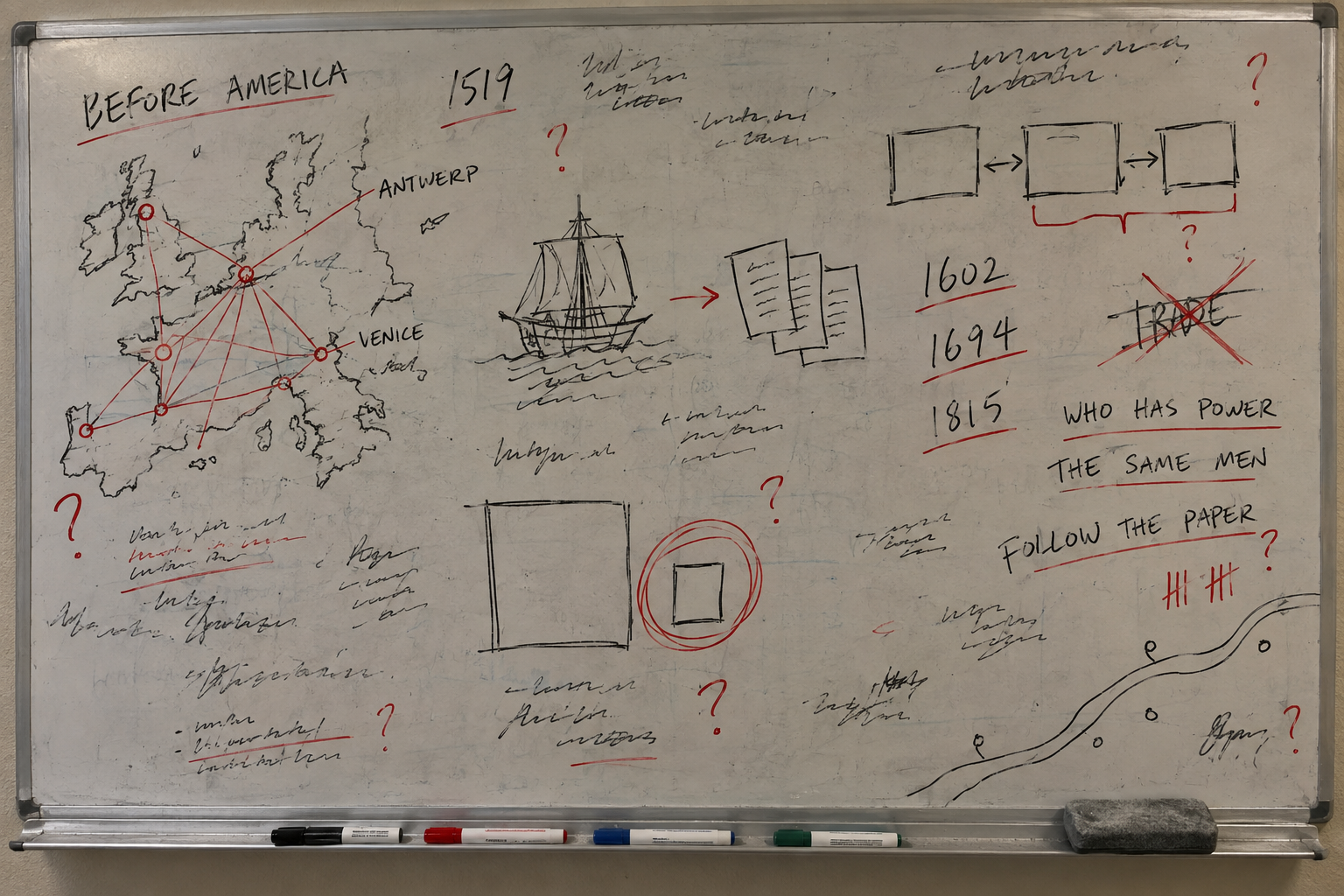
In 1519 a merchant from a German town bought the Holy Roman Empire.
Not a figure of speech. The throne went to an election, seven prince-electors held the votes, and the votes were openly for sale. Jakob Fugger put up more than half a million florins on behalf of one bidder. His man won an empire running from Vienna to Peru.
Four years later Fugger wrote him a letter. It survives. The tone is a contractor chasing an unpaid invoice, and the content is a banker informing an emperor that he would not be emperor otherwise.
No lodge, no secret oath. A ledger.
That’s where this series starts, four hundred years before America existed, because every piece the Americans later assembled was invented somewhere else first. Paper that moved money without moving the gold. The first slip you could sell to a stranger who’d never seen the thing it represented. A bank built so the king couldn’t rob it.
And then the part nobody repeats, because it ruins the story people want to tell.
Fugger’s fortune was destroyed. Not by a rival, not by a revolution, not by anyone who ever plotted against him. By the grandson of the emperor he bought.
Which raises the question the whole series runs on. If the richest man in Europe could be wiped out by the throne he purchased, then who actually had the power in that room?
Episode one. 1000 Sats.
⚡ Zap 1000 sats to unlock the full article on
https://fanfares.io/naddr/naddr1qvzqqqr4gupzptwpf7366kgg2mwchqypt5m87lq7vu666q8anz5x6qp0h60m2d0pqyvhwumn8ghj7enpdenxzun9wvhxummnw3erztnrdaksqfrrx5ekvwtxxqej6dpkvsuz6dphx93j6wfsx33z6ctrxg6kydesv3nrgwfs4szpc4
Write a comment