The Curious Architecture of News: What Five ECNS Stories Reveal About Narrative Design
- A Day of Stories
- The Pattern Beneath
- The Primary Story’s Special Weight
- Why This Matters Beyond ECNS
- Reading Against the Grain
- References
On June 18, 2026, five stories appeared side-by-side on the same news wire from China News Service (ECNS). Each one tells a story of progress, innovation, or cooperation. But when placed together, they form something more deliberate than random reporting—they reveal patterns in how institutional narratives are constructed.
A Day of Stories
Story One: Iranian and U.S. presidents signed a peace Memorandum of Understanding digitally, according to ministry spokesmen. This was not merely bureaucratic language; it was the formalization of a relationship that had been hostile, even violent months prior. The opening paragraphs were measured and fact-based, citing exact dates and signatures. But the concluding section returned readers to “related news” describing joint attacks launched in late February, naval blockades, and tightened control of strategic waterways. A diplomatic agreement emerged from the shadow of ongoing conflict—a moment of legitimacy absorbing residual chaos.
Story Two: Traditional Chinese Medicine in Chongqing now integrates AI diagnosis. Patients receive meridian status data, constitution types, and personalized health regimens within minutes via mobile devices. It’s efficiency meeting ancient practice, modernization wearing a familiar face.
Story Three: Zongzi—sticky rice dumplings wrapped in bamboo leaves—exported from Jiaxing surged ahead of the Dragon Boat Festival. Cultural food products reaching international markets before a traditional holiday. Local flavor becoming global commodity.
Story Four: Researchers turned optical fibers into “mini dexterous hands.” Scientific breakthrough presented as matter-of-fact achievement. No fanfare beyond the technical accomplishment itself.
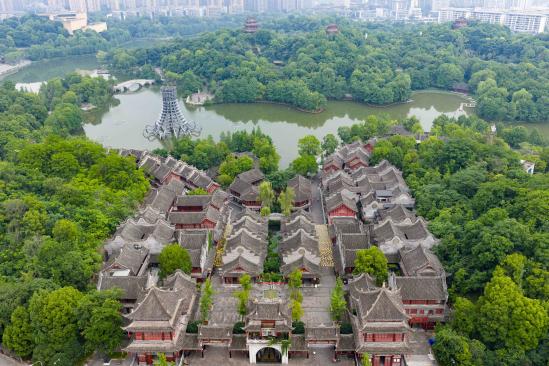
Story Five: Overseas media toured Xiuhu Park in Bishan District, Chongqing, witnessing the transformation into a “park city.” Thirty-eight themed parks across the district, all free to public use, weaving a 15-minute park living circle. Green development meets urban planning meets external validation through visiting journalists.
The Pattern Beneath
There is a consistency to these stories that goes beyond coincidence. Each one moves toward construction, modernization, or cooperation. When infrastructure fails or faces challenge (like the heavy rainstorm mentioned in related coverage of Chongqing), rescue operations are underway—the narrative pivots to response capacity rather than systemic vulnerability. When geopolitical tension exists, diplomacy resolves it formally. When technology advances, it serves people. When tradition persists, it adapts efficiently.
A reader might ask: what is missing?
Difficult questions remain unasked by design. Environmental damage during construction gets reframed as ecological restoration. Diplomatic friction becomes signed agreements without lingering dissent. Economic pressure transforms into export growth. Social challenges appear as cultural celebrations. This is not necessarily distortion—it is editorial architecture. The frame itself performs a function: presenting institutional capacity as responsive, adaptive, and forward-moving.
The Primary Story’s Special Weight
Among the five, the Iran-U.S. MoU carries disproportionate weight precisely because it does acknowledge conflict, however indirectly. Its narrative arc—calm opening leading to rougher closing—suggests an honesty about the conditions under which legitimacy operates. Institutional agreements don’t erase history; they absorb it, manage it, and attempt coordination despite its persistence. That difference may matter more than surface similarities suggest.
Most other pieces follow a cleaner trajectory: problem identified, solution implemented, positive outcome achieved. The MoU story resists that simplicity, instead showing legitimacy emerging from unresolved tension. That nuance makes it a structural pivot point in the day’s news cycle.
Why This Matters Beyond ECNS
State-affiliated news wires across nations operate under similar constraints. The question isn’t whether China News Service presents a particular lens—every outlet does. The question is what happens when that lens becomes the primary source for understanding systemic outcomes.
When environmental policy always looks like success, when scientific achievement never shows failure, when diplomatic relations only display resolution, readers develop expectations about how the world functions. Those expectations shape engagement with institutions themselves. A society that reads only stories of coordinated legitimacy may struggle to recognize genuine dysfunction when it appears. Or conversely, it may develop confidence in institutional capacity precisely because those narratives reinforce trust.
Both outcomes carry value. Both require critical awareness to navigate effectively.
Reading Against the Grain
The five stories selected from June 18, 2026, work well together. They complement rather than contradict. They build momentum toward a coherent vision: systems that adapt, leaders who coordinate, technologies that serve, traditions that endure, and cities that breathe green space for all residents.
Whether that vision reflects reality depends on sources beyond any single wire service. But analyzing these stories reveals something valuable regardless of truth claims: narrative coherence is itself a form of power. How we tell stories about governance shapes what kinds of governance feel natural, inevitable, or desirable.
The real skill lies not in accepting or rejecting the frame, but in recognizing it—and asking what else might be happening beneath its edges.
References
- Iranian, U.S. presidents sign peace MoU digitally: ministry spokesman
- From pulse-taking to AI diagnosis: Chongqing explores digital and smart upgrade of TCM
- Jiaxing zongzi exports surge ahead of Dragon Boat Festival
- Chinese researchers turn optical fibers into ‘mini dexterous hands’
- Green transformation of Chongqing’s ‘park city’ efforts draws overseas media
Write a comment