The German Airport Drone Is Testing Europe’s Ability to Separate Threat from Proof
The German Airport Drone Is Testing Europe’s Ability to Separate Threat from Proof
An explosive-laden drone found near Ukrainian aircraft at Leipzig/Halle Airport has turned a runway disruption into a wider test of Europe’s security judgment: officials see a dangerous new threat, while political and media voices debate who, if anyone, ordered it.
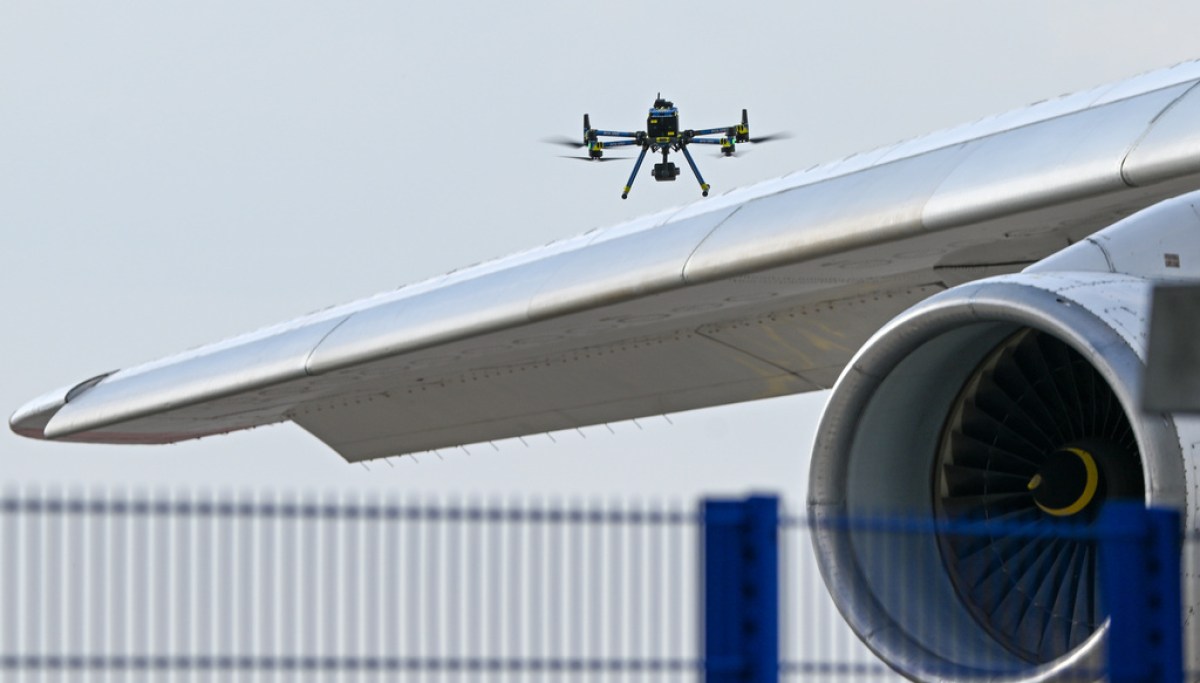
The immediate facts are stark. Police discovered the drone in a secured cargo area near the southern runway, prompting a temporary shutdown, flight diversions and a bomb-disposal operation. A second unidentified object later collided with a cargo aircraft, which landed safely with minor damage. Germany’s interior minister, Alexander Dobrindt, called the discovery “a new threat scenario” and described it as a possible “hybrid attack scenario.”
That account stresses escalation without assigning blame. The airport is a major freight hub, a NATO and German military logistics site, and the European base for Ukrainian Antonov aircraft—making the location strategically sensitive. Yet authorities have said the drone’s origin, explosive composition and intended target remain under investigation.
Liberal-leaning coverage draws a more pointed preliminary conclusion. One analysis said the evidence “points firmly towards a Russian-orchestrated plot,” citing the drone’s military-style construction, its proximity to a Ukrainian plane and a history of suspected Russian sabotage operations in Europe. It also warned that the failed detonator may have prevented a far more damaging attack, quoting an expert who said the explosive quantity would have been “enough to do considerable damage” to an aircraft.
A second report presents the same suspicion but preserves more institutional caution: officials did not explicitly name Russia, even as Ukraine’s ambassador, Oleksii Makeiev, asked, “Who else could it be but Russia?” The contrast is consequential. The incident clearly demonstrates a vulnerability; attribution, however, remains an inference rather than an established fact. Europe’s challenge is to close that gap before the next device is found—or detonates.
Write a comment