Idaho Shooting Video Reveals a Rampage Shaped by Armed Resistance and Civilian Courage
Idaho Shooting Video Reveals a Rampage Shaped by Armed Resistance and Civilian Courage
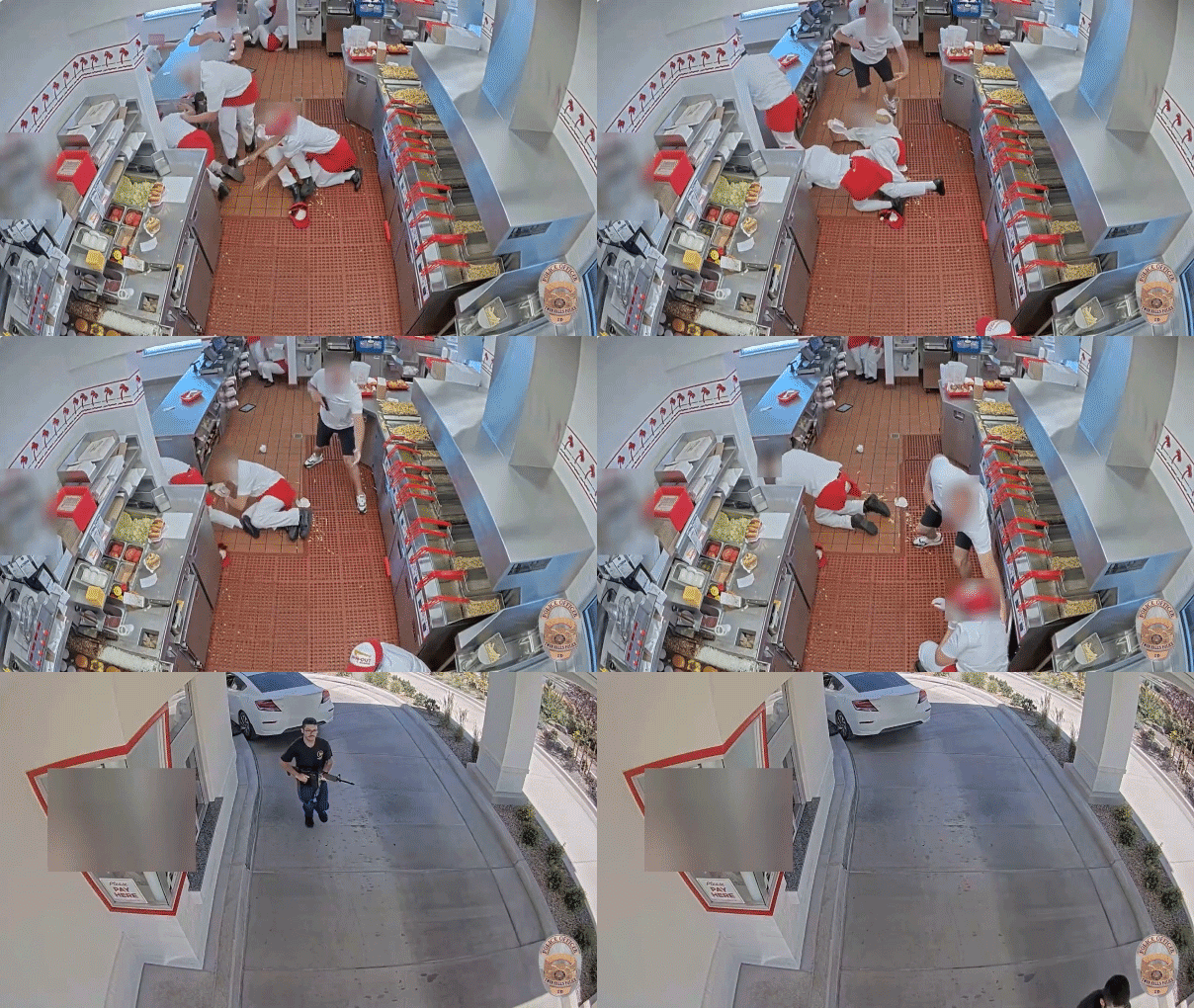
The newly released video of the Twin Falls, Idaho, In-N-Out shooting shows a rampage that moved rapidly across a restaurant, a roadway and a visitor-center area—and a chaotic response in which civilians, an off-duty trooper and police repeatedly confronted the gunman.
Police said Chad Williams, 24, killed three people and wounded seven others before dying from a self-inflicted gunshot wound as officers closed in. Investigators still have not identified a motive. The edited footage shows Williams firing at the drive-thru, moving toward Blue Lakes Boulevard and a Tesla charging station, then heading toward the Twin Falls Visitors Center and a nearby trail.
The two accounts emphasize different lessons from the same footage. The liberal account centers the scale of the trauma and the role of an unarmed employee, Braxton Steube, who spoke to Williams on the trail and appears to have delayed him while others fled. Police Chief Matthew Hicks called Steube’s actions potentially decisive: “Your courage, your composure, your selflessness in that moment likely gave others the time they needed to escape harm.”
The conservative account instead foregrounds armed resistance, detailing how former officer Austin “AJ” Scott, an off-duty Idaho State Police trooper and armed bystander Jordan Salinas confronted Williams. Police said the gunman’s path away from the restaurant after those encounters helped prevent additional deaths. The report also stresses that Scott was not the same person as the off-duty trooper, correcting misinformation that had circulated online.
Both perspectives depict a deadly attack interrupted by improvised acts of courage, but they assign emphasis differently: one highlights human composure and community protection without a firearm, while the other presents armed intervention as central to containing the threat. Police, meanwhile, offered a broader conclusion—that bystanders, employees and first responders collectively saved lives—without resolving the larger question of why the attack occurred.
Write a comment