NASA’s Moon-Crash Photos Turn a SpaceX Mishap Into a Debate Over Commercial Lunar Exploration
NASA’s Moon-Crash Photos Turn a SpaceX Mishap Into a Debate Over Commercial Lunar Exploration
The Moon has become an unexpected proving ground for commercial spaceflight—and a crash site that exposes both the promise and the risks of sending private hardware beyond Earth.
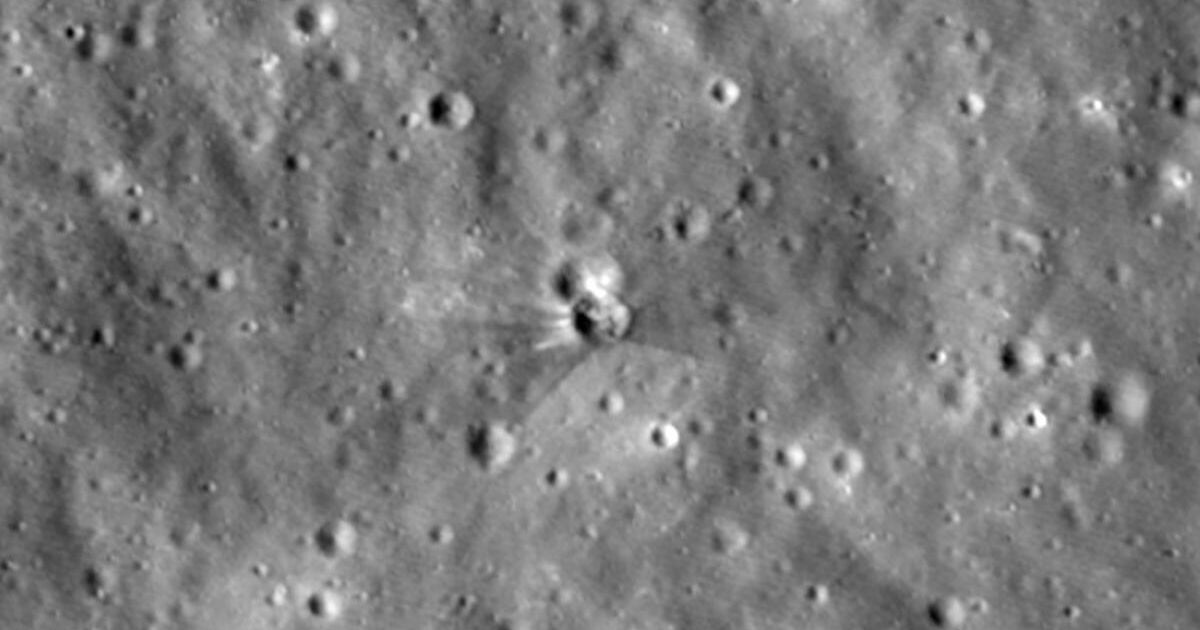
NASA’s Lunar Reconnaissance Orbiter has released before-and-after images of the crater left by an 8,800-pound SpaceX Falcon 9 booster, which struck the lunar surface on Aug. 5 after drifting through space for more than a year. The impact carved out a crater roughly 60 feet wide and less than 10 feet deep, with dark and bright debris streaks spreading outward like butterfly wings.
The scientific framing emphasizes what the images reveal: darker material came from the Moon’s weathered upper layer, while brighter rays exposed fresher rock and soil from below. The event is unusual because artificial lunar impacts remain relatively rare compared with natural meteoroid strikes. It also arrives as NASA increasingly relies on commercial partners to deliver landers, experiments and other equipment to the Moon.
That context makes the crash more than a spectacle. The booster was part of a SpaceX mission launched in January 2025 that carried private lunar landers and a small rover, linking the accident to NASA’s broader effort to commercialize exploration. Yet the conservative framing is notably sharper and more physical, describing the scene as a crater “carved by a SpaceX rocket that slammed into the moon.”
Both perspectives agree on the basic event and its scale. They differ in emphasis: one treats the crater as a scientific record of an increasingly active lunar environment, while the other foregrounds the blunt fact of a private rocket crashing into another world. NASA’s own history complicates the criticism: the agency deliberately crashed a rocket stage into the Moon in 2009 to search for water ice. The difference now is that this impact was not planned—and reflects how quickly commercial activity is expanding beyond Earth.
Write a comment