Mine Disaster Exposes the Human Cost Behind Central African Republic’s Gold Rush
Mine Disaster Exposes the Human Cost Behind Central African Republic’s Gold Rush
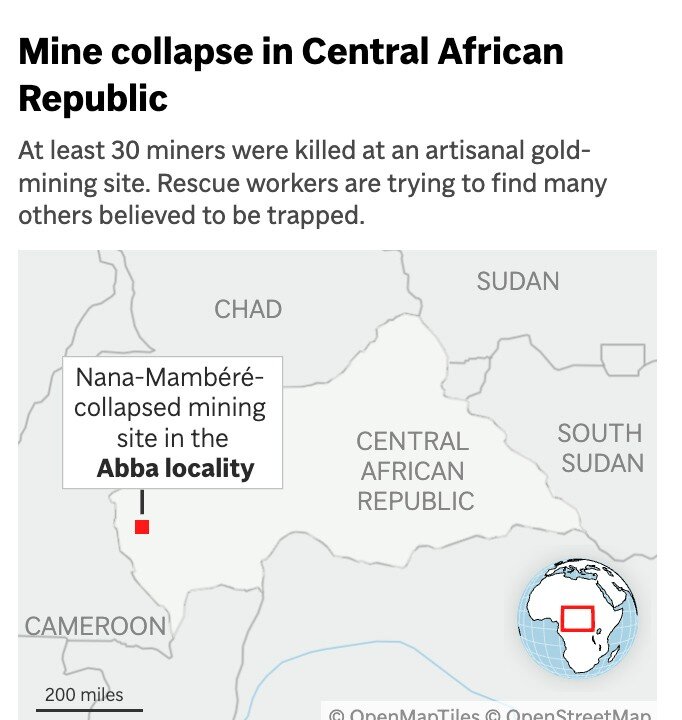
The collapse of a low-tech gold mine in western Central African Republic has turned a local disaster into a widening humanitarian emergency, with more than 100 people dead and others still buried or missing.
Reports from different editorial perspectives converge on the scale of the tragedy, but the available accounts emphasize different aspects of it. The conservative report, citing a Red Cross volunteer and a local official, provides the clearest ground-level detail: the mine collapsed Tuesday morning in Zamboye, in Nana-Mambere prefecture near the Cameroon border. Several survivors were critically injured, while rescue and recovery efforts continued.
The liberal account likewise reports that “more than 100” people died, underscoring the immediate human toll but offering fewer details about the operation or the rescue response. The two perspectives therefore agree on the central fact—an exceptionally deadly collapse—while differing in emphasis: one documents the unfolding emergency through local sources, and the other presents a concise account of the mass-casualty event.
The final toll remains uncertain. Bertrand Be Yangué, a member of the Zamboye youth council, said people were still missing and others remained trapped under the rubble. That warning suggests the reported death count is not a ceiling but a preliminary figure. The disaster also highlights the risks facing workers in artisanal mining, where rudimentary operations can leave little protection against landslides or structural failure.
For now, the immediate priority is recovery, but the competing reports point to the same larger question: how many lives are being put at risk in the pursuit of gold under conditions where basic safety measures appear limited?
Write a comment