A Fresh Carrier Arrives as the Lincoln’s Long Mission Exposes a Deeper Strain
A Fresh Carrier Arrives as the Lincoln’s Long Mission Exposes a Deeper Strain
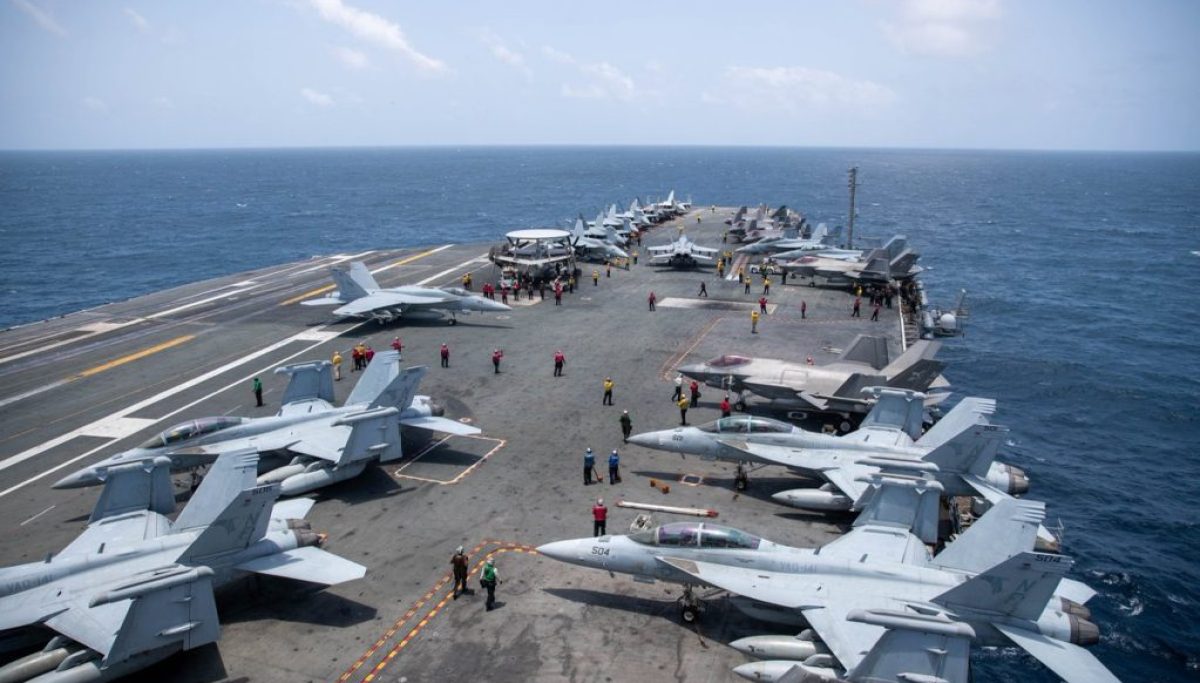
The arrival of the USS George Washington in the Middle East marks a long-awaited rotation—but also sharpens questions about how much strain the USS Abraham Lincoln’s crew was expected to absorb.
U.S. Central Command and conservative-leaning coverage present the handover as a planned operational move. CENTCOM described the Washington’s deployment as “scheduled”, while another account emphasized that the nuclear-powered Nimitz-class carrier can accommodate more than 6,000 service members. The Washington, normally forward-deployed in the western Pacific, is now moving through the Arabian Sea toward the Gulf of Oman as the Lincoln prepares to leave after nearly nine months in theater.
That description contrasts sharply with reporting centered on the Lincoln’s sailors and their families. The carrier’s deployment was extended by the war with Iran and involved thousands of aircraft launches, while relatives reported food and water shortages, plumbing problems, disrupted mail and deteriorating morale. One sailor’s wife said her husband’s messages contained “less hope” and that “he’s just exhausted.” A retired Navy captain argued that strategic demands had eclipsed the “human element,” warning that sailors faced stresses earlier generations rarely encountered.
The Navy and Central Command have rejected the broadest allegations. Adm. Brad Cooper said the Lincoln had among the Navy’s lowest numbers of reported mental-health cases, while acknowledging that “that doesn’t mean all is perfect.” The service also said sailors had continuous access to clean water, functioning air conditioning and healthy meals. Conservative coverage likewise focuses on the relief force and the mission, describing the Washington’s arrival as “fresh forces to the region.”
Both perspectives agree that the Lincoln’s crew completed a demanding mission. They diverge over what that achievement proves: operational resilience, or a system relying on sailors’ endurance until relief finally arrives.
Write a comment