Aisha Wahab’s Victory Exposes a Sharp Divide Over What California Voters Chose
Aisha Wahab’s Victory Exposes a Sharp Divide Over What California Voters Chose
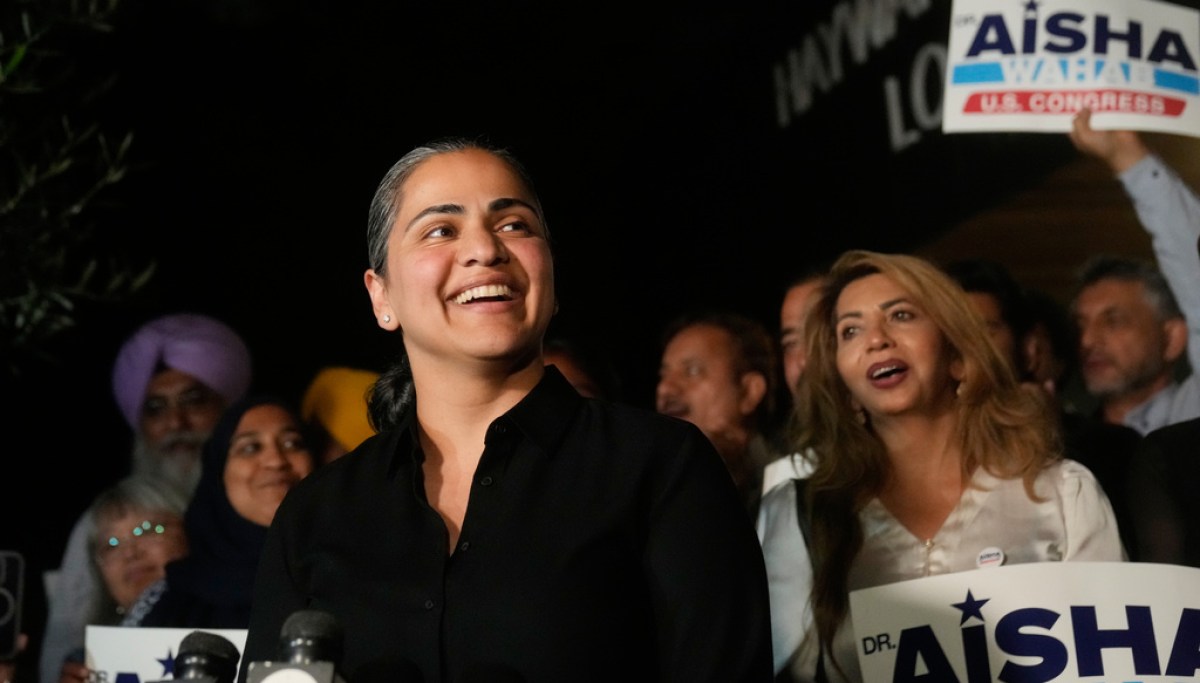
Aisha Wahab’s victory in California’s 14th Congressional District was decisive, but the meaning assigned to it is anything but settled. Her win over Melissa Hernandez has become a contest not only over a House seat, but over how voters’ choice should be interpreted.
Wahab, a Democratic state senator, secured roughly 53% of the vote to Hernandez’s 47%, winning the special election to complete former Rep. Eric Swalwell’s term. The neutral account presents the result as a straightforward succession story: a state lawmaker winning a competitive race for Congress.
The opposing account is far more ideological. It calls Wahab a “radical, far-left Afghan Muslim” and opens with the declaration, “Islam is on the march.” That framing treats the election less as a local contest than as evidence of a broader leftward and pro-Palestinian shift. It highlights Wahab’s past criticism of Israel and attacks on pro-Israel AIPAC, while portraying Hernandez as the more “moderate” Democrat.
Both perspectives agree on the central facts: Wahab won, the race followed a June primary in which neither candidate reached a majority, and outside money played a significant role. But they diverge sharply over causation and consequence. The neutral report emphasizes the result itself; the partisan narrative emphasizes what Wahab’s positions may mean for Congress.
The spending contrast also feeds that split. The partisan account says AIPAC put millions of dollars behind Hernandez, suggesting that outside intervention failed to overcome Wahab’s appeal. Yet the available reporting does not establish whether voters were primarily motivated by ideology, local concerns, party loyalty or dissatisfaction with the alternatives. What is clear is that Wahab’s win has produced a larger political argument: one side sees a normal electoral handoff, while the other sees a warning about the direction of the Democratic Party.
Write a comment