Nancy Kassebaum Baker’s Legacy Exposes What Both Parties Have Lost
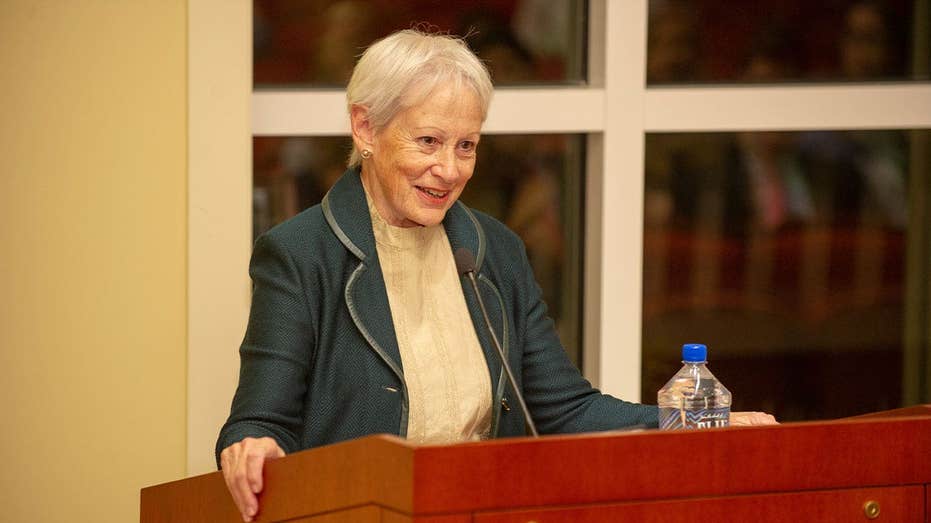
Nancy Kassebaum Baker’s Legacy Exposes What Both Parties Have Lost
Nancy Kassebaum Baker, the barrier-breaking Kansas Republican who built her reputation by refusing to fit neatly inside her party, has died at 94. Her career now stands as a test of how differently America’s political camps remember moderation, independence and dissent.
Liberal accounts emphasize Kassebaum Baker’s progressive Republicanism and her willingness to explain unpopular votes to voters. Her son described her as “an independent voice that was willing to do what was right for Kansas and the country,” even when that meant opposing her party. That framing highlights her work across ideological lines, including the 1996 health insurance law named with Democratic Sen. Ted Kennedy, her support for an assault-weapons ban and her later call for Donald Trump’s impeachment after the Jan. 6 attack.
The conservative account reaches a similar conclusion about her independence but places greater weight on her identity as a Republican trailblazer. It calls her the first woman elected to the Senate without a husband or other family connection to Congress and stresses that she “loved Kansas” and represented it for 18 years. Her electoral strength—76% of the vote in 1984 and 74% in 1990—underscored that breaking with conservative activists did not make her broadly unpopular at home.
The difference is less about the facts than the emphasis. One perspective presents Kassebaum Baker as evidence that bipartisan, moderate Republicanism could produce durable public trust; the other treats her as proof that a senator could defy party leaders while remaining rooted in Republican identity. Both acknowledge the tension: her vote for gun-control legislation brought “the angriest mail of her Senate career,” yet she remained a widely respected Kansan.
That balance eventually shifted. As the GOP moved rightward, Kassebaum Baker endorsed Democrats, including Gov. Laura Kelly, and said of Trump after the Capitol attack: “This just has gone too far.” Her death invites bipartisan praise—but also exposes how rare the political space she occupied has become.
Write a comment