A WNBA Sideline Clash Turns the Transgender Debate Into a Public Spectacle
A WNBA Sideline Clash Turns the Transgender Debate Into a Public Spectacle
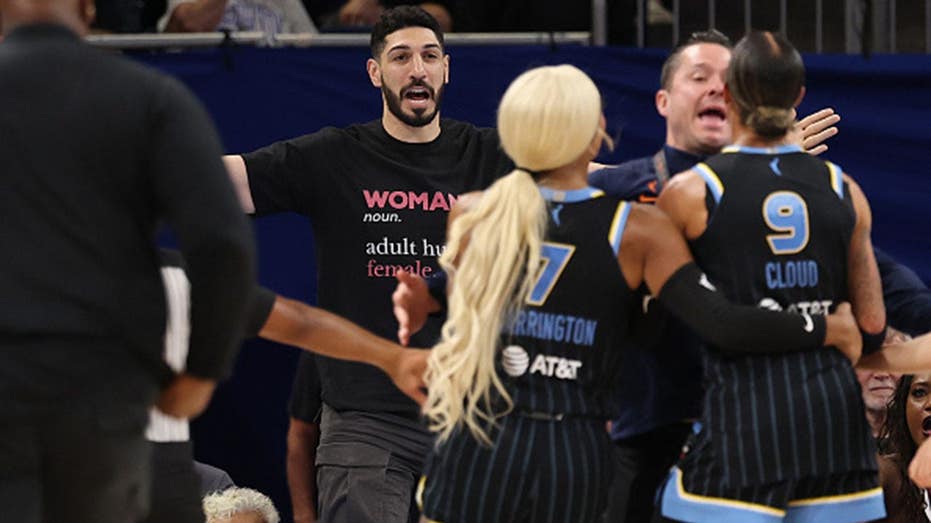
A WNBA game became the latest stage for the culture war over sex, gender and sports when former NBA player Enes Kanter Freedom was ejected after a confrontation with Chicago Sky guard Natasha Cloud. The dispute turned a symbolic protest into a highly visible clash between competing ideas of inclusion and advocacy.
From a conservative perspective, Freedom presented himself as a defender of women’s sports. He attended the game wearing a shirt defining a woman as an “adult human female” and later wrote, “I just got kicked out of a @WNBA game for supporting WOMEN! Let that sink in, AMERICA!” His supporters cast the ejection as evidence that the league tolerates political expression only when it aligns with transgender inclusion.
The liberal account places greater emphasis on the confrontation itself and on the players’ right to reject what they viewed as a provocative message. After scoring in the third quarter, Cloud walked toward Freedom, who stood and took a step onto the court before security and players intervened. Chicago coach Tyler Marsh said the team “embrace[s] her as someone that protects our team and protects people that need to be protected.”
The two perspectives overlap on the basic facts: Freedom was removed, Cloud did not speak publicly after the game, and the incident unfolded against a wider debate about transgender athletes. They diverge sharply over what the episode represents. Freedom describes principled advocacy; Cloud and the Sky frame solidarity with transgender people as protection from hostility.
The league’s position remains less definitive than either side’s rhetoric. Its collective bargaining agreement restricts the WNBA to women but does not specify whether eligibility is determined by sex assigned at birth or gender identity. No transgender woman has played in the league, leaving the argument largely hypothetical—but no less politically combustible.
Write a comment