Japan’s 360-Tonne Castle Move Turns Preservation Into a Spectator-Powered Feat
Japan’s 360-Tonne Castle Move Turns Preservation Into a Spectator-Powered Feat
A 360-tonne Japanese castle keep is being nudged back toward its historic foundation—not by a single machine, but through a highly choreographed blend of traditional engineering and public participation.
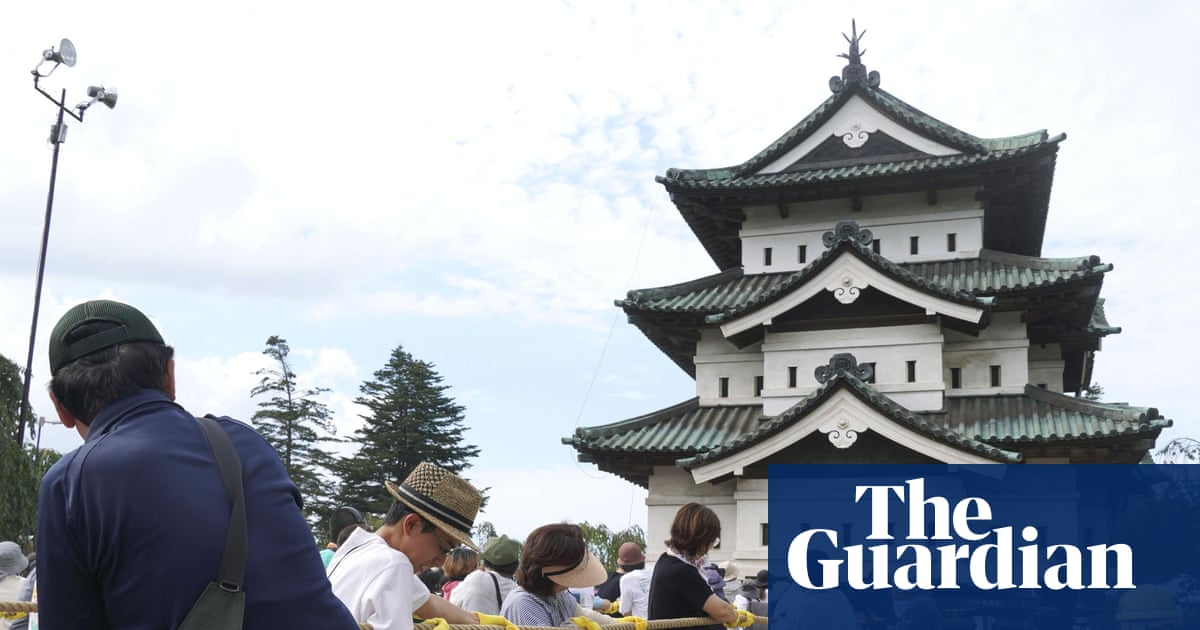
The keep of Hirosaki Castle in Aomori was moved 78 metres in 2015 so workers could repair earthquake-damaged stone walls. Now, rotating teams of volunteers are pulling it back across rails with 30-metre ropes, shifting it just over two metres during the latest weekend effort. The Guardian described the scene as about 1,800 people hauling the structure while chanting “so-re, so-re.”
That account presents the operation primarily as a community preservation project. Officials received roughly 8,000 applications for 1,800 places, drawing participants from Japan and abroad. The physical effort is symbolic: volunteers are scheduled to move the keep five metres by hand, while machinery will complete the remaining 73 metres by year’s end.
A second framing leans into the spectacle. One report calls the footage “CRAZY VIDEOS” and emphasizes the apparent contradiction of people pulling “the very symbol of stasis,” turning a technical restoration into an image of citizens moving an immovable monument. The contrast is revealing. The engineering is conservative—officials used hikiya, an ancient Japanese method of relocating buildings on rollers rather than dismantling them. Because the keep is a nationally designated cultural property, “we didn’t take it apart,” city official Kensuke Hayasaka said.
For participants, the spectacle and the conservation mission are inseparable. Motoharu Nakata, who also helped move the keep in 2015, called the experience “very moving” and said there was “absolutely no other opportunity to pull a castle.” Yet the public moment will end long before the restoration does: the keep is expected to remain covered during preservation work and reopen to visitors in 2033.
Write a comment