Marine One’s Close Call Exposed a Warning System That Had Already Failed
Marine One’s Close Call Exposed a Warning System That Had Already Failed
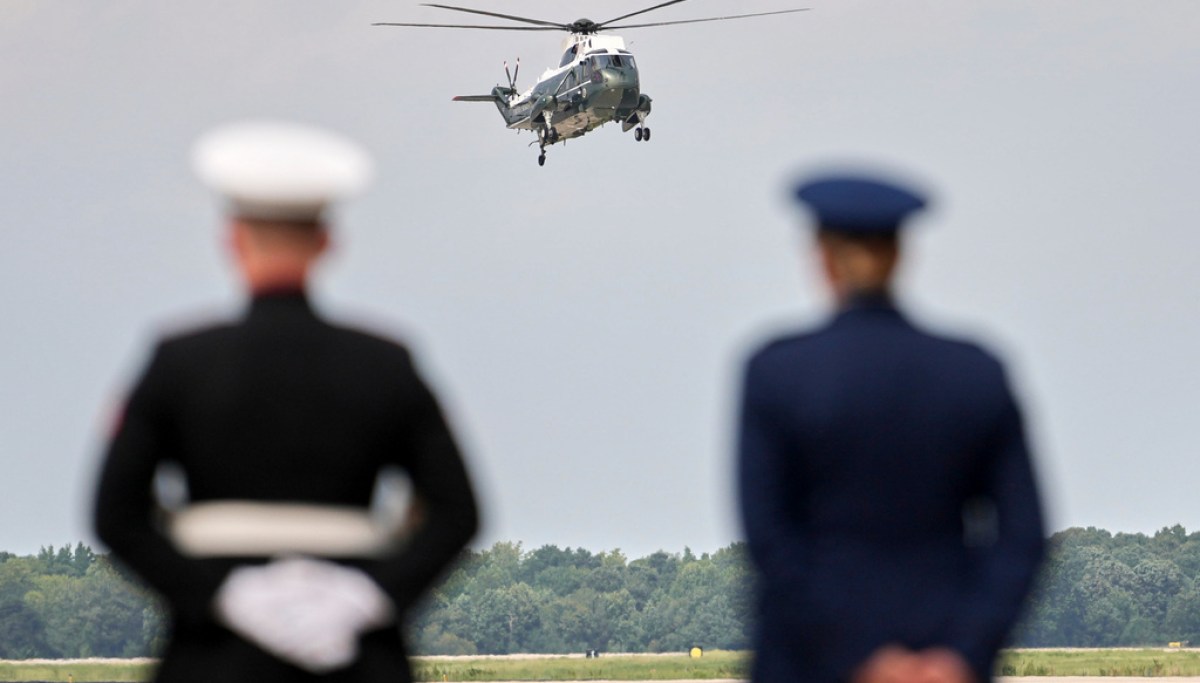
The Aug. 4 flight incident involving President Donald Trump’s Marine One helicopter has become a test of whether Washington’s aviation safeguards work in practice—or merely exist on paper. A commercial jet departed Ronald Reagan Washington National Airport shortly after the helicopter lifted off, despite procedures intended to keep the aircraft apart.
The central finding is not simply that two aircraft were briefly airborne at the same time. Investigators say Marine One pilots and airport controllers had already identified unreliable communications days earlier and agreed on a backup procedure. That arrangement failed as well when the incident occurred.
The liberal account emphasizes the institutional warning signs. It says controllers had raised communication concerns roughly a week before the incident and notes that the normal protocol—halting commercial departures after receiving a three-minute warning from the Pentagon—was not followed. The episode also revived scrutiny of procedures adopted after the January 2025 midair collision near Reagan National that killed 67 people.
The conservative account presents a more operational timeline, stressing that the Marine One crew attempted both available notification routes. The initial radio call did not get through; a relay through Joint Base Anacostia-Bolling also failed. Contact was established only after the helicopter reached altitude, by which point the passenger flight had already departed.
The accounts converge on the communication breakdown but differ in emphasis. One highlights a preventable safety-system failure and the fact that officials had prior notice. The other underscores the pilots’ efforts, the absence of a collision and the government’s assessment that the event was not a dangerous close call. The FAA said the aircraft came no closer than about 0.82 nautical miles laterally and 700 feet vertically, while the White House said Trump was never in harm’s way.
The NTSB investigation remains ongoing, leaving the key question unresolved: whether this was an isolated communications lapse or evidence that the safeguards around presidential air travel remain fundamentally fragile.
Write a comment