Voting Rights Rally Casts Midterm Elections as a New Civil Rights Test
Voting Rights Rally Casts Midterm Elections as a New Civil Rights Test
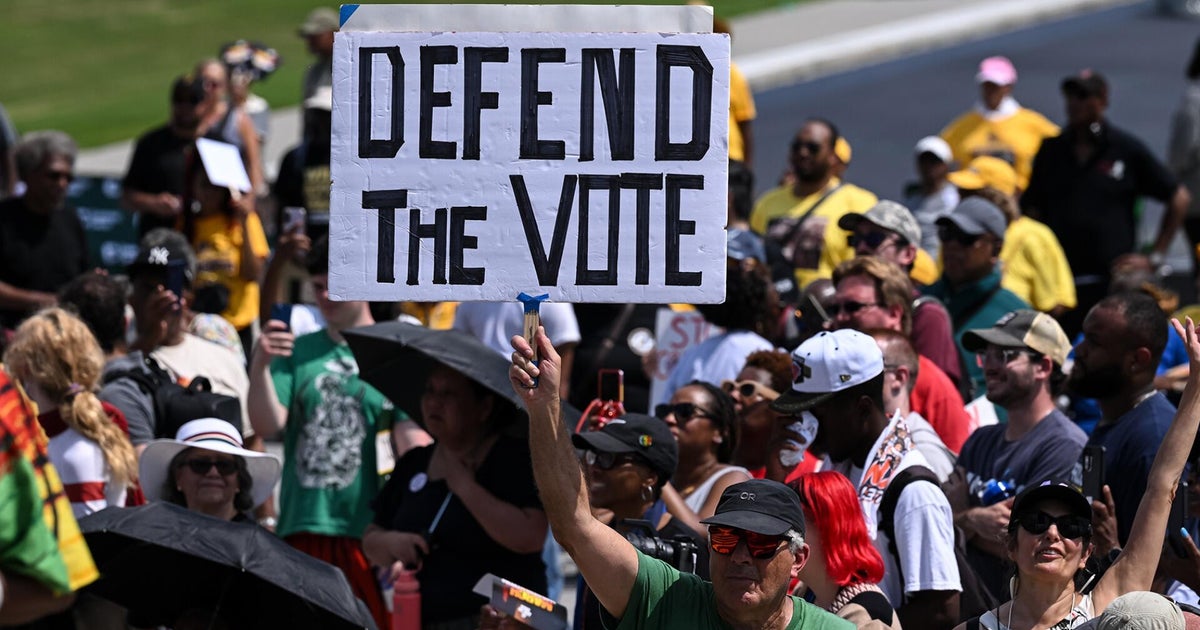
Thousands gathered in Washington, D.C., for a Defend the Vote rally, turning the anniversary of the March on Washington into a warning that the country’s next electoral battle may also be a fight over who can vote—and whose votes count.
Organizers and civil-rights advocates presented the rally as a response to what they see as renewed pressure on voting access. A report on the event said demonstrators warned that voting rights are “under attack again,” pointing to recent changes involving voting maps and voter-identification requirements. Their argument is rooted in the history of federal voting protections: challenges to allegedly racially discriminatory maps have become more difficult after the Supreme Court weakened a key provision of the Voting Rights Act of 1965, according to the same report.
The rally’s timing sharpened that message. Held 63 years after the original March on Washington and before the midterm elections, it linked past civil-rights mobilization with present-day disputes over election rules. Tylik McMillan, national director of youth and college for the NAACP, was among the speakers, underscoring the organizers’ emphasis on younger voters and sustained activism.
The conservative framing represented in the supplied coverage is less detailed but reveals a different emphasis: the event was described as a “civil rights groups make urgent plea for voting rights in D.C., ahead of midterm elections.” That framing acknowledges the campaign’s urgency while centering the groups’ appeal rather than endorsing their claims.
The two perspectives converge on the rally’s importance and its proximity to the midterms. They diverge over interpretation: organizers portray election-law changes as threats to democratic participation, while the opposing frame leaves those changes contested rather than settled. The resulting divide is not simply over one demonstration, but over whether new voting rules represent protection of elections or erosion of voting rights.
Write a comment