Nepal-Tibet Floods Turn a Rescue Mission Into a Race Against Silence
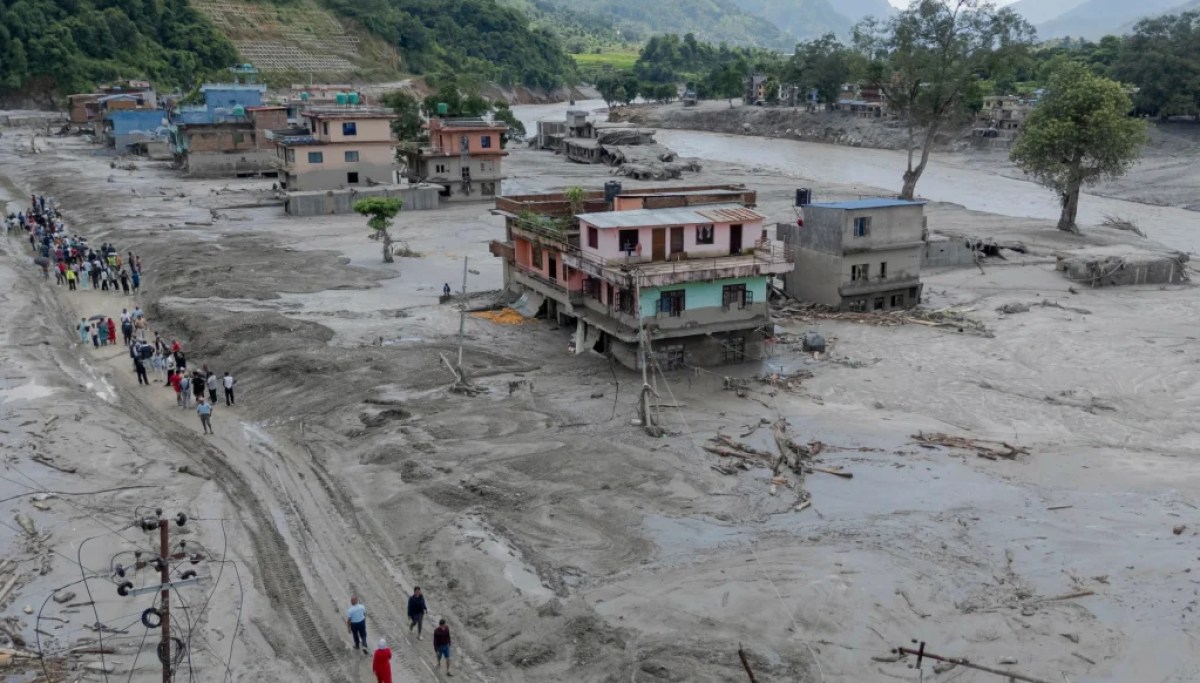
Nepal-Tibet Floods Turn a Rescue Mission Into a Race Against Silence
A glacier collapse in the Himalayas has turned a cross-border pilgrimage and work corridor into a landscape of mud, wreckage and uncertainty. Hundreds are dead, thousands are missing, and rescue crews are racing both the terrain and the clock.
Official figures differ by jurisdiction, but the scale is clear: Nepal and Chinese authorities together report more than 700 deaths and nearly 3,000 missing. Nepal has rescued more than 3,700 people, while helicopters deliver food and evacuate survivors from areas cut off by destroyed roads and bridges. The operation has also become international, with Indian and Chinese specialists joining efforts to reach more than 100 workers believed trapped in hydropower tunnels. Rescuers have begun pumping air into at least one tunnel, but deep mud, unstable ground and limited landing sites continue to slow progress.
For families, however, the central crisis is not the number of helicopters in the air but the absence of dependable information. Canadian relatives describe themselves as desperate for confirmation, while an American family member refused to speak of missing relatives in the past tense: “We don’t know anything.” That fragile hope is shared by relatives searching hospital lists and relief-center notices, even as unidentified bodies are displayed nearby.
Foreign families say the information gap is especially severe on the Chinese side of the border. Nava Pandey flew from Sydney after mistakenly believing his missing wife had been identified, only to learn the survivor was someone else. “The search goes on,” he said, urging authorities to release verified information and establish direct contact with families.
Governments have emphasized solidarity and aid. The United States says it is providing more than $3.6 million in humanitarian assistance, while Secretary of State Marco Rubio wrote that Washington “stands ready to support the Government of Nepal.” Yet aid cannot resolve the basic problem confronting families: rescue operations may be expanding, but verified answers remain painfully scarce. A further flood warning underscores the danger that the disaster—and the uncertainty—could deepen.
Write a comment