Times Square Attack Pits Mental-Health Questions Against Police Use-of-Force Defense
Times Square Attack Pits Mental-Health Questions Against Police Use-of-Force Defense
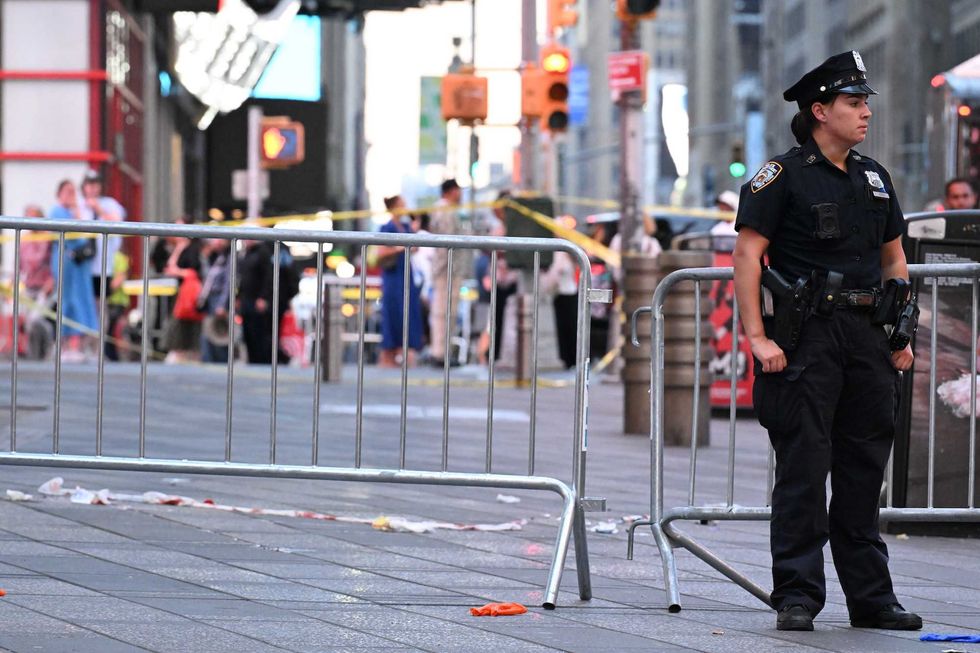
A midday attack in one of Manhattan’s busiest public spaces ended with two people stabbed, one dead and the alleged assailant killed by police—leaving grief and accountability questions in its wake.
Authorities said Pamela Cisneros, 49, approached a 68-year-old man and Erin Piacenti, 32, with two knives near West 42nd Street and Seventh Avenue. Piacenti, a Bank of America vice-president, died at Bellevue Hospital; the man remained in stable condition. The NYPD described the assault as “random and unprovoked,” while saying Cisneros had a documented mental-health history.
The police and mayoral account centers on an escalating threat. Officers reportedly spoke with Cisneros for roughly four minutes and used Tasers before shooting her as she advanced with the knives. Commissioner Jessica Tisch said Cisneros told officers, “I’m not dropping anything, I would rather kill both of you.” Mayor Zohran Mamdani praised the officers, saying they “prevented a horrific attack from becoming even worse,” while promising an internal investigation and the release of body-camera footage.
Conservative coverage similarly emphasized the speed of the police response and the danger posed by an armed suspect, describing officers as having stopped the attack after Tasers failed. That framing contrasts with the broader questions raised in liberal coverage: whether Cisneros’s known mental-health struggles represented a missed opportunity for intervention, and how police confront people in crisis. One witness said the incident underscored the need to “continue to address mental health issues,” while Cisneros’s father apologized to the victims’ families and insisted his daughter was “a human being.”
Both perspectives agree on the immediate facts and the victims’ loss. They diverge over what the episode chiefly represents: a necessary use of force to stop an imminent attack, or a fatal breakdown in mental-health care whose final moments still require independent scrutiny.
Write a comment