A Failed Aid Mission Became a Target After Israel Mistook Proximity for Proof
A Failed Aid Mission Became a Target After Israel Mistook Proximity for Proof
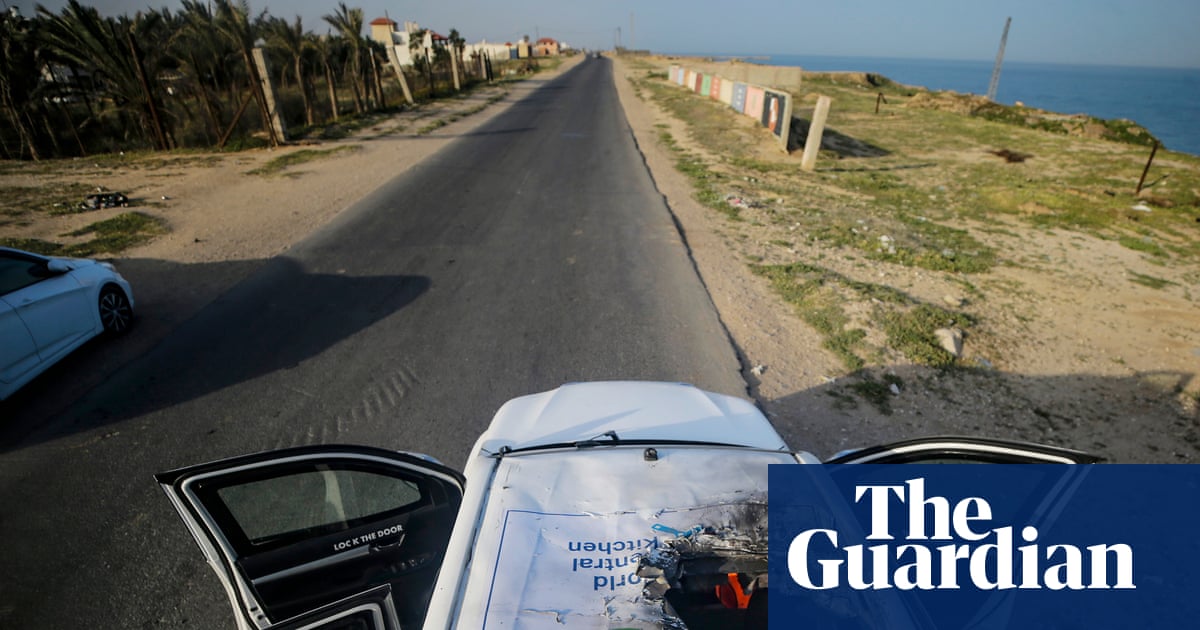
The killing of seven World Central Kitchen aid workers in Gaza was not simply the result of one battlefield mistake. It exposed how a humanitarian convoy, coordinated with Israel, could become a target when fragmented information and assumptions overrode what was happening on the ground.
The convoy’s movement had been planned with the Israeli army, yet the Nahal brigade and its drone operators were not fully briefed on the mission. An Australian review found that “specific details about the pre-coordinated WCK aid mission had not been passed down” to the brigade or the unmanned-aircraft operator. That failure helped turn the presence of local armed guards near the trucks into an apparent Hamas hijacking.
The Israeli military’s account says soldiers saw vehicles surrounding the convoy and interpreted the scene through their “accumulated operational experience.” But the convoy continued to its designated warehouse and delivered the food—facts that should have challenged the hijacking theory. WCK also told its headquarters that the guards had “fake guns” and that contact with the convoy had not been lost, although it remains unclear whether that information reached the troops directing the strikes.
The deeper dispute concerns Israel’s targeting doctrine. After the aid workers briefly stood near the local guards, the brigade’s chief of staff, Col Nochi Mendel, said they had been “mingling” with Hamas. He defended the decision in stark terms: “There was incrimination. The incrimination was according to the rules.” Other Israeli officers told investigators that this kind of guilt-by-association assessment is widely used, though commanders apply different standards—a practice captured in the title of one investigation as “Guilt by association.”
The contrast is consequential. Israeli officials presented the strike as a tragic operational error, while the investigations describe a system in which communication gaps, untested assumptions and proximity to suspected gunmen could substitute for evidence of a direct threat. The workers were not merely caught in crossfire; they were treated as targets because the military’s interpretation of their surroundings hardened into certainty.
Write a comment