Russia’s Consulate Closure Deepens a Dangerous Berlin-Moscow Tit-for-Tat
Russia’s Consulate Closure Deepens a Dangerous Berlin-Moscow Tit-for-Tat
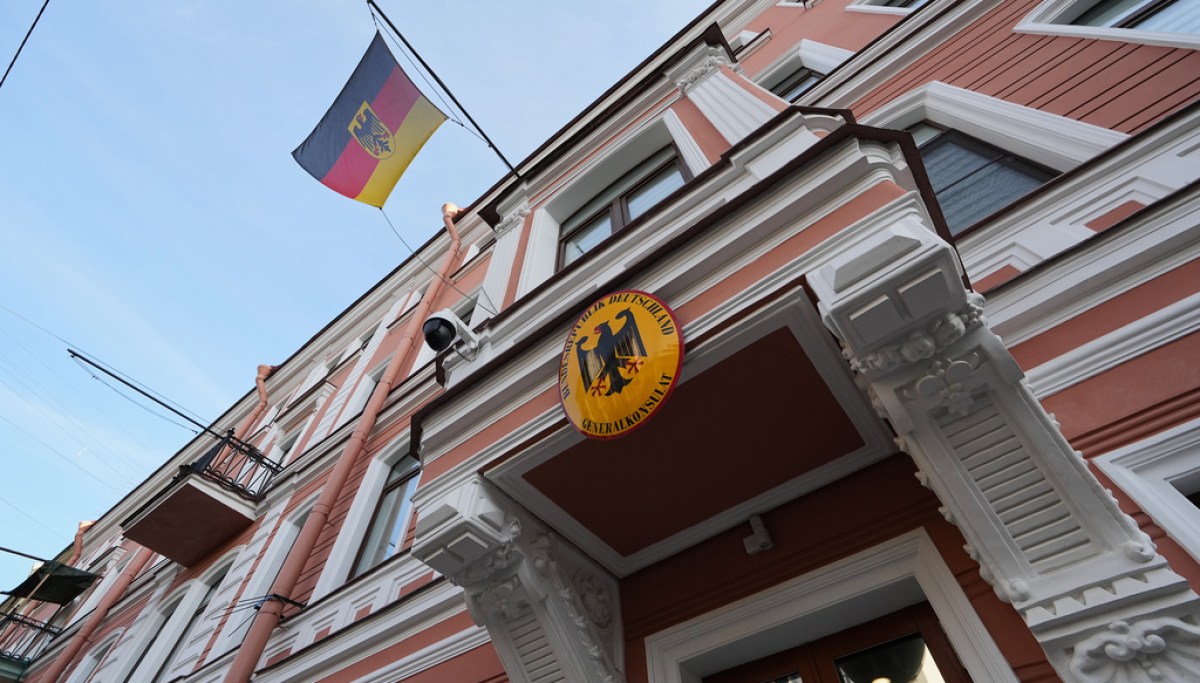
Russia’s closure of Germany’s consulate in St. Petersburg marks another sharp escalation in a diplomatic conflict increasingly shaped by retaliation, competing accounts and allegations of covert action.
The Russian Foreign Ministry ordered the consulate to stop operating and its staff to leave by Sept. 18. It also reaffirmed plans to close Goethe-Institut cultural centers in Moscow and St. Petersburg. Reports on the decision described it as part of a widening dispute over an attempted drone attack near Leipzig/Halle Airport. The closure was also reported as a direct response to Berlin’s decision to shut Russia’s consulate in Bonn and the Russian House cultural center in Berlin.
Moscow presents the sequence as a defensive response to German provocation. Its Foreign Ministry said, “It was the German authorities who once again provoked a new round of escalation in bilateral relations,” adding that “all responsibility for the consequences lies entirely with the German government.” Russia denies involvement in the Aug. 4 incident, in which an explosives-laden drone was found near a Ukrainian aircraft and later defused, and describes the accusation as a provocation.
Germany’s interpretation is fundamentally different: Berlin has blamed Russia for the attempted attack at a major freight hub used to support Ukraine. Western officials place the episode within a broader alleged Russian campaign of sabotage and disruption intended to weaken European backing for Kyiv—claims Moscow rejects. The competing narratives turn diplomatic facilities and cultural institutions into instruments of pressure, while leaving the underlying allegation unresolved.
The latest decision therefore does more than close a consulate. It reinforces a tit-for-tat pattern in which each government casts its own measures as justified retaliation, making further diplomatic damage more likely and reducing room for verification or de-escalation.
Write a comment