Supreme Court freezes Missouri’s old map as both sides blame the chaos on the other
Supreme Court freezes Missouri’s old map as both sides blame the chaos on the other
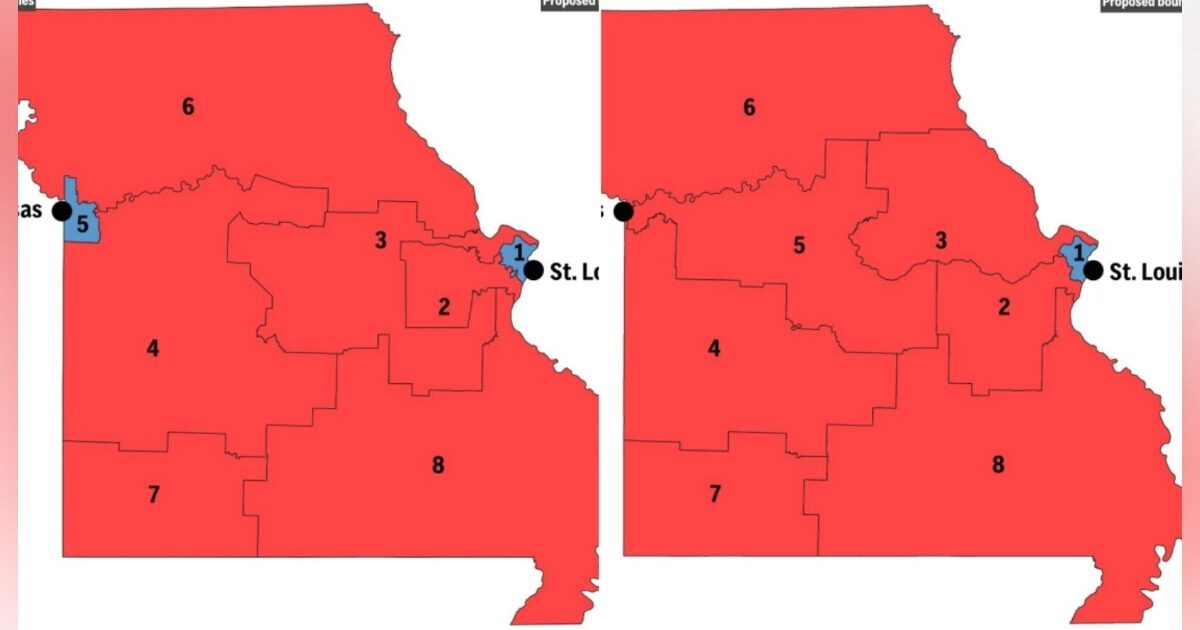
Missouri’s congressional map will not change again before the 2026 general election, but the Supreme Court’s decision leaves behind a political and legal fight over who created the crisis—and who benefits from it.
The justices blocked an appeals-court order that would have restored the 2025 map, a Republican-backed plan designed to give the GOP an advantage in seven of the state’s eight House districts. Instead, Missouri must use the lines adopted in 2022, which currently produce a 6-2 Republican-to-Democratic delegation. The court cited the practical consequences of changing districts after ballots had been printed, mailed and used in absentee voting, warning that reversion “would usher in electoral chaos.”
That rationale is central to the ruling, but the two political camps describe the underlying dispute in sharply different terms. Liberal-leaning coverage frames the 2025 map as an aggressive partisan maneuver pushed by President Donald Trump and Missouri Republicans to eliminate a Democratic seat. It notes that more than 305,000 Missourians sought a referendum on the map and quotes Democratic Rep. Emanuel Cleaver accusing state officials of trying to “silence the voices of Missouri voters and steal a congressional seat.”
Conservative coverage emphasizes the opposite concern: that Missouri conducted its primary under the new boundaries, then was forced back to the old map through late judicial intervention. One account described the decision as shutting down a “legal mess,” while stressing that the new map had offered Republicans a possible 7-1 advantage. Another presented the ruling more simply as an order to use the 2022 lines and an end to the immediate litigation.
Both perspectives acknowledge the same destabilizing fact: voters and candidates have faced shifting districts, conflicting court orders and uncertainty over which boundaries govern the November contest. The Supreme Court resolved the election timetable, not the broader argument over mid-decade redistricting, partisan power and the proper role of courts once voting is underway.
Write a comment