The U.S.-China Tariff Truce Offers Relief but Leaves the Bigger Deal Unresolved
The U.S.-China Tariff Truce Offers Relief but Leaves the Bigger Deal Unresolved
The latest U.S.-China agreement lowers immediate trade tensions, but its carefully limited scope underscores how far the two powers remain from a comprehensive settlement.
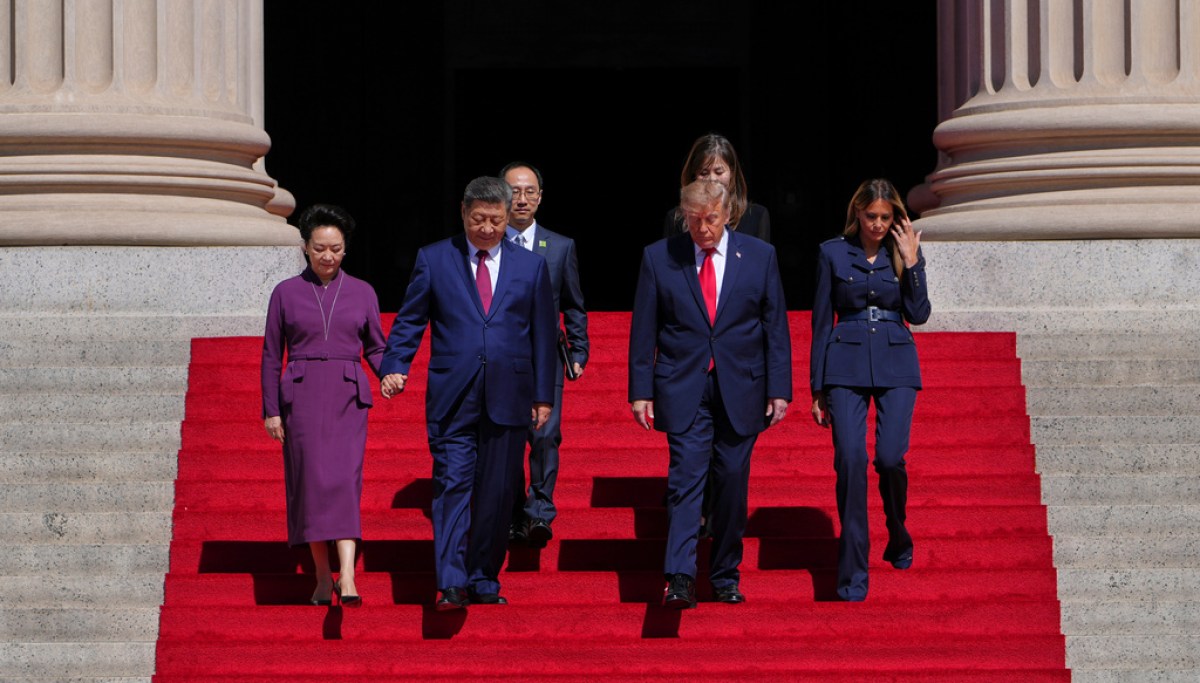
The United States and China said they would reduce tariffs on about $30 billion in goods from each country after Chinese President Xi Jinping’s visit to Washington. The conservative account frames the deal as a concrete product of high-level diplomacy, emphasizing that the covered goods are non-sensitive and linking the announcement to parallel understandings on Iran’s nuclear program, international waterway tolls and artificial intelligence. It describes a visit built around ceremony as well as negotiations, including a military welcome, bilateral talks and a state dinner.
The liberal account places greater emphasis on Beijing’s institutional reading of the agreement. China described an eight-point consensus that includes the tariff reductions, an AI dialogue, a trade council and an extension of earlier Kuala Lumpur understandings. That framing makes the agreement less a standalone tariff deal than a provisional mechanism for managing a broader rivalry.
Both accounts identify economic de-escalation and AI cooperation as the principal areas of convergence. They diverge, however, in emphasis: the first highlights presidential diplomacy and a list of shared foreign-policy positions, while the second stresses the absence of a major public breakthrough and the fragility of the underlying trade truce.
The arrangement therefore offers political breathing room rather than resolution. Tariff reductions may stabilize commerce, but the continued reliance on extensions, councils and future dialogues suggests that the central disputes remain unresolved. The summit produced agreement on how to keep negotiating—without yet settling what the two countries ultimately want from one another.
Write a comment