France’s Cost-of-Living Revolt Is Being Pulled Between Public Anger and Street Violence
France’s Cost-of-Living Revolt Is Being Pulled Between Public Anger and Street Violence
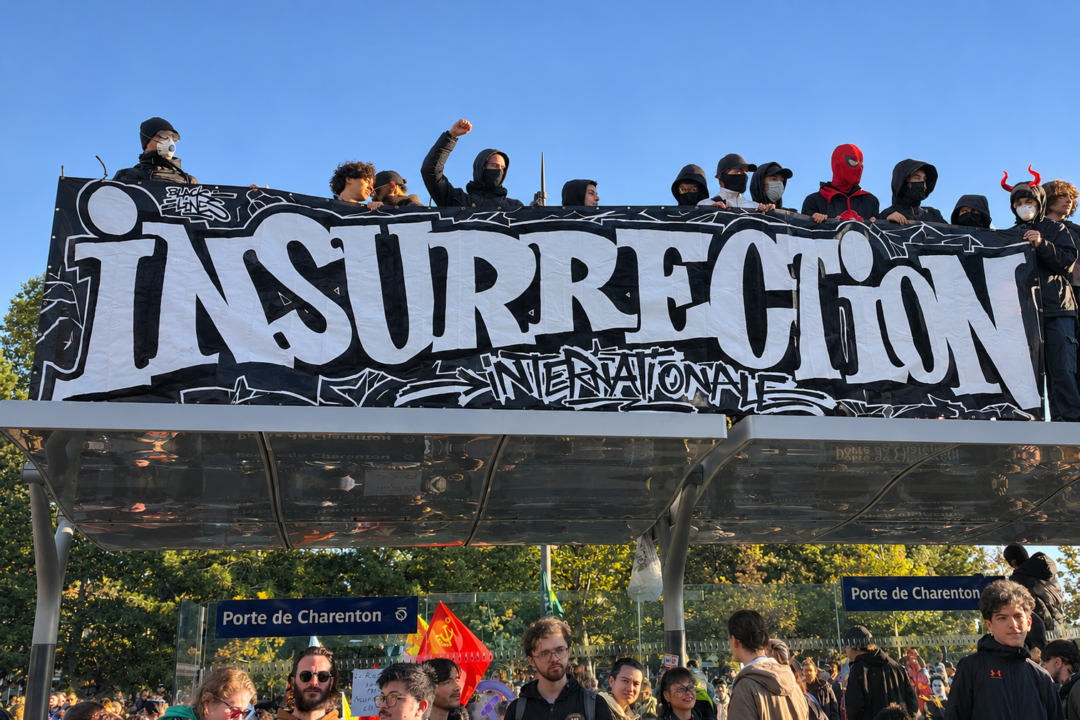
France’s protest movement is becoming a contest over both economic hardship and the meaning of public disorder. The marches remained largely peaceful, but clashes, fires and mass arrests gave the government’s critics an opening to recast the demonstrations as a security crisis.
The scale of the mobilization remains substantial, though it is declining. France’s Interior Ministry counted 320,000 demonstrators nationwide, including 70,000 in Paris—down from roughly 410,000 the previous weekend. Organizers and sympathetic protesters presented the movement as a broad coalition of students, unions and ordinary households confronting rising prices, inequality and deteriorating public services.
That message was captured by protester Camille Guérin: “We say no to the cost of living, no to the far right, yes to high school students’ demands, yes to giving citizens a voice.” Another marcher, Jérôme Rodrigues, accused the government of incompetence while families struggle “with a few cents.” Their argument is that disorder is a symptom of political and economic failure, not the movement’s central purpose.
Authorities offered a sharply different interpretation. Interior Minister Laurent Nuñez said the rallies had included an “extraordinary” level of violence, while police reported 511 arrests and clashes in Paris, Marseille, Lyon and Toulouse. A Molotov cocktail reportedly struck a police officer, an incident Nuñez described as an “attempted murder.”
Conservative coverage went further, characterizing the unrest as a far-left campaign driven by “ultra-left and radical far left” groups and emphasizing the attack on police, looting and planned school blockades. Another conservative headline cast the demonstrations as youth-led rallies sweeping Europe.
The competing narratives share one fact: public frustration is real. They diverge over its meaning. For protesters, violence risks obscuring legitimate grievances; for officials and conservative critics, it proves that the movement has become a threat to public order.
Write a comment