Car Collides with Truck on Ibarska Magistrala
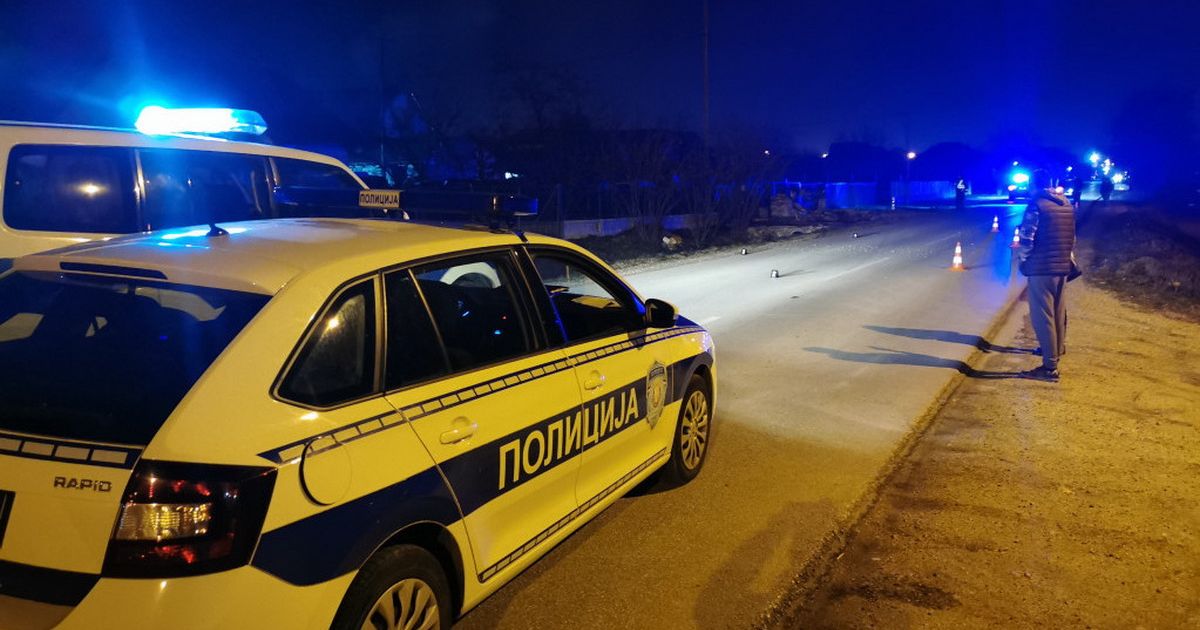
Car Collides with Truck on Ibarska Magistrala pro-government Pro-government outlets depict the Ibarska magistrala crash near Lazarevac as a serious traffic accident in which a Dacia slammed into the rear of a truck, heavily damaging the car and injuring the driver, who was taken to hospital while police investigated on site. Their coverage focuses on concrete details, the dramatic scene, and the actions of emergency services, avoiding broader political criticism or systemic blame. @Telegraf @Republika A serious traffic accident on the Ibarska magistrala near Lazarevac involved a passenger car, identified in pro-government reports as a Dacia, which collided with the rear of a truck. Both opposition and pro-government-leaning descriptions would agree that the front of the car was heavily damaged, that at least one person (the car’s driver) was injured but survived, and that emergency medical services transported the driver to hospital while police conducted an on-site investigation, causing temporary disruption to traffic in the area.
Across the spectrum, outlets describe the event as a heavy or serious traffic accident on one of Serbia’s most burdened and historically dangerous highways, highlighting the recurring problem of rear-end collisions with trucks on this route. Both sides would situate the crash within a broader pattern of frequent accidents on the Ibarska magistrala, mentioning standard institutional actors such as traffic police, emergency medical services, and road maintenance authorities, and implicitly linking the case to ongoing public debates about road safety, driver behavior, and infrastructure on key national corridors.
Points of Contention
Framing of the accident. Opposition-aligned outlets are likely to frame the crash not just as an isolated event but as another symptom of systemic neglect of road safety on the Ibarska magistrala, using more critical language and drawing attention to repeated tragedies on the same route. Pro-government media, by contrast, tend to present it as a discrete incident with a focus on descriptive details of the crash, vehicle damage, and the condition of the injured driver, avoiding broader political framing. While opposition coverage would stress patterns and institutional failure, pro-government reports largely confine themselves to the basic who-what-when-where.
Institutional responsibility. Opposition reporting would typically connect this type of crash to state responsibility, questioning whether authorities have adequately improved infrastructure, enforced speed and distance regulations, or upgraded truck safety oversight on the Ibarska magistrala. Pro-government outlets, however, largely omit explicit criticism of institutions, instead highlighting that police are conducting an investigation and that emergency services reacted quickly, thereby implying that the system is functioning as intended. This contrast yields a narrative of alleged long-term state negligence on one side versus a narrative of routine institutional response on the other.
Causes and prevention. Opposition sources are likely to speculate more openly about potential causes, such as poor lighting, insufficient signage, dangerous road design, or lax enforcement that allows risky driving behavior, pairing these with calls for structural reforms and investment. Pro-government coverage tends to refrain from attributing blame or delving into deeper causality while the investigation is ongoing, often limiting itself to stating that the car hit the rear of the truck and that the authorities are on the scene. In doing so, opposition media often frame the event as preventable with better policy, whereas pro-government outlets emphasize the uncertainty of causes and the importance of official findings.
Use of imagery and tone. Opposition-leaning outlets are more prone to use highly emotive or graphic descriptors and photos to underscore the severity of the crash and to dramatize the consequences of policy failures on the Ibarska magistrala. Pro-government outlets also use strong visual language, but mainly to convey the shock of the scene rather than to argue an explicit political point, often crediting stock or open-source imagery and emphasizing the “horrific” look of the damaged vehicle. Thus, opposition coverage tends to deploy tone and images as part of a broader critique, while pro-government coverage uses them primarily to grab attention and illustrate the incident.
In summary, opposition coverage tends to fold the accident into a wider story of chronic state underinvestment, policy failure, and preventable danger on the Ibarska magistrala, while pro-government coverage tends to treat it as a self-contained traffic incident, stressing official responses and descriptive details and downplaying systemic or political culpability. Story coverage nevent1qqsx8cxh8fg838erugqke6ek4jlrxmlmfh75mrj33egf7v34f5f75pqzfmgs5 nevent1qqsf4al20gskq979gmw69p87v6xyyapwjza9heu7dtcc5xc76j2jsngd0x0u9
Write a comment