Storm Kristin Kills at Least Six in Portugal and Spain, Causes Widespread Power Outages
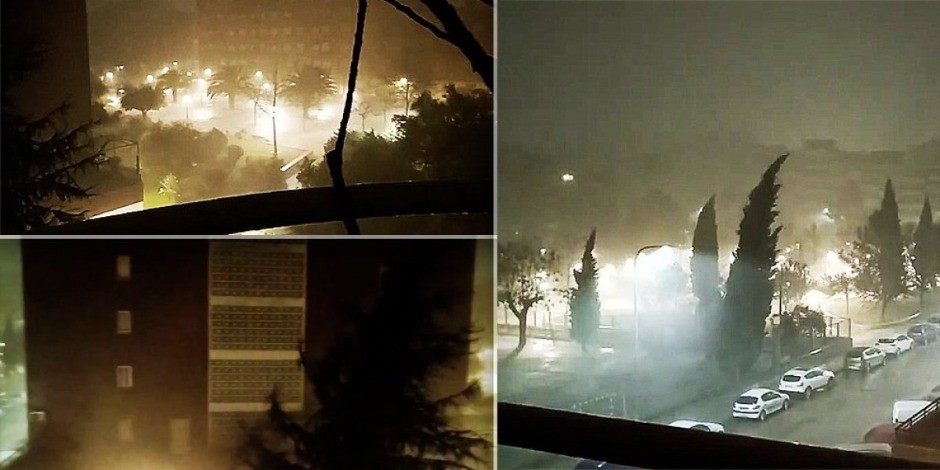
Storm Kristin Kills at Least Six in Portugal and Spain, Causes Widespread Power Outages pro-government Pro-government coverage portrays Storm Kristin as an exceptionally powerful natural disaster that inevitably caused fatalities and massive outages, while underlining that emergency services responded quickly with thousands of interventions and minimized an even greater tragedy. These outlets frame institutions as largely effective and resilient, presenting planned follow-up assessments and targeted upgrades as evidence of responsible, ongoing management rather than systemic failure. @Политика @Republika @Alo! Storm Kristin swept across Portugal and parts of Spain with hurricane-force winds of up to around 150 km/h, heavy rain, and snow, killing at least six people in total and causing widespread damage. Both opposition and pro-government outlets highlight that five fatalities were reported in Portugal and one in Spain, and that the storm left roughly one million people without electricity at its peak, triggering more than 3,000 emergency interventions by Portuguese Civil Protection services. Reporting converges on the most affected Portuguese regions—particularly Leiria, Coimbra, Lisbon, Setúbal, and the Oeste area—as well as noting significant disruption to road and rail transport, school closures, and falling trees and debris as the main immediate hazards. Coverage also agrees that in Spain at least one woman died after being struck by a falling palm tree, and that authorities issued severe weather warnings and urged residents to stay indoors.
Across both opposition and pro-government sources, the storm is framed as an intense Atlantic weather system, sometimes described as a “meteorological bomb,” consistent with meteorological services’ characterization of a rapidly deepening low-pressure system. There is common emphasis on the role of national and local institutions—especially Civil Protection, emergency services, and grid operators—in coordinating responses such as clearing roads, restoring power, and pre-emptively closing schools or transport links in the most exposed regions. Both sides also reference broader patterns of increasingly frequent and severe Atlantic storms impacting the Iberian Peninsula, implicitly linking Kristin to a wider context of climate-related vulnerabilities, aging infrastructure, and the need for resilient energy and transport systems. Reporting agrees that further assessments are ongoing, that authorities are still tallying the full economic cost of the damage, and that additional weather alerts may follow as the system moves eastward and gradually weakens.
Points of Contention
Responsibility and preparedness. Opposition-aligned outlets tend to argue that while the storm was powerful, the scale of damage and outages reflects years of underinvestment in infrastructure, inadequate tree management near power lines, and slow modernization of the grid. Pro-government media, by contrast, stress that the storm’s exceptional intensity would have strained even the best-prepared systems and present the outages as largely unavoidable force majeure. Where opposition coverage asks whether authorities ignored earlier expert warnings about infrastructure vulnerabilities, pro-government sources emphasize that emergency plans were activated in time and that no major institutional failures have been identified.
Government performance and emergency response. Opposition sources often focus on delays in restoring electricity for hundreds of thousands of households and small businesses, highlighting residents’ frustration and cases of prolonged outages in rural areas as evidence of an overstretched or poorly coordinated response. Pro-government reports accentuate the sheer number of Civil Protection interventions—over 3,000—and portray them as proof of an efficient, round-the-clock mobilization, frequently quoting officials praising the professionalism of emergency services. While opposition coverage spotlights local complaints about communication gaps and insufficient pre-positioning of repair crews, pro-government outlets largely frame these as unavoidable logistical challenges during an unprecedented event.
Narrative framing of the disaster. Opposition-aligned media are more likely to balance dramatic imagery with critiques of policy, suggesting that recurring “apocalyptic scenes” show systemic governance failures in climate adaptation and land-use planning. Pro-government coverage uses equally dramatic language—calling the storm a “meteorological bomb” and highlighting “apocalyptic scenes”—but leans toward framing it as a natural catastrophe that tested, and ultimately validated, existing civil protection structures. The opposition tends to fold Kristin into a narrative of ongoing governmental shortcomings, whereas pro-government outlets integrate it into a story of resilience, solidarity, and competent crisis management.
Accountability and future reforms. Opposition outlets often call for investigations, parliamentary scrutiny, or independent reviews to determine whether better maintenance, earlier alerts, or stronger building and grid standards could have reduced fatalities and outages. Pro-government sources acknowledge the need for post-storm assessments but present them as routine technical evaluations rather than as responses to political failures, and they spotlight official promises of targeted upgrades without questioning current leadership. Where opposition reporting pushes for broader structural reforms in climate adaptation policy and infrastructure oversight, pro-government coverage tends to stress incremental improvements and frames existing strategies as fundamentally sound.
In summary, opposition coverage tends to treat Storm Kristin as both a human tragedy and a revealing stress test of infrastructural weaknesses and government competence, while pro-government coverage tends to underscore the storm’s exceptional force, the scale and speed of institutional response, and the resilience shown by authorities and citizens.
Story coverage
Write a comment