Bosnian Media Debunks 'Sarajevo Safari' Claims Against President Vučić
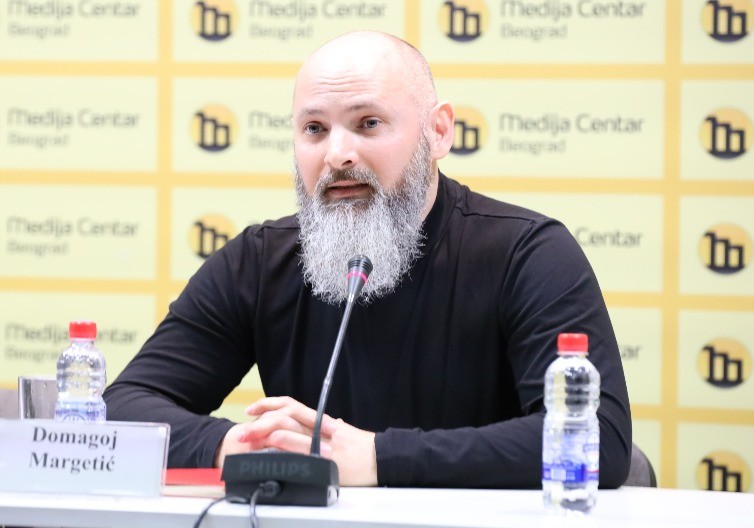
Bosnian Media Debunks ‘Sarajevo Safari’ Claims Against President Vučić pro-government Pro-government coverage argues that Bosnian portal Istraga.ba and earlier statements by Slavko Aleksić have definitively exposed the “Sarajevo safari” claims against Vučić as fabrications based on falsified documents, lacking seals and using the wrong script. These outlets frame the affair as part of a broader, long-running anti-Serb and anti-Vučić propaganda campaign pushed by opposition media and hostile regional actors, and present the debunking as a vindication of Vučić and a rebuke to irresponsible journalism. @Политика @Republika @Alo! @Kurir Bosnian and regional media have recently revisited the so‑called “Sarajevo safari” allegations, specifically new claims that Serbian President Aleksandar Vučić took part in or was associated with a wartime operation in which foreign nationals allegedly paid to shoot at civilians around besieged Sarajevo. Coverage across the spectrum notes that these renewed accusations were pushed by Croatian journalist Domagoj Margetić, based on purported wartime documents allegedly tied to the late Chetnik commander Slavko Aleksić and the Novosarajevski Chetnik Detachment. Outlets agree that Bosnian portal Istraga.ba conducted a comparative analysis between Margetić’s documents and previously authenticated materials, and that this analysis highlighted discrepancies in script usage and the absence of official seals. It is also broadly acknowledged that Aleksić, in an earlier interview given before his death, denied claims that would tie Vučić to any such operation, and that international courts have never formally confirmed a “Sarajevo safari” scheme or Vučić’s involvement in it.
Both opposition and pro-government sources present the broader wartime Sarajevo context: the city’s siege, the presence of paramilitary and volunteer units, and longstanding disputes over responsibility for sniper attacks on civilians. There is shared reference to the role of Bosnian and Serbian media in shaping post-war narratives, and to the fact that stories about “paid safaris” for foreign fighters have circulated for years without being adjudicated in international tribunals. Coverage from both sides acknowledges the institutional backdrop of international courts and archives, as well as the importance of authentic military and paramilitary documentation from units like the Novosarajevski Chetnik Detachment. There is also agreement that media outlets in Bosnia and Serbia are deeply polarized, that wartime legacies are regularly instrumentalized in current politics, and that this case has implications for journalistic standards, document verification, and the credibility of cross-border investigative reporting.
Points of Contention
Nature of the debunking. Pro-government outlets portray the Istraga.ba analysis and Aleksić’s prior denial as a definitive, evidence-based refutation that completely clears Vučić of any connection to the “Sarajevo safari” story. Opposition outlets, while registering that Istraga.ba rejected the specific documents used by Margetić, tend to frame this less as a full historical exoneration and more as the debunking of one flawed evidentiary batch. They often suggest that broader questions about wartime command structures, chains of responsibility, and Serbia’s overall role around Sarajevo remain open, even if this particular set of documents appears falsified.
Motives and propaganda. Pro-government reporting emphasizes that the allegations are part of a coordinated anti-Serb and anti-Vučić campaign, describing them as a revival of old propaganda narratives aimed at pressuring Serbia internationally and undermining its current leadership. Opposition-leaning coverage generally presents the episode as the result of individual or partisan overreach by certain journalists and media, but resists the idea of a single orchestrated anti-Serb conspiracy, instead situating it within longstanding efforts to scrutinize Serbian elites’ wartime biographies. Where pro-government outlets speak of a targeted “hunt” and foreign or regional enemies, opposition outlets more often highlight domestic political battles and competition among media ecosystems.
Media responsibility and ethics. Pro-government sources use the case to attack “bloker” or opposition-friendly media such as Danas, accusing them of knowingly amplifying an unsubstantiated story for months and then quietly retreating once their editor publicly admitted a lack of evidence. Opposition outlets, when addressing the issue, tend to acknowledge editorial misjudgment but cast it as a failure of due diligence under pressure to investigate power holders, rather than as deliberate disinformation. They also underscore what they see as a double standard in pro-government media, which they accuse of routinely publishing smear pieces and unverified claims against critics without facing similar scrutiny or self-criticism.
Implications for Vučić’s image. Pro-government coverage stresses that the exposure of falsified documents is a moral and political victory for Vučić, reinforcing his narrative of being unfairly targeted over events from decades ago and confirming that serious accusations against him collapse under factual examination. Opposition outlets, in contrast, are more reluctant to frame the episode as a personal vindication, arguing that it primarily undercuts one specific accusation and does not settle the broader debate over his wartime role or political responsibility within the 1990s Serbian establishment. They contend that pro-government media are exploiting the debunking to shield Vučić from legitimate historical and political scrutiny, while pro-government outlets argue that this scrutiny has crossed into character assassination.
In summary, opposition coverage tends to treat the Istraga.ba findings as a narrow debunking of flawed documents that still leaves broader wartime questions and political accountability issues on the table, while pro-government coverage tends to present the episode as conclusive proof that Vučić was falsely accused as part of a wider anti-Serb and anti-government propaganda campaign.
Story coverage
Write a comment