Crvena Zvezda Defeats Fenerbahce 79-73 in EuroLeague Match
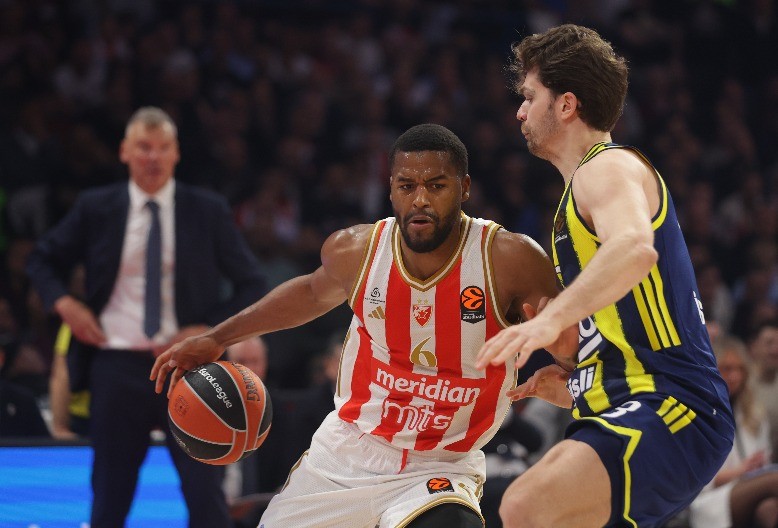
Crvena Zvezda Defeats Fenerbahce 79-73 in EuroLeague Match pro-government Pro-government outlets portray Zvezda’s 79–73 win over Fenerbahce as a major, even historic upset that snapped the European champion’s long winning streak and propelled the Serbian club firmly into playoff contention. They highlight Saša Obradović’s emphasis on energy, aggression, and character, credit Zvezda’s physical defense for forcing Fenerbahce’s errors, and use updated standings to argue that the team can now realistically beat anyone in EuroLeague. @Republika @Alo! Crvena zvezda defeated Fenerbahce 79–73 at home in a EuroLeague Round 31 clash, ending the Turkish champion’s long winning streak that had stretched since early January and included 19 consecutive victories. Both opposition and pro-government sources agree that Zvezda trailed for much of the game before turning it around with a dominant second half, especially a decisive third quarter, with key contributions from players like Cody Miller-McIntyre, Moneke, Nnoko/Izundu, Butler, and others, while Fenerbahce’s players, including Tarik Biberović, openly admitted that late-game mistakes and Zvezda’s physical defense were decisive.
Coverage across the spectrum situates the match within the EuroLeague playoff race, noting that this was Zvezda’s 18th win of the season and that the result pushed the Serbian club firmly into the top six or at least into a strong playoff position with an 18–13 record. There is shared emphasis that Fenerbahce, still leading the standings, suffered its first loss in more than two and a half months, making the upset particularly significant as Zvezda faces a difficult remaining schedule with limited home games; both sides highlight EuroLeague’s competitive balance and portray the win as a pivotal moment in Zvezda’s late-season surge.
Areas of disagreement
Significance of the victory. Opposition-aligned sources tend to frame the win as impressive but primarily a sporting result that should not distract from structural issues in Serbian basketball and broader politics, sometimes downplaying celebratory narratives around the club’s success. Pro-government outlets, by contrast, elevate the game into a landmark triumph over the European champion, underscoring the snapped winning streak and repeatedly calling the win “huge” and “historic.” Where opposition coverage might contextualize the result as one step in a long season, pro-government coverage presents it as a defining proof that domestic teams can “beat anyone” when properly led and motivated.
Framing of coaching and leadership. Opposition media are more likely to treat Saša Obradović’s post-game comments as routine professional analysis, emphasizing tactical adjustments and team rotation without personalizing the victory around him. Pro-government sources heavily foreground Obradović’s statements about energy, character, and defensive aggression, portraying him as a master motivator whose decisions unlocked the turnaround while hinting at a broader culture of winning. While opposition outlets may question long-term consistency and roster construction, pro-government ones cast the coach and club structure as exemplary models of leadership.
Attribution of responsibility for Fenerbahce’s loss. Opposition-aligned reports tend to stress Fenerbahce’s own errors, fatigue, and possible complacency after a long unbeaten run, treating Tarik Biberović’s self-criticism as evidence that the defeat was as much about the Turkish side’s drop in level as Zvezda’s rise. Pro-government coverage quotes the same Biberović remarks but uses them primarily to validate Zvezda’s physicality, defense, and transition game, arguing that the Serbian team “forced” those mistakes. In opposition narratives, responsibility appears more evenly split between both teams’ performances, whereas pro-government narratives lean toward crediting Zvezda’s intensity and character as the overwhelming cause.
Implications for EuroLeague status. Opposition sources generally caution that, despite the jump into the top six or playoff zone, the table is tight and Zvezda’s remaining schedule is difficult, so the win is important but not transformative. Pro-government outlets use the updated standings to assert that Zvezda is firmly “in the playoffs,” stressing how the victory validates the roster and recent signings and suggesting that bigger EuroLeague ambitions are now realistic. While opposition media highlight volatility and the need for sustained performance, pro-government media interpret the new ranking as confirmation of a successful project already bearing fruit.
In summary, opposition coverage tends to treat the game as a notable but contained sporting event, emphasizing shared responsibility, future uncertainty, and the limits of a single result, while pro-government coverage tends to magnify the victory as proof of exceptional leadership, character, and national sporting strength with clear, optimistic implications for Zvezda’s EuroLeague ambitions. Story coverage
Write a comment