Severe Storms Cause Thousands of Flight Cancellations in US
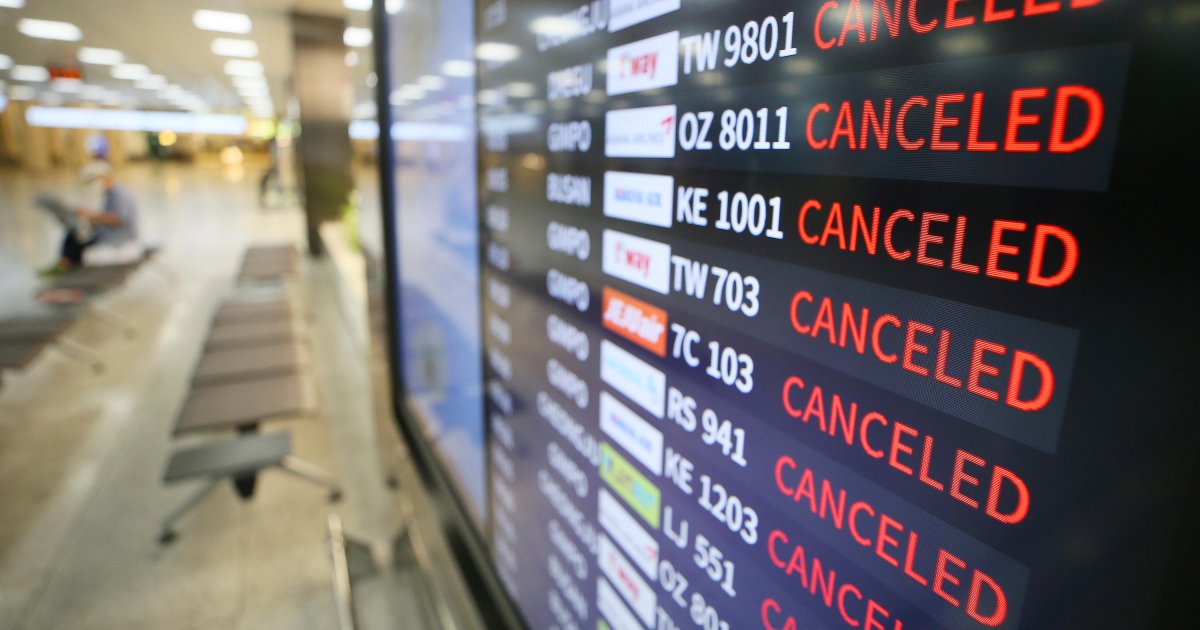
Severe Storms Cause Thousands of Flight Cancellations in US pro-government Pro-government coverage portrays the storm-related flight cancellations as an unavoidable consequence of severe weather, emphasizing that the FAA and airlines appropriately slowed or halted traffic to prioritize safety. These outlets stress the scale of the storms and highlight official measures—such as ground delays and early release of federal workers—as evidence of responsible institutional action rather than systemic failure. @Telegraf Severe storms moving across large parts of the United States have led to major air travel disruption, with both opposition and pro-government outlets agreeing that thousands of flights have been delayed or canceled at key hubs. Coverage converges on the scale of the impact, typically citing around 1,800 cancellations and more than 12,000 delays or combined disruptions over a short period, with especially heavy effects at major East Coast and central hubs such as New York–area airports, Washington D.C., Boston, Charlotte, Atlanta, Chicago, and Houston. Reports agree that the Federal Aviation Administration responded by issuing ground stops and delay programs due to high winds, low visibility, and thunderstorms, and that federal offices in the Washington D.C. region were ordered to release employees early as a safety measure. Passengers are consistently depicted as facing long lines, extended tarmac waits, and cascading knock-on delays as aircraft and crews fell out of position.
Across the spectrum, outlets stress that the storms were the principal trigger, describing a combination of fast-moving thunderstorm systems, severe winds, and difficult flying and ground-handling conditions that made normal operations unsafe. Both sides recognize that the FAA and airport authorities have institutional protocols that require spacing out takeoffs and landings, slowing traffic flows when convective weather threatens flight paths, and redirecting or holding flights to avoid turbulence and lightning. There is shared acknowledgment that the disruptions hit during a peak-demand period, exacerbating congestion because planes and crews were already tightly scheduled. Commentators across outlets also reference recent years’ weather- and staffing-related disruptions to explain how fragile the current aviation system can be when confronted with large-scale storms.
Areas of disagreement
Responsibility and blame. Opposition-aligned outlets frame the storm as a stress test that exposed deeper government and regulatory failures, arguing that inadequate investment in air traffic control staffing and infrastructure magnified the disruption. They highlight the FAA’s role under current political leadership, suggesting that poor planning left the system unable to absorb predictable seasonal storms. Pro-government outlets, by contrast, emphasize that the weather itself was extraordinary and portray FAA ground stops and delays as prudent safety measures rather than evidence of mismanagement. They tend to downplay systemic criticism and focus more on the inevitability of disruption under such conditions.
Airline and industry performance. Opposition coverage often stresses airline responsibility, arguing that carriers operate with overly tight schedules, minimal redundancy, and inconsistent customer service when flights are canceled en masse. These outlets cite stranded passengers and long rebooking times as signs that airlines and regulators have not enforced robust consumer protections. Pro-government sources acknowledge inconvenience but present airlines as reacting within reasonable operational limits, often highlighting how many flights were still completed and how carriers worked to re-accommodate travelers. They are more likely to frame airline performance as constrained by unavoidable safety requirements rather than by profit-driven corner cutting.
Government communication and preparedness. Opposition outlets tend to characterize official communication as slow, confusing, or overly optimistic, saying that authorities did not warn travelers early enough about the likelihood of cascading delays and cancellations. They often connect this to broader critiques of emergency preparedness and transportation leadership, implying that better forecasting integration and contingency planning could have mitigated chaos. Pro-government outlets, however, underscore FAA advisories, early-release orders for federal workers in Washington D.C., and public weather alerts as evidence that institutions acted responsibly to safeguard both travelers and employees. Their narratives stress that advance warnings and real-time updates were broadly available and that rapid adjustments reduced potential safety risks.
Broader political implications. Opposition-aligned coverage frequently situates the storm-related chaos within a larger narrative of strained national infrastructure and perceived government underperformance, using the episode to argue for leadership change or policy overhaul. They draw parallels to previous transport disruptions, portraying a pattern of crisis management failures under current authorities. Pro-government outlets resist framing the incident in partisan terms, presenting it instead as a weather-driven event that any administration would have struggled to avoid, and in some cases use the disruption to justify ongoing modernization efforts already championed by current leaders.
In summary, opposition coverage tends to use the severe weather disruptions as evidence of deeper systemic and political failings in aviation management and infrastructure, while pro-government coverage tends to emphasize the extraordinary nature of the storms and portray official and airline responses as largely appropriate, safety-focused reactions to unavoidable conditions. Story coverage
Write a comment