Lepa Lukić Holds Solo Concert at Belgrade's Sava Center
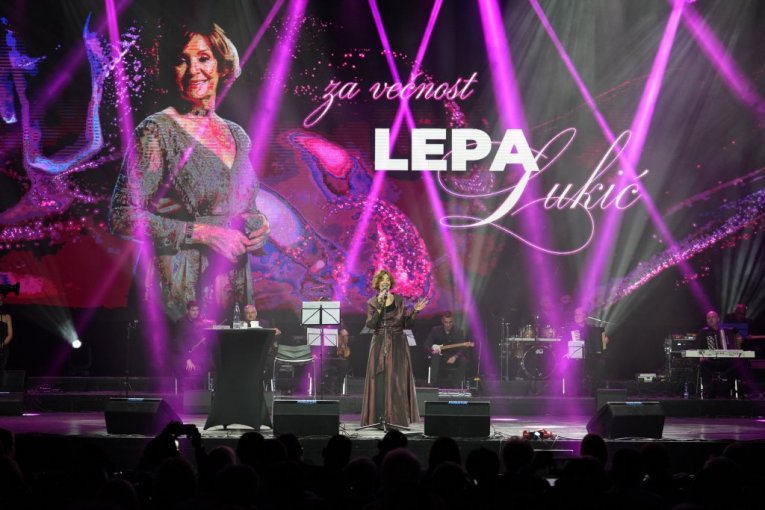
Lepa Lukić Holds Solo Concert at Belgrade’s Sava Center pro-government Pro-government outlets portray Lepa Lukić’s Sava Center concert as a triumphant, glamorous celebration of a national music icon, emphasizing her expensive outfit, emotional performance, and the prestige of the venue. They frame the event as proof that cultural life is vibrant and that the current environment allows such legends to be honored in grand fashion. @Telegraf @Republika Lepa Lukić, a veteran folk singer with a career spanning around six decades, held a major solo concert at Belgrade’s Sava Center, framed in coverage as either a farewell or semi-farewell event but clearly marked as a milestone performance. Pro-government outlets detail that she appeared in a highly publicized outfit reportedly worth about 10,000 euros, selected and styled by Boki 13, opened the show with an a cappella rendition of a song dedicated to her native village Miločaj, and thanked a multi-generational audience for decades of loyalty, stressing that their support sustained her career. Across the spectrum, reports emphasize the emotional tone of her address, the symbolism of Sava Center as a prestigious venue for such a legacy concert, speculation about special guests, and her own insistence that, despite talk of a farewell, she will continue to perform as long as health and circumstances allow.
Common context in both opposition and pro-government framing treats Lepa Lukić as a central figure of Yugoslav and Serbian folk music whose longevity reflects broader cultural continuity through political and economic upheavals. Coverage on all sides situates Sava Center as a premier Belgrade hall that confers institutional recognition and underlines the concert’s ceremonial character, and notes that such solo shows by long-standing folk stars function as collective memory rituals, not just entertainment events. Both angles recognize that her references to her home village, her plain-spoken remarks about colleagues, and her banter about not formally inviting many peers fit her public persona as a direct, unpretentious entertainer who bridges rural roots and urban stages. There is shared agreement that the concert sits within a series of late-career retrospectives by major folk performers and that it taps into nostalgia across generations rather than any overt political message.
Areas of disagreement
Tone and significance. Opposition-aligned sources tend to frame the concert as a rare, authentic cultural event standing somewhat apart from the dominant entertainment-industrial machinery, highlighting her life story and broader social change more than spectacle. Pro-government outlets, by contrast, amplify the glamour and celebratory tone, stressing the 10,000-euro outfit, the diva image, and star-studded attendance as proof of her status and, indirectly, of a thriving cultural life under current conditions. While opposition media may underscore the bittersweet aspect of a farewell narrative and the passing of an era, pro-government reports lean into triumphal language about her still-ongoing career and the success of the evening.
Relationship to institutions and the state. Opposition coverage is more likely to present Sava Center as a historically significant venue whose fate has been tied to privatizations and state decisions, sometimes hinting that artists like Lukić succeed despite institutional neglect. Pro-government outlets instead spotlight the venue as a revitalized, prestigious space that showcases how the city and state support culture and allow legends to shine on properly equipped stages. Where opposition narratives might subtly allude to commercialization or political branding around such events, pro-government reports frame the concert as a straightforward cultural celebration with no need to question who benefits symbolically.
Socioeconomic framing. In opposition reporting, the mention of a 10,000-euro wardrobe would more likely be juxtaposed with everyday economic hardship, either downplayed or treated with irony to avoid glamorizing excess in a time of inequality. Pro-government coverage foregrounds the price and designer as markers of high production value, success, and aspirational lifestyle, rarely connecting this to broader issues of living standards. Thus, while both mention the outfit, opposition stories tend to contextualize or critique such luxury, whereas pro-government ones use it to elevate the event’s perceived importance.
Use of nostalgia. Opposition-oriented outlets tend to use nostalgia to contrast the authenticity and social solidarity associated with earlier decades of Lukić’s career against what they portray as a more polarized, commercialized present. Pro-government media employ the same nostalgic appeal to suggest continuity and stability, implying that cherished cultural figures remain honored and that the current environment allows these memories to be celebrated fully. This leads opposition coverage to lean toward a reflective, sometimes melancholic mood, while pro-government coverage leans toward optimistic messaging about tradition successfully carried into the present.
In summary, opposition coverage tends to use Lepa Lukić’s Sava Center concert as a lens on social change, institutional shortcomings, and economic contrasts, while pro-government coverage tends to highlight glamour, institutional support, and continuity as evidence that culture and national icons are flourishing.
Story coverage
Write a comment