Partizan's Bibras Natcho Sends Emotional Message to Fans After Final Derby
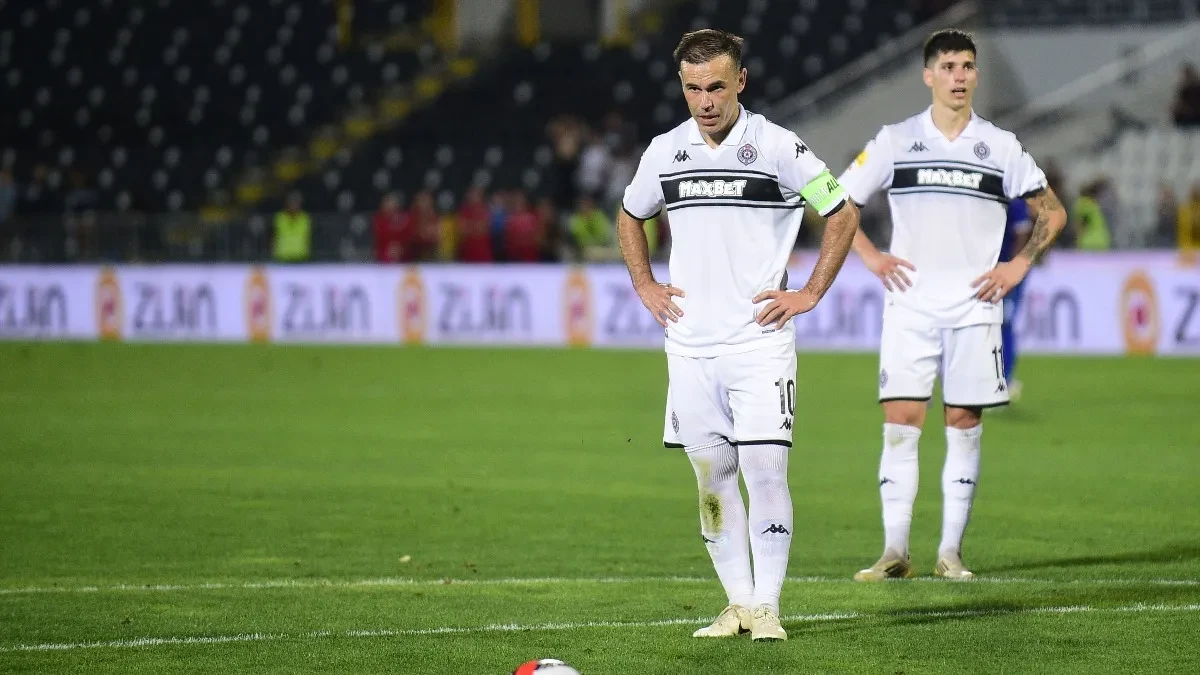
Partizan’s Bibras Natcho Sends Emotional Message to Fans After Final Derby pro-government Pro-government coverage presents Natcho’s emotional message as a moving but essentially apolitical farewell, highlighting his gratitude to the “Grobari” and respect for the derby tradition while treating the 3-0 defeat as a clear-cut sporting result. It emphasizes Crvena zvezda’s sustained success as the product of footballing quality and portrays Partizan’s disappointment as part of normal competitive cycles rather than evidence of structural or political problems. @Alo! @Telegraf Partizan’s 3-0 defeat to Crvena zvezda in the 179th “eternal” derby is reported by both opposition and pro-government outlets as a decisive loss that mathematically ended Partizan’s title hopes and confirmed Crvena zvezda’s ninth consecutive Serbian championship. Coverage agrees that this was Bibras Natcho’s last derby for Partizan after several years at the club, that he was visibly emotional at full time, and that he walked toward the south stand to acknowledge and thank the “Grobari” for their support. Both sides highlight that he later published a photo of that moment on social media, pairing it with a heartfelt message of gratitude to the fans and clear disappointment with the result, framing the image of him standing in front of the south stand as the central symbol of the evening.
Across outlets, the broader context is consistent: the “eternal derby” is portrayed as the key fixture in Serbian club football, with Crvena zvezda’s long-running dominance and Partizan’s struggle to keep pace providing the backdrop to Natcho’s farewell moment. Reports agree on the long-term nature of his relationship with the club and its supporters, underscoring that his years in Belgrade and his bond with the “Grobari” shape why this final derby carries emotional weight beyond a single match. The shared narrative presents Partizan as a club under pressure after repeated failures to stop Zvezda’s title streak, while the fan base is depicted as steadfast and central to the club’s identity, making Natcho’s message both a personal goodbye and a tribute to that enduring support.
Areas of disagreement
Tone and framing of Natcho’s message. Opposition-aligned outlets are more likely to frame Natcho’s post as a bittersweet or even tragic farewell that subtly reflects the club’s deeper decline, reading his emotion as a commentary on mismanagement and missed chances. Pro-government outlets, by contrast, describe the same message in uplifting and sentimental terms, focusing on his gratitude and loyalty to the “Grobari” and avoiding any interpretation that links his sadness to systemic problems at Partizan.
Interpretation of the defeat and title loss. Opposition coverage tends to present the 3-0 loss and the confirmed end of Partizan’s title challenge as another symptom of structural issues in Serbian football, sometimes implying an uneven playing field and entrenched advantage for Crvena zvezda. Pro-government media treat the defeat largely as a sporting result, emphasizing Zvezda’s quality and consistency over nine consecutive titles and leaving broader institutional questions either unmentioned or at the margins.
Attribution of responsibility for Partizan’s situation. Opposition sources generally hint that club leadership, and by extension the political environment surrounding Serbian football, bear responsibility for Partizan falling so far behind their rival, weaving Natcho’s farewell into a longer narrative of misgovernance. Pro-government outlets avoid assigning blame, portraying Partizan’s struggles as part of natural sporting cycles and positioning Natcho’s departure as a normal end of an era rather than an indictment of those in charge.
Role of fans and their relationship to the state. Opposition-leaning coverage may underline the “Grobari” as a disillusioned but defiant group whose unwavering presence contrasts with what they see as a politicized football landscape, hinting that fan frustration carries a broader social or political charge. Pro-government reporting focuses on the fans as passionate but apolitical supporters, stressing their loyalty and atmosphere while sidestepping any suggestion that their chants or discontent reflect wider opposition to the current power structures.
In summary, opposition coverage tends to turn Natcho’s emotional farewell into a symbol of Partizan’s systemic decline and a subtle critique of the broader football and political order, while pro-government coverage tends to spotlight the personal, sentimental aspects of his message and frame the derby outcome as a straightforward sporting story without broader political overtones. Story coverage
Write a comment