Mira Dodik, Mother of Milorad Dodik, Buried in Mrčevci
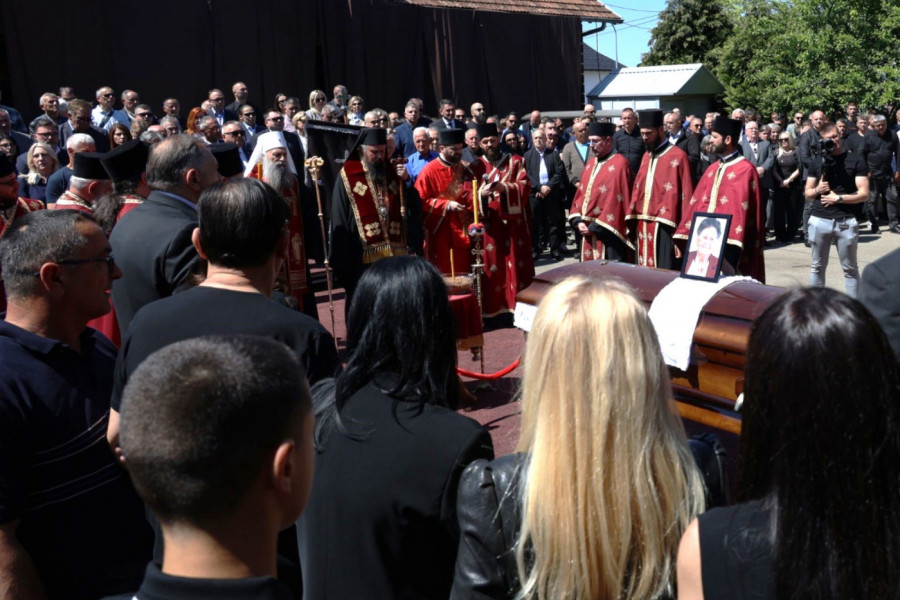
Mira Dodik, Mother of Milorad Dodik, Buried in Mrčevci pro-government Pro-government outlets depict Mira Dodik’s funeral in Mrčevci as a solemn, dignified Orthodox ceremony where Milorad Dodik’s grief and tribute to his mother are central, and the presence of Patriarch Porfirije and President Vučić is portrayed as a natural, honorable show of support. Their coverage stresses faith, family, and national unity over political calculation, framing the event primarily as a human and spiritual moment rather than a political signal. @Republika @Политика @Telegraf @Kurir Mira Dodik, mother of Milorad Dodik, was buried at the family cemetery in Mrčevci near Laktaši after passing away in Banja Luka at the age of 87. Coverage across the spectrum agrees that the funeral took place in a solemn, Orthodox Christian setting, with Serbian Patriarch Porfirije officiating the service and clergy from the Serbian Orthodox Church participating. Serbian President Aleksandar Vučić attended the funeral, along with numerous officials from Republika Srpska and other dignitaries, and conveyed condolences to the Dodik family. All sides concur that Milorad Dodik paid a personal tribute to his mother, highlighting her role as a source of strength and love, and that a wreath from Vučić bearing a special message was laid at the ceremony.
Reports also agree that the event carried both a private and institutional dimension, given Milorad Dodik’s position as SNSD leader and former president of Republika Srpska and Vučić’s role as president of Serbia. Media on both sides note the visible presence of the Serbian Orthodox Church as an important religious institution, reinforcing traditional rites of mourning and the message of hope in resurrection. They likewise converge on the fact that the gathering in Mrčevci symbolized strong political and national ties between Belgrade and Banja Luka, reflected in the attendance of high-level political representatives. Across outlets, the ceremony is framed as a moment of grief for the Dodik family and an occasion that naturally drew top officials from Serbia and Republika Srpska due to longstanding political, familial, and institutional connections.
Areas of disagreement
Framing of the event. Opposition-aligned outlets are likely to frame the funeral as a highly public and politicized event, emphasizing the concentration of power figures and questioning whether the scale of official attention reflects entrenched patronage networks. Pro-government media, by contrast, emphasize the human and spiritual dimensions, portraying it as a dignified farewell to a respected mother and as a natural expression of support for a long-serving statesman. While critical outlets may underline the spectacle aspect and suggest it exemplifies elite solidarity, supportive outlets underscore mourning, tradition, and respect without casting it as political theater.
Role of institutions and officials. Opposition coverage tends to cast the heavy presence of state officials, especially Vučić and Republika Srpska leadership, as evidence of tight political alignment and mutual dependence between Belgrade and Banja Luka. Pro-government reporting presents the same attendance as a normal and honorable gesture from national leaders toward a grieving political ally, stressing personal loyalty and interstate friendship rather than political calculation. Where critics may read the involvement of top officeholders and church leaders as overreach into what should be a private family matter, sympathetic outlets depict it as a rightful convergence of family, church, and state in a moment of loss.
Use of emotional narrative. Opposition-aligned sources are prone to treat Dodik’s obituary and public expressions of grief with more distance, either quoting them briefly or juxtaposing them with commentary about his broader political behavior. Pro-government outlets dwell on his words at length, highlighting his references to his mother as a pillar of strength and solace and framing his grief as evidence of personal warmth and family values. Critical coverage may resist personalizing Dodik in this way, wary of humanizing a controversial leader, whereas supportive coverage leans into the emotional storyline to reinforce his image as a devoted son and family man.
Political symbolism. Opposition media are inclined to interpret Vučić’s attendance and his specially inscribed wreath as a symbolic reaffirmation of a political alliance that has concrete implications for power balances in Bosnia and Herzegovina and the region. Pro-government outlets foreground the same symbols as signs of unity, solidarity, and shared Serbian identity, downplaying any transactional political meaning. While critics may see the funeral as another stage on which regional leaders project influence and status, loyalist outlets represent it as a moment when politics recedes and communal and national bonds come to the fore.
In summary, opposition coverage tends to stress the political overtones, elite symbolism, and possible instrumentalization of a private tragedy, while pro-government coverage tends to stress piety, personal grief, and the legitimacy of high-level support in a moment of mourning. Story coverage
Write a comment