Zagreb Police Ask Public for Help Identifying Four Deceased Men
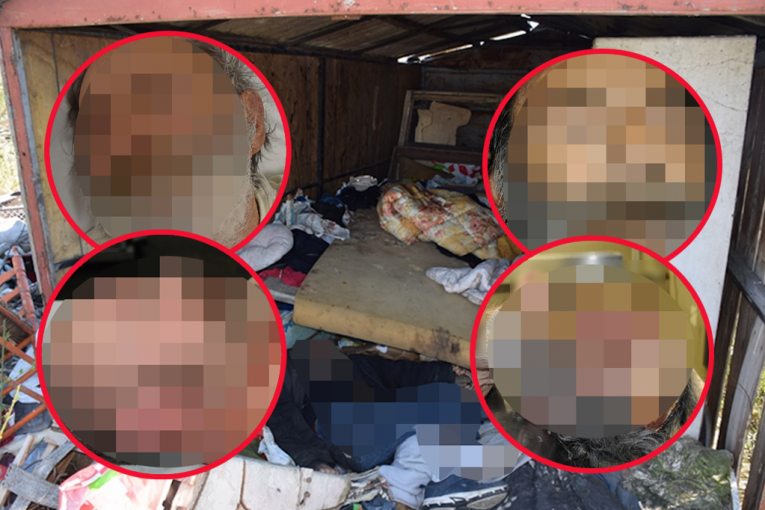
Zagreb Police Ask Public for Help Identifying Four Deceased Men pro-government Pro-government coverage portrays the Zagreb police appeal as a responsible and urgent effort to identify four deceased men, focusing on official descriptions and clear calls for public cooperation. These outlets emphasise the sensitivity of the disturbing images but frame their publication as justified and necessary to help the investigation proceed. @Telegraf @Republika Zagreb police have publicly appealed for help in identifying four deceased men whose bodies were discovered in separate incidents over recent years in the wider Zagreb area. Across outlets, reports agree that the police released photographs and detailed physical descriptions of the men, including estimated ages, height, build, hair color, clothing, and any distinctive marks such as tattoos, while warning that some of the images and information may be disturbing. All coverage notes that the identities of the men remain unknown and that the authorities are asking anyone who might recognize them to contact the police via official phone lines or other standard reporting channels.
Both opposition-leaning and pro-government-leaning framings, where present, acknowledge that the appeal follows established practice in missing persons and unidentified remains cases handled by Croatian police and coordinated with state forensic and medical institutions. They concur that the primary objective is humanitarian and investigative: to identify the deceased, notify potential relatives, and clarify the circumstances of death in line with legal procedures. The shared context emphasizes that similar appeals occasionally occur when standard investigative methods fail, and that identification is important for both criminal investigations and the civil registration of deaths, underlining the role of law enforcement, coroners, and forensic services in resolving such cases.
Areas of disagreement
Tone and emphasis. Opposition-aligned outlets tend to frame the story in a more critical or questioning tone, highlighting the gravity of four unidentified deaths and implying possible investigative gaps or broader social neglect, while still reporting the basic police appeal. Pro-government outlets, by contrast, largely reproduce the official police communication, stressing the urgency of public assistance and the technical details of the descriptions without interrogating institutional performance. Where opposition sources exist, they are more likely to situate the appeal within a pattern of unresolved or slow-moving cases, while pro-government pieces focus on the immediacy of the identification effort and the sensitivity of the published images.
Institutional performance. Opposition coverage, when it addresses the issue, is more inclined to ask why these men have remained unidentified for years and whether systemic shortcomings in data sharing, social services, or migrant support contributed to the situation. Pro-government coverage presents the police as acting diligently and transparently by turning to the public after exhausting standard leads, avoiding any suggestion of delay or mismanagement. Opposition-leaning narratives may raise questions about resourcing, training, or oversight of law enforcement, whereas pro-government narratives portray the appeal as evidence that institutions are functioning as intended.
Social context and vulnerability. Opposition sources are likelier to speculate or report on whether the deceased might have been socially marginalised individuals, such as migrants, homeless people, or those without strong family ties, and to connect these cases to broader debates about social safety nets and state responsibility for vulnerable groups. Pro-government outlets generally avoid such framing and focus almost exclusively on neutral, factual descriptors like age, clothing, and tattoos, leaving the men’s backgrounds and potential vulnerabilities unexplored. In opposition framing, these deaths can symbolise people who “fell through the cracks,” while pro-government narratives keep the focus on identification as a discrete police task.
Use of graphic content. Opposition-aligned commentary, where it exists, may question the ethics of publishing disturbing photos of the deceased and call for stricter standards on how media and police handle such imagery, balancing investigative needs with dignity and privacy. Pro-government outlets prominently label the photos and details as disturbing but justify their publication as necessary to maximise recognition and assist the investigation, echoing or amplifying the police rationale. Thus, opposition voices tend to treat the images as a potential civil-liberties and ethics issue, while pro-government coverage treats them as a pragmatic tool within acceptable legal limits.
In summary, opposition coverage tends to embed the police appeal in a broader critique of institutional performance, social vulnerability, and media ethics, while pro-government coverage tends to foreground the police version of events, emphasise cooperation and urgency, and avoid questioning the underlying systems or policies. Story coverage
Write a comment