Serbian President Vučić Condemns Attack on Donald Trump
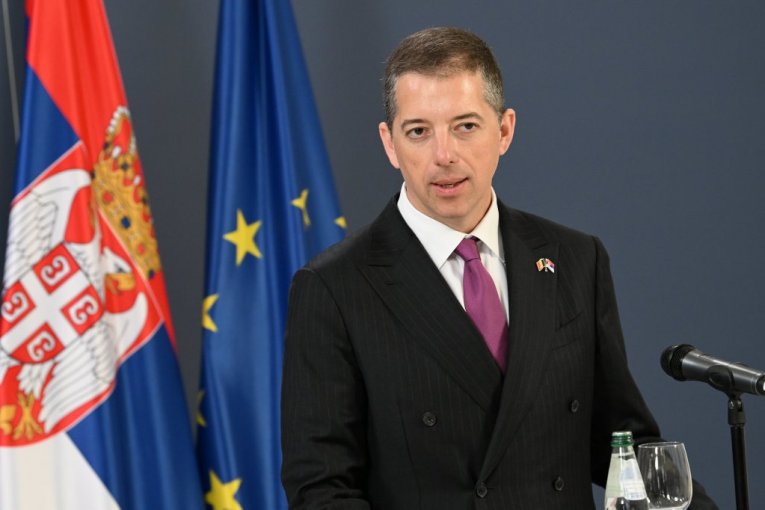
Serbian President Vučić Condemns Attack on Donald Trump opposition Opposition outlets depict Vučić’s condemnation of the attack on Trump as a necessary and standard expression of solidarity against political violence, emphasizing the principle that democracy must rely on dialogue rather than force. They report his words with limited embellishment and little effort to turn the reaction into a broader showcase of his leadership or foreign-policy achievements. @Danas
pro-government Pro-government outlets portray Vučić’s reaction as a strong, morally charged stand against political violence and a clear signal of Serbia’s solidarity with the United States and its people. They highlight his phrasing, echo it through Foreign Minister Marko Đurić, and frame the episode as evidence of the government’s commitment to democratic norms and international partnership. @Политика @Republika Serbian and international coverage from both opposition and pro-government Serbian outlets agree on the core facts: President Aleksandar Vučić publicly condemned an armed attack on former US President Donald Trump, stressing that he was relieved Trump and those around him were unharmed. Both sides report that Vučić labeled political violence as cowardice and underlined that Serbia condemns all forms of political violence, insisting that dialogue is the foundation of democracy and should replace any resort to force. They also concur that the incident is serious, follows earlier threats and attacks against Trump, and sends a dangerous message about the state of political culture.
Both opposition and pro-government reports situate Vučić’s reaction within the broader framework of Serbia’s declared foreign policy stance and institutional commitment to democratic norms. They highlight Serbia’s desire to be seen as a responsible partner that supports stability in the United States and globally, with an emphasis on the role of dialogue, elections, and peaceful competition as the legitimate means of resolving political conflicts. Both perspectives also reference Serbia’s leadership, including the president and the foreign minister, as speaking on behalf of the state in rejecting political violence as incompatible with democratic institutions, and present the episode as a reminder of the need to safeguard political processes everywhere.
Areas of disagreement
Framing of Vučić’s role. Opposition-aligned outlets tend to present Vučić’s statement in a more neutral, matter-of-fact way, treating it as a routine diplomatic reaction expected from any head of state in response to an attack on a major international figure. Pro-government outlets, by contrast, highlight Vučić’s wording and visibility, portraying his condemnation as particularly strong, principled, and morally clear, and emphasizing his personal leadership in setting Serbia’s stance. While opposition coverage often stops at reporting his comments, pro-government coverage turns them into a central narrative of decisive presidential statesmanship.
Emphasis on Serbia–US relations. Opposition media usually frame the reaction primarily as a universal rejection of political violence, with less focus on strategic bilateral ties, and they rarely dwell on Serbia’s alignment with the United States beyond standard diplomatic language. Pro-government outlets explicitly stress Serbia’s solidarity “with the United States and its people,” using the incident to underscore friendly relations, shared values, and Serbia’s reliability as a partner. In doing so, pro-government coverage more clearly connects the condemnation to foreign-policy messaging, whereas opposition coverage largely keeps it within the realm of generic democratic norms.
Use of institutional voices. Opposition reporting centers almost exclusively on Vučić’s statement, mentioning the presidency as the main institutional actor and giving limited space, if any, to other officials. Pro-government outlets, however, elevate the role of the foreign minister Marko Đurić, featuring his statements alongside Vučić’s and depicting a unified front of state institutions speaking in harmony. This creates a contrast where opposition sources depict a single, expected reaction, while pro-government sources showcase a coordinated, multi-actor state response.
Tone and political messaging. Opposition-aligned coverage tends to keep a restrained, less emotional tone, stressing concern about violence but avoiding overt dramatization or broader ideological messaging. Pro-government outlets adopt more charged language, repeating phrases like “cowardice in its worst form” and framing the incident as a grave warning to democracies, which reinforces a narrative that Serbia’s current leadership is firmly on the side of order and stability. As a result, opposition pieces read like straightforward news items, while pro-government pieces double as value-laden affirmations of the government’s democratic credentials.
In summary, opposition coverage tends to treat Vučić’s condemnation as a standard, largely procedural diplomatic response focused on a general rejection of political violence, while pro-government coverage tends to amplify the moral language, highlight institutional unity, and use the incident to promote Serbia’s leadership and alignment with the United States under the current government. Story coverage
Write a comment