Motorcyclist Killed in Crash with Audi Near Bijeljina
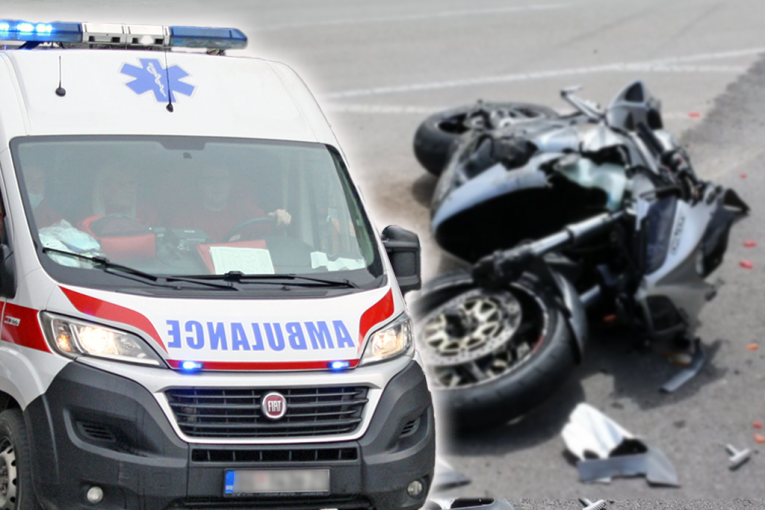
Motorcyclist Killed in Crash with Audi Near Bijeljina pro-government Pro-government coverage presents the crash as a tragic but isolated traffic accident, stressing confirmed facts, the prompt involvement of police and prosecutors, and the need to await investigative findings before discussing responsibility. These outlets emphasize institutional professionalism and offer general road-safety guidance rather than systemic criticism or speculation about fault. @Alo! @Republika A motorcyclist identified as M.J. was killed in a traffic accident on the main Bijeljina–Brčko road near Donja Čađavica, in the Bijeljina area, following a collision between his Yamaha motorcycle and an Audi Q8 driven by Ž.S. Pro-government outlets agree that the crash occurred early afternoon, around 13:36, and that emergency services and police responded to the scene, with the investigation placed under the supervision of a competent prosecutor to determine the exact circumstances. Both sides, where they report the case, acknowledge the basic sequence of events: a direct collision between the motorcycle and the passenger car, fatal injuries to the motorcyclist, and formal opening of a traffic-crime case.
Across the spectrum, media refer to the involvement of the police, prosecutor’s office, and emergency medical services as the central institutional actors, and they converge on the idea that the legal classification of the case and possible charges will depend on the outcome of the ongoing investigation. They also broadly share contextual elements such as the known risk profile of the Bijeljina–Brčko road, the general vulnerability of motorcyclists in mixed traffic, and standard procedural steps after serious collisions, including securing the scene, documenting evidence, and reminding drivers of basic safety and post-crash obligations, without going into detailed speculation about individual guilt at this stage.
Areas of disagreement
Responsibility and blame. Opposition-aligned outlets tend to scrutinize potential driver behavior, speed, right-of-way, and road conditions, sometimes hinting that either the Audi driver or systemic failures in traffic policing may bear responsibility, while adding testimonies from locals about that stretch of road. Pro-government coverage, by contrast, largely avoids assigning or implying blame, emphasizing that all facts will be established by the ongoing investigation and carefully repeating official wording from police and prosecutorial statements. Where opposition media might foreground witness claims and patterns of previous accidents to suggest probable fault, pro-government reports keep descriptions neutral and confined to confirmed procedural information.
Systemic traffic safety issues. Opposition sources typically embed this crash into a broader narrative of inadequate traffic safety policy, criticizing authorities for poor road infrastructure, insufficient signaling, and lax enforcement toward powerful cars and motorcycles. Pro-government outlets, however, treat the event more as an isolated tragedy, focusing on the specific incident rather than systemic critique, and when they raise safety, they do so through generic advice and reminders to all drivers and motorcyclists. As a result, opposition media often use the case to demand reforms or accountability from ministries and police leadership, whereas pro-government media foreground individual caution and adherence to rules without challenging current policy frameworks.
Use of official sources and tone. Opposition coverage, where present, typically juxtaposes official police and prosecutorial statements with independent comments from residents, traffic experts, or social media reactions, creating a more skeptical and questioning tone toward the authorities’ version of events. Pro-government outlets rely almost exclusively on official communiqués, citing the police, prosecutor, and emergency services as primary and often sole sources, which produces a restrained, institutional tone. Opposition media may highlight previous cases where investigations were slow or inconclusive to pressure institutions, while pro-government media present the investigation as routine, professional, and sufficient.
Framing of victim and public emotion. Opposition-leaning outlets are more likely to humanize the deceased motorcyclist by mentioning age, family situation, or local community reaction and by stressing public anger or grief over recurring fatalities on that road. Pro-government reports keep personal details to a minimum, referring to the victim by initials only and focusing on the technical description of the accident and post-crash procedures. In doing so, opposition media tend to amplify broader discontent about road safety and institutional performance, whereas pro-government media frame the death as a solemn but depersonalized incident within standard traffic reporting.
In summary, opposition coverage tends to use the fatal crash as a lens to question institutional performance, highlight possible driver fault, and link the case to recurring systemic safety problems, while pro-government coverage tends to present a concise, institution-centered account that avoids speculation, downplays systemic criticism, and emphasizes official procedure and generic safety messaging. Story coverage
Write a comment