Additional Vein Group Member Arrested in Novi Sad
Additional Vein Group Member Arrested in Novi Sad
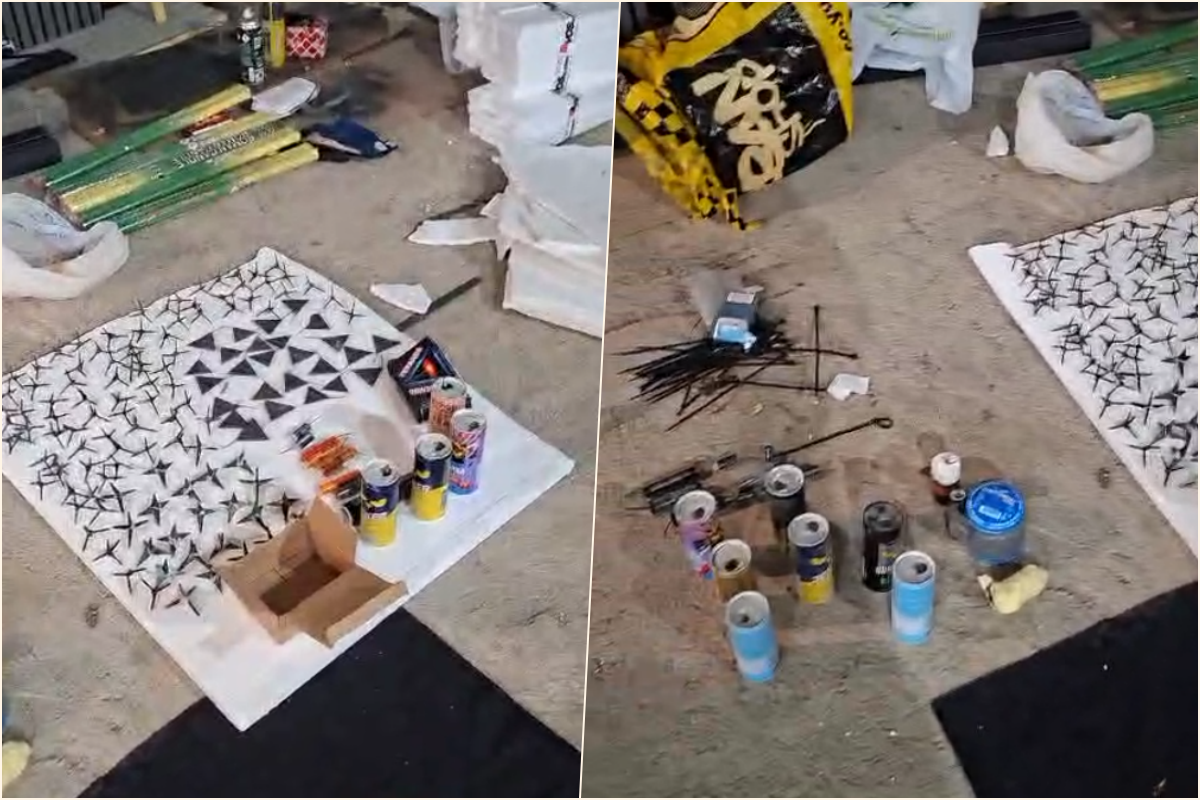
Authorities in Serbia have arrested another suspected member of the so‑called Vein group in Novi Sad, identified by initials D.A., a 32‑year‑old alleged associate of Marko Vein (Marko V.). Both opposition and pro‑government outlets agree that the arrest followed a search in which police and the Higher Public Prosecutor’s Office say they found a sizable cache of items: improvised explosive devices, various pyrotechnics, a gas cylinder combined with a firecracker, cans with fuses, metal spikes or caltrops, body armor, helmets, and gloves. Reporting from both sides accepts that this arrest is part of a broader operation that had already led to the detention of Marko Vein and several others, and that the suspect is under a prosecutor‑ordered detention measure. There is also consensus that the suspect is being investigated under serious charges linked to weapons and explosives, and possible crimes against the constitutional order and public safety, though precise legal qualifications may be framed differently across outlets.
Across the spectrum, media describe the Vein group as a criminal or extremist formation that the authorities claim was preparing violence linked to upcoming or recent elections in Belgrade. Both opposition and pro‑government coverage acknowledge that prosecutors and police present the case as an organized network with logistical preparation for street unrest, referencing alleged plans for riots, arson, and attacks on individuals on election day. There is shared recognition that institutions at the forefront are the Higher Public Prosecutor’s Office and police units tasked with suppressing organized crime and safeguarding electoral processes. Outlets on both sides also situate the case within a broader pattern of pre‑election security operations, noting that multiple arrests and weapon seizures are being narrated by state bodies as proof of a coordinated effort to prevent large‑scale disruption.
Areas of disagreement
Framing of the threat. Opposition‑aligned outlets tend to question whether the seized arsenal and the narrative of an organized plot truly amount to a major threat to constitutional order, often hinting that the case could be overstated or selectively publicized for political purposes. Pro‑government outlets, by contrast, portray the confiscated items as clear evidence of a highly dangerous plan to cause chaos, emphasizing details like spikes, body armor, and improvised explosives to dramatize the risk. While opposition media may accept that a crime involving weapons occurred, they more often cast doubt on the alleged scale and coordination, whereas pro‑government media treat the case as proof that authorities foiled a serious attempt at election‑day violence.
Political implications and motives. Opposition outlets typically frame the arrests as part of a broader pattern in which the ruling party and security apparatus use criminal cases to stigmatize or intimidate protest movements and potential election‑related gatherings, suggesting the timing is designed to influence public perception before or during voting. Pro‑government coverage instead presents the operation as evidence of the government’s responsibility and effectiveness in defending democratic institutions, insisting that the arrests are purely a response to concrete intelligence about planned riots. The former highlight possible instrumentalization of the judiciary and police for political gain, while the latter highlight the arrests as a non‑political law‑enforcement success that protects citizens and the electoral process.
Credibility of institutions and evidence. Opposition‑aligned sources often stress past instances where prosecutions related to protests or elections were later weakened or collapsed, using this to question the reliability of current prosecutorial claims and to call for more transparent disclosure of evidence. Pro‑government outlets, by contrast, treat statements from the Higher Public Prosecutor’s Office and the police as authoritative, amplifying official photos and videos of the seized items as straightforward proof. As a result, opposition media are more likely to demand independent oversight or to feature defense perspectives, whereas pro‑government media largely echo the institutional narrative without substantial skepticism.
Connection to opposition politics. Opposition‑oriented media usually warn against conflating this alleged criminal group with the broader political opposition or peaceful protesters, arguing that the regime may use the Vein case to smear dissent as violent extremism. Pro‑government outlets, however, place strong emphasis on the alleged plan to target an SNS candidate and disrupt elections in Belgrade, implicitly or explicitly linking the group’s aims to anti‑government forces and painting them as extremists aligned against state stability. In this way, opposition coverage seeks to firewall democratic opposition from the accused group, while pro‑government coverage blurs that line to suggest a continuum between radical actors and political adversaries of the ruling party.
In summary, opposition coverage tends to accept that an arrest and weapons seizure occurred while casting doubt on the scale, motives, and political framing of the alleged plot, while pro-government coverage tends to fully endorse the official narrative, emphasizing the gravity of the threat, the professionalism of state bodies, and a link between the Vein group’s plans and hostile anti‑government forces.
Write a comment