Tirana Protests Escalate as Stones and Tear Gas Overshadow Rama’s Dialogue Bid
Tirana Protests Escalate as Stones and Tear Gas Overshadow Rama’s Dialogue Bid
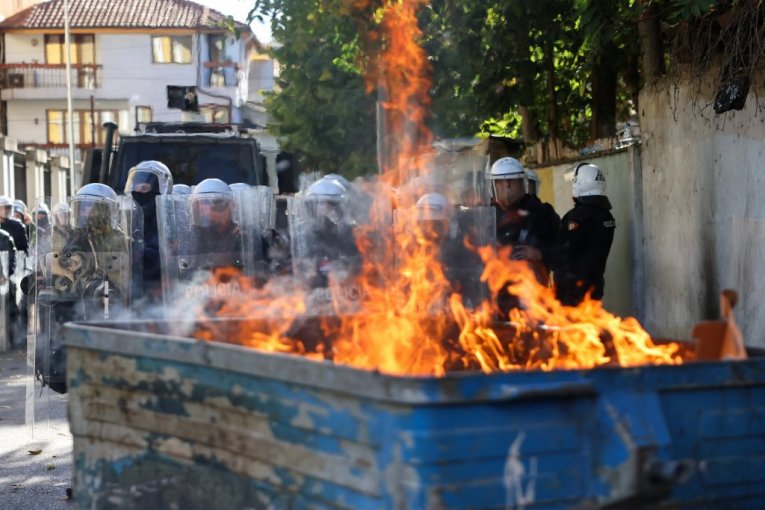
The latest escalation came on the 12th day of protests in Tirana, as demonstrators gathered near the Ministry of Education and other government buildings. Stones were thrown at the ministry, containers were set alight and chairs placed by Rama as an invitation to dialogue were reportedly burned outside the government headquarters.
Police responded with water cannons as the crowd gathered. The confrontation later intensified on the Boulevard of the Martyrs of the Nation, where protesters also threw stones at officers and police used tear gas. Demonstrators then split into groups, with some moving toward Skanderbeg Square and others toward the Ministry of Economy.
The protests began over education conditions, the cost of studying and limited employment prospects for young people. They have since developed into broader demonstrations against Rama’s government, including demands for the prime minister’s resignation. Opposition Democratic Party supporters joined the movement, while professors, intellectuals, artists and trade unions also took part in the latest mobilization.
Rama has repeatedly urged protesters to negotiate. He initially placed chairs and benches outside his office, later replacing them with papers marked “dialogue” on a stone table after demonstrators rejected earlier invitations. Protesters have now refused his offer for four consecutive days, according to reports cited by the opposition-aligned account.
The competing accounts agree that the demonstrations have expanded and that the clashes involved both projectiles from protesters and force by police. They differ mainly in emphasis: the pro-government narrative highlights disorder and Rama’s outreach, while the opposition account stresses the breadth of the movement and its demand for political change.
Write a comment