Commission Begins Review of Belgrade Prosecutor's Office Cases
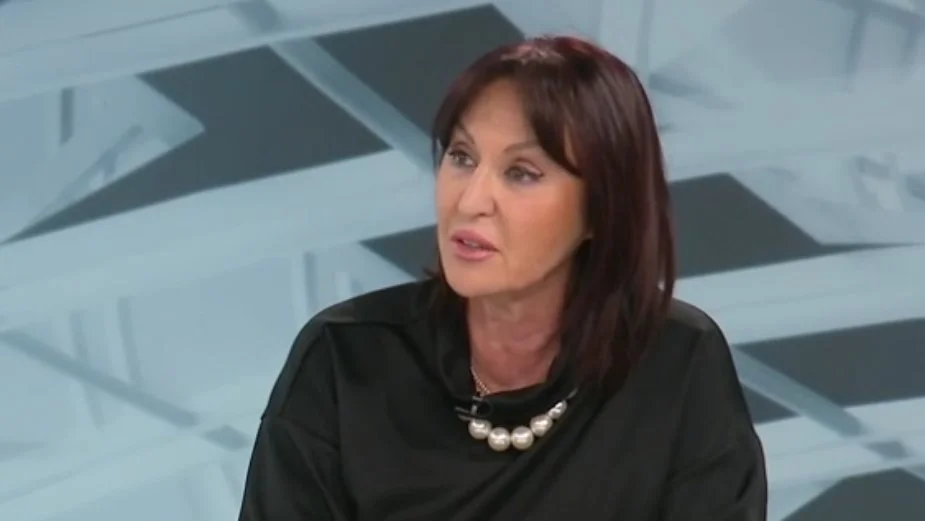
Commission Begins Review of Belgrade Prosecutor’s Office Cases
A commission from the Supreme Public Prosecutor’s Office, formed by Supreme Public Prosecutor Zagorka Dolovac, has begun reviewing cases at the Higher Public Prosecutor’s Office in Belgrade. Both opposition and pro-government outlets agree that a five-member commission entered this office, led by Nenad Stefanović, with a mandate to examine a broad range of cases, including serious crimes against life and body, human and electoral rights, economic offenses, and crimes against the constitutional order and official duties, and that this is at least the fourth such oversight visit in roughly the last two years. They concur that the commission has been granted access to requested files, that the review could identify irregularities or misconduct within prosecutorial work, and that the move follows intense public scrutiny of the Belgrade office’s handling of high-profile and politically sensitive cases.
Across the spectrum, media describe this review as part of the supervisory powers of the Supreme Public Prosecutor’s Office over lower-level prosecutor’s offices within Serbia’s hierarchical prosecutorial system. It is commonly framed as a mechanism for ensuring legality, consistency, and accountability in the handling of complex and sensitive cases, in accordance with the Constitution and relevant laws. Both sides emphasize that, in principle, the commission may propose disciplinary or other measures if it uncovers serious omissions or abuses, and they situate the move within ongoing debates about judicial and prosecutorial reforms and the credibility of law enforcement institutions in politically charged matters.
Areas of disagreement
Motivation and timing. Opposition outlets portray Dolovac’s decision to send the commission after 17 years in office as belated, reactive, and driven by political calculations in the context of an outgoing government associated with Aleksandar Vučić. Pro-government outlets, by contrast, present the review as part of a regular, methodical oversight cycle, emphasizing that this is already the fourth such control in two years and suggesting that the timing reflects institutional routine rather than political pressure. While opposition voices stress that such a broad review should have occurred much earlier, government-aligned coverage avoids questioning Dolovac’s earlier inaction and instead underscores continuity and legality.
Scope and priorities. Opposition coverage argues that the commission should focus primarily on corruption and abuses linked to the long-ruling authorities, including alleged manipulation of politically sensitive investigations and deals benefiting those in power. Pro-government sources emphasize a more neutral, technical scope, listing categories such as serious crimes, human and electoral rights, and economic offenses, without singling out cases tied to current or former officeholders. In doing so, opposition narratives frame the review as an overdue opportunity to expose systemic political influence, while pro-government narratives frame it as a broad, depoliticized check on prosecutorial performance.
Characterization of the Belgrade Prosecutor’s Office. Opposition-leaning commentary highlights the Belgrade office as a symbol of compromised independence, pointing to controversial actions toward students, activists, and journalists and implying that prior obedience to political power now necessitates a deep internal purge. Pro-government reporting defends the office under Nenad Stefanović, stressing its cooperation with the commission and insisting there is no hiding of cases, presenting it as an institution faithfully executing the Supreme Public Prosecutor’s instructions. Where opposition sources depict Belgrade prosecutors as part of a problematic power structure, government-aligned outlets depict them as professionals unfairly maligned by critical media.
Role of the media and public narrative. Opposition outlets amplify critical expert voices like former prosecutor Jasmina Paunović, using them to argue that independent scrutiny has forced institutions to act and that persistent media exposure of irregularities is vindicated by the very need for a commission. Pro-government outlets, conversely, accuse parts of the media of spreading baseless or sensationalist claims, particularly regarding supposed hidden files or improper titles, and emphasize that their work follows the Constitution and law. Thus, opposition narratives cast media pressure as a corrective to institutional inertia, while pro-government narratives cast critical media as distorting or politicizing a legitimate oversight process.
In summary, opposition coverage tends to interpret the commission’s entry into the Belgrade prosecutor’s office as a politically delayed, high-stakes chance to expose entrenched abuses linked to the long-ruling establishment, while pro-government coverage tends to frame it as a routine, legally grounded oversight action that confirms the professionalism and transparency of both the Supreme and Higher Public Prosecutor’s Offices.
Write a comment