Attack Outside Israeli Embassy in Belgrade Investigated as Terrorism
Attack Outside Israeli Embassy in Belgrade Investigated as Terrorism
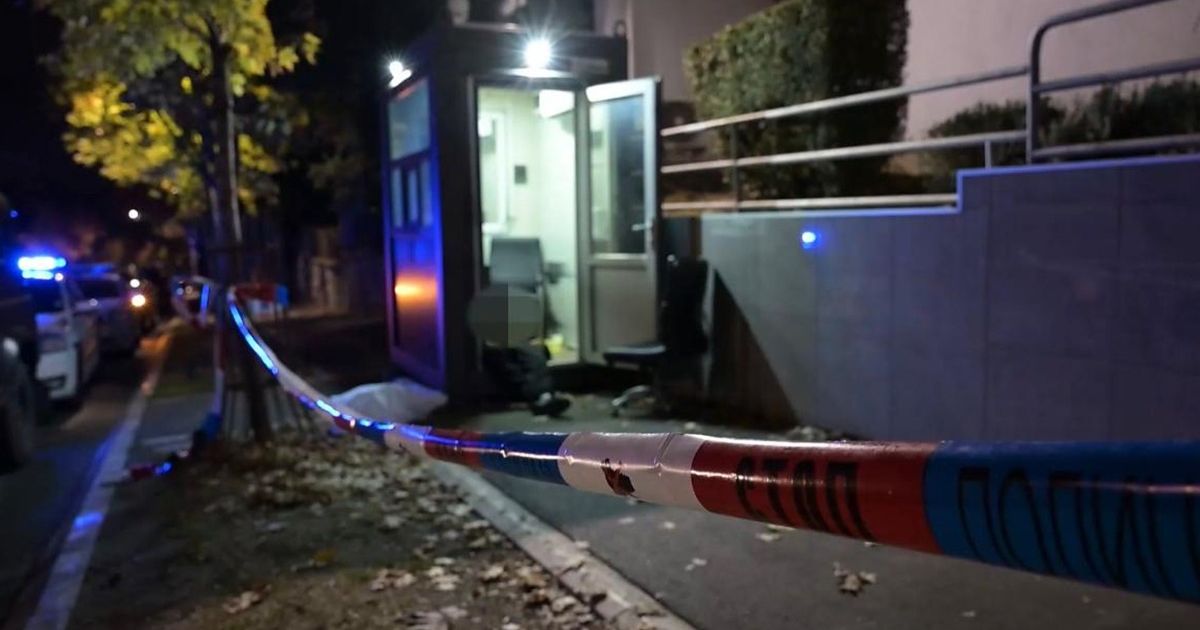
An attack took place outside the Israeli embassy in Belgrade when a young man armed with knives approached a Gendarmerie officer on duty and injured him, after which the officer shot and killed the assailant in what authorities describe as self-defense. Both opposition and pro-government reporting agree that Serbian police and the Public Prosecutor’s Office for Organized Crime quickly classified the incident as a suspected terrorist act, raised the national terrorism threat level to the highest “red” alert, and opened an investigation focused on identifying the attacker, reconstructing his movements, and examining any links to extremist or terrorist networks. Coverage from both sides notes that forensic methods such as DNA and fingerprint analysis are being used, that possible accomplices or logistical support are being sought, and that the incident follows at least one similar recent attack targeting security personnel at or near the Israeli embassy.
Shared context across outlets emphasizes that the incident is being handled by specialized institutions — notably the Organized Crime Prosecutor’s Office and security services familiar with regional jihadist and other extremist networks — within a broader climate of heightened sensitivity around attacks on Israeli or Jewish targets across Europe. There is agreement that the attacker was a Serbian national, very young, previously present in Germany and reportedly deported over radical content on social media, and that he appears to have been influenced by Islamist propaganda, with some reports linking him conceptually to Islamic State–inspired radicalization. Both opposition and pro-government sources situate the case within ongoing concerns about online radicalization, cross-border extremist connections in the Balkans, and Serbia’s obligation to demonstrate effective counterterrorism capacity to international partners.
Areas of disagreement
Nature and framing of the attack. Opposition-aligned outlets tend to frame the incident more cautiously, emphasizing the preliminary character of the terrorism classification, the limited verified facts, and the risk of politicizing a serious security case. Pro-government media, by contrast, adopt unequivocal language of terrorism from the outset, often using emotionally charged descriptors like “bloody attack” and “jihadist,” and highlighting the assailant’s alleged cries and ideological symbols as proof of terrorist intent. While opposition coverage may stress that motives and ties are still under investigation, pro-government reporting presents terrorism as an already settled narrative foundation.
Government performance and security services. Opposition coverage is more likely to question how a previously flagged and deported radicalized youth could approach a high-profile diplomatic target, raising issues of intelligence gaps, preventive failures, or misuse of security priorities by the government. Pro-government outlets focus on praising the Gendarmerie officer’s rapid reaction and personal bravery, casting him as a hero who single-handedly averted a mass-casualty attack and demonstrating that the security system functioned effectively under pressure. Where opposition narratives implicitly suggest institutional accountability and oversight are needed, pro-government narratives underscore loyalty to the police and interior ministry leadership and present the event as validating current security policies.
Broader political and international context. Opposition-aligned sources tend to decouple the attack from partisan geopolitical messaging, treating it primarily as a domestic security incident and avoiding strong linkage to Serbia’s foreign policy stances. Pro-government media more readily connect the attack to wider themes such as alleged extremist hubs in the region, Serbia’s stability amid international crises, and pressures related to EU conditions and broader security alignments. In opposition narratives, the emphasis is on rule of law and professional investigation, while pro-government narratives embed the incident into a storyline of Serbia as a frontline state defending itself and its partners against terrorism.
Use of the case in domestic politics. Opposition coverage is inclined to warn against exploiting the attack to distract from internal problems or to justify further concentration of power in the security apparatus, often signaling concern about civil liberties and media spin. Pro-government outlets, however, leverage the incident to reinforce support for the interior minister, security agencies, and the ruling leadership, depicting them as indispensable guardians of public safety and stability. Thus, while opposition-aligned media scrutinize whether the terrorism label could be instrumentalized for political gain, pro-government media use the same label to rally public unity around the government and its security agenda.
In summary, opposition coverage tends to underscore uncertainty, institutional accountability, and the need to avoid politicizing the terrorism probe, while pro-government coverage tends to present the attack as clear-cut jihadist terrorism that validates the toughness and effectiveness of the current security and political leadership.
Write a comment